How top Fed bank cop's resignation limits Trump's options

Add Axios as your preferred source to
see more of our stories on Google.
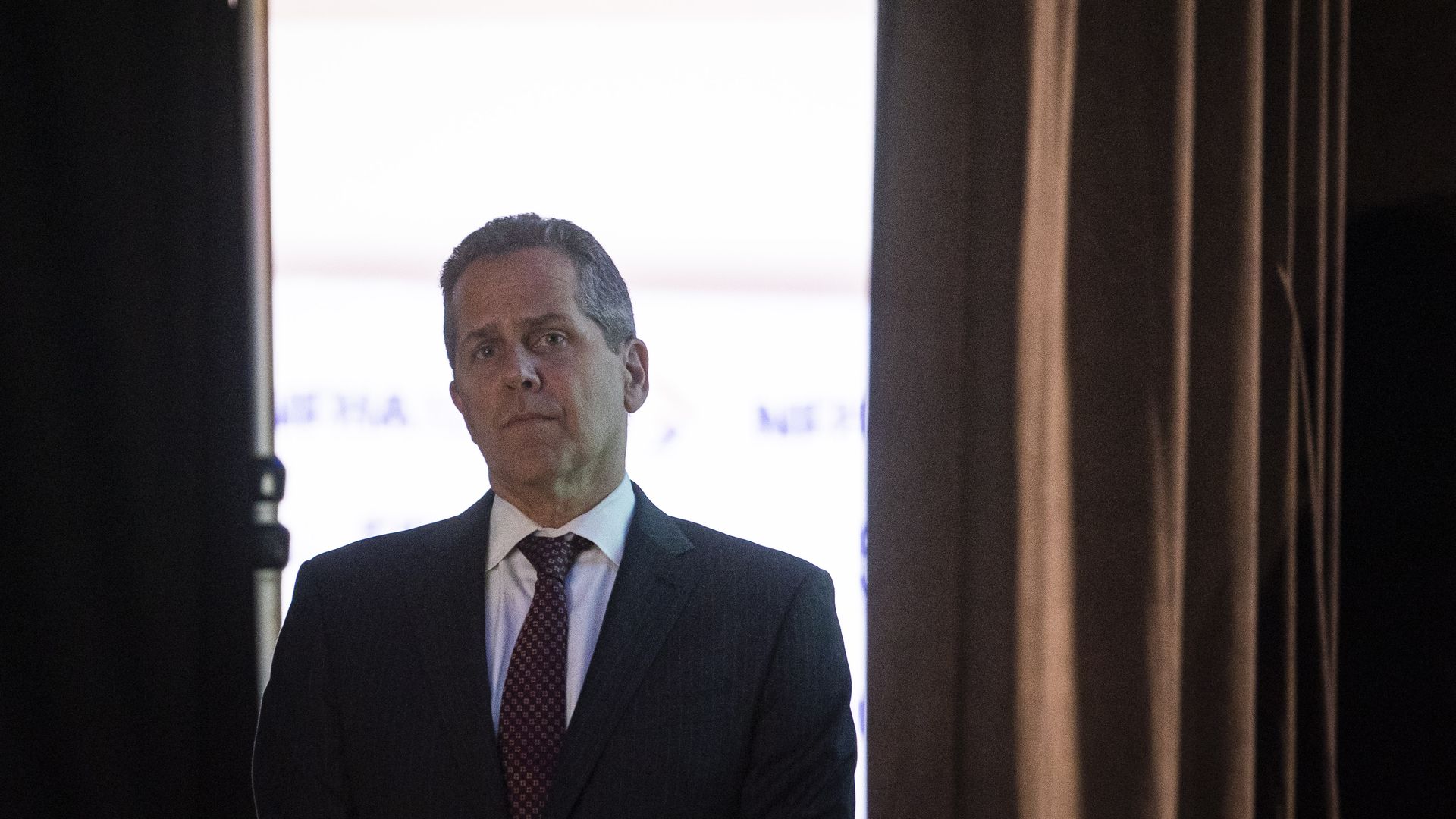
Fed vice chair for supervision Michael Barr. Photo: Al Drago/Bloomberg via Getty Images
Monday's decision by the Federal Reserve's top bank regulator to step down from his job — but not from the Fed entirely — is simultaneously less and more than meets the eye.
Why it matters: Michael Barr's self-demotion clears the way for President-elect Trump to appoint a vice chair for supervision. It is no radical departure from past precedent: Fed governors have, in the past, stepped aside on the principle that a new president should get to appoint their own chief financial regulator.
Historically, the Fed's regulatory side pays greater deference to the wishes of the president and Congress, in contrast to monetary policy, in which political independence is fiercely guarded.
- Barr's move was intended to get ahead of Trump possibly demoting him, which would have created a disruptive legal battle.
- Indeed, Barr's decision to remain a Fed governor — which limits Trump's options in appointing a new vice chair for supervision — is in some ways more of a break with precedent.
Flashback: Randall Kroszner, a President George W. Bush-appointed Fed governor who focused on bank supervision, stepped aside in January 2009, making way for Dan Tarullo, President Obama's appointee to the comparable role.
- In January 2017, Tarullo resigned, allowing Trump to eventually appoint Randal Quarles to the equivalent job.
- Quarles hung around through the first 11 months of the Biden administration then resigned from the Fed in December 2021, opening up the slot now occupied by Barr.
Between the lines: The common thread is that these top bank supervision officials view their role as more explicitly carrying out the regulatory agenda of the president who appointed them — and that a new president is entitled, in reasonable time, to their own choices.
- In monetary policy, there's a deep institutional tradition of Fed governors seeking to adjust interest rate policy in the best interest of the economy, regardless of who is in the Oval Office.
- With Barr remaining at the Fed as a governor, Trump will either have to wait until there is a vacant governor slot to choose a chief regulator or elevate a current governor, likely Michelle Bowman, whom he first appointed in 2018.
Yes, but: One difference now, compared to the Kroszner and Tarullo cases, is that neither held the title of vice chair of supervision, which was only created as part of the Dodd-Frank Act.
- Barr's term in that role wasn't scheduled to expire until July 2026.
What they're saying: "It is unfortunate in terms of Fed independence that Barr has stepped down before the end of his term as vice-chair in July 2026 at a time when he was subject to external pressure," wrote Krishna Guha and Marco Casiraghi of Evercore ISI in a note.
- "But we thought it would be unfeasible for him to remain in [that] seat for a year and a half," they add.
- "The problem lies in the way the term of vice-chair for supervision became badly misaligned with the election cycle when the Fed accepts the administration sets the direction on regulation, as opposed to rates."
