Biden takes final shot at China chip industry with new investigation

Add Axios as your preferred source to
see more of our stories on Google.
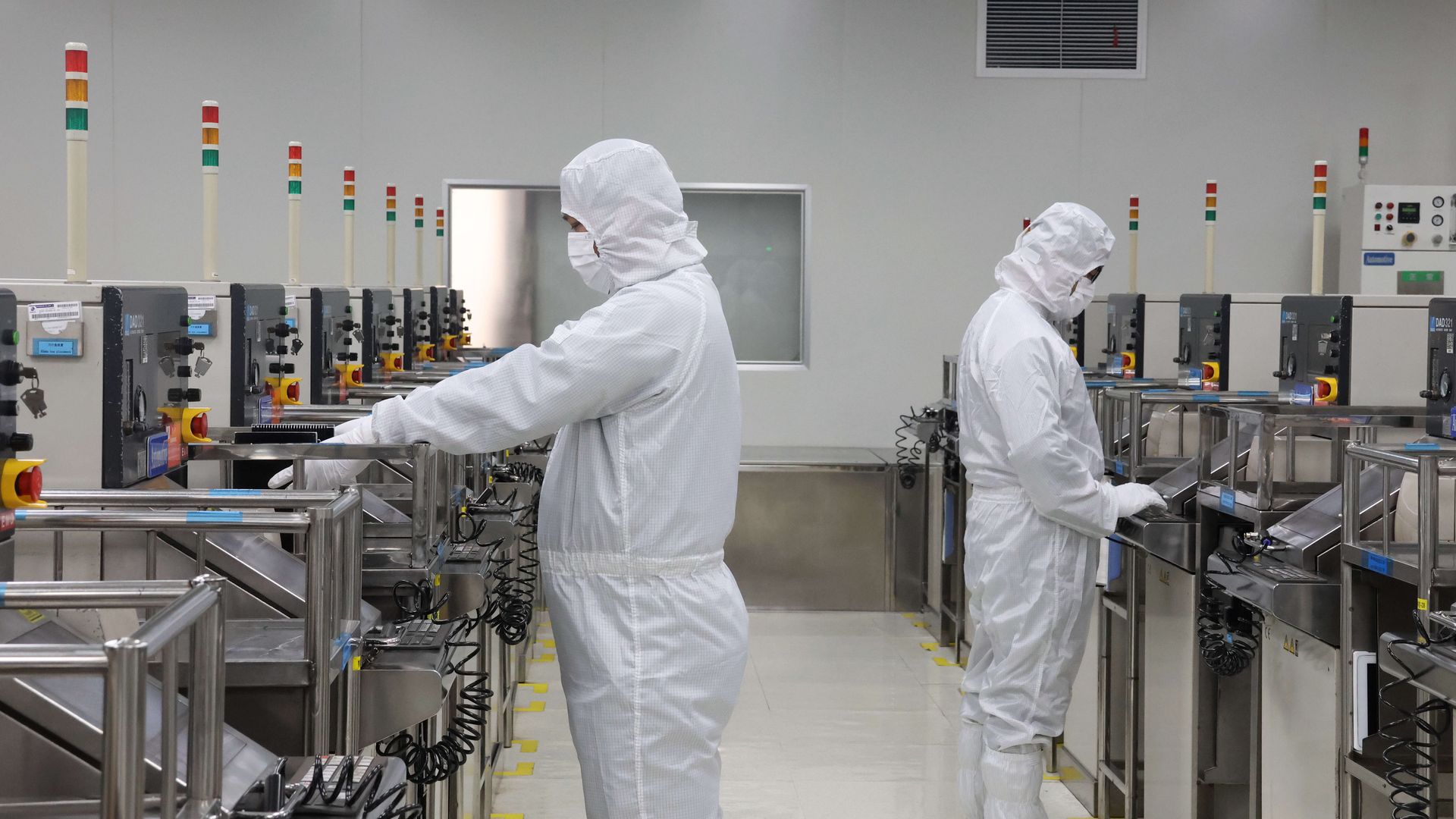
Workers at an automotive semiconductor plant in China. Photo: Chu Baorui / Feature China/Future Publishing via Getty Images
The Biden administration said on Monday it launched an investigation into China's semiconductor sector, which officials claim threatens U.S. national security.
Why it matters: It is a first step toward possible measures, like tariffs, that might seek to squeeze China-made chips out of U.S. products. But with one month left in office, the fate of the investigation — and the ultimate remedies — rests with President-elect Trump.
The big picture: The investigation will largely focus on China's foundational semiconductors — key inputs in automobiles, medical devices and military defense systems. These are distinct from advanced AI chips, though those have also been targeted by Biden.
- The probe will be conducted under Section 301 of the Trade Act, which the Biden administration previously used to impose steep tariffs on Chinese imports of electric vehicles, batteries and solar equipment.
Between the lines: This investigation will be in its early phase when Biden leaves office next month — like others under Section 301, the probe may take as long as a year to complete.
- Senior administration officials say initiating the investigation now builds a record for the incoming Trump administration to pick up.
- China doesn't stop pursuing its policies just because the U.S. is going through a transition, the officials said.
What they're saying: Commerce Secretary Gina Raimondo told reporters that Chinese manufacturers sell chips for ultra-low prices around the world, which makes it less appealing for other companies to compete.
- "We've seen chips companies hesitate to invest in the U.S.," Raimondo told reporters, keeping America reliant on China for chips.
- "We saw during COVID what happens when we need a chip and we can't have it — it fuels inflation, makes cars and washing machines more expensive and left our military supply chain vulnerable," Raimondo said.
What to watch: It's unclear what priority the investigation gets under Trump.
- It would fall to Jamieson Greer, who Trump tapped to lead the Office of the U.S. Trade Representative, assuming he's confirmed.
- Tariffs are a central part of the president-elect's economic agenda. He plans to impose import taxes on his first day in office via executive orders, not the Section 301 process.
The bottom line: The investigation is a parting shot from the Biden-era White House, which implemented a slew of measures aimed at curbing imports from China over the course of Biden's term.
- U.S.-China economic relations will likely stay frosty under Trump.
