How to watch Geminid meteor shower this week and beyond

Add Axios as your preferred source to
see more of our stories on Google.
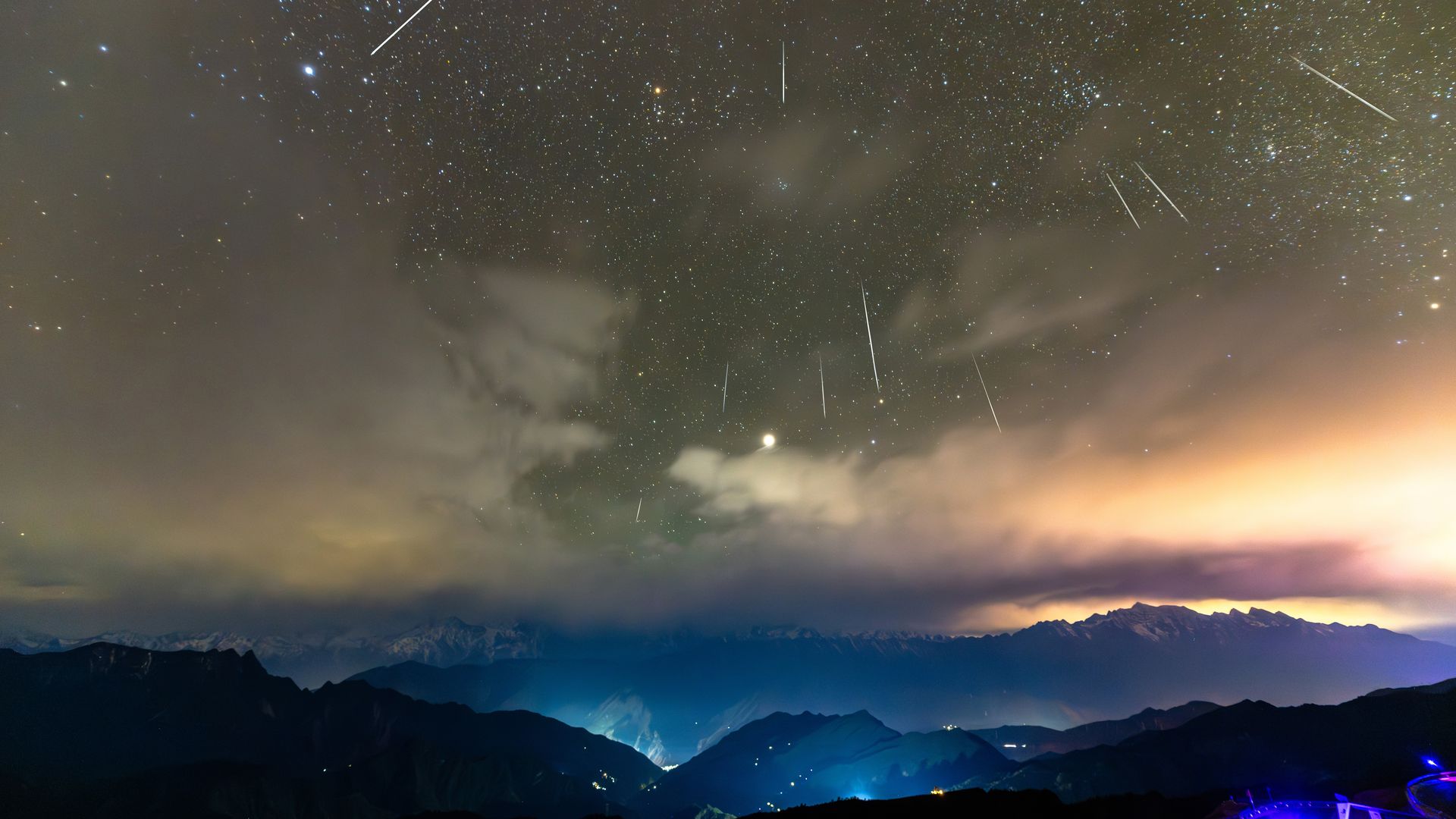
The Geminid meteor shower seen over Ya'an City, Sichuan Province, China, in 2023. Photo: Costfoto/NurPhoto via Getty Images
The Geminid meteor shower, which NASA calls one of the "best meteor showers of the year," is expected to peak Friday and Saturday.
The big picture: The shower appears around mid-December each year as Earth passes through the debris left behind by the asteroid 3200 Phaethon.
- This meteor shower is one of the most reliable annual meteor showers, per NASA.
What to know about Geminids
Zoom in: At its peak, 120 Geminid meteors can be seen per hour under perfect conditions, NASA said.
- The Geminids are bright and fast meteors and tend to appear yellow or green.
- The American Meteor Society says the meteor shower will be active until Dec. 21.
The intrigue: The name for the shower comes from the constellation of Gemini, also known as the "Twins."
- "The constellation for which a meteor shower is named only serves to aid viewers in determining which shower they are viewing on a given night," NASA said. "The constellation is not the source of the meteors."
Best time to see Geminid meteor shower
What we're watching: The constellation Gemini will be well placed high in the northern hemisphere sky from about 10pm local time, per Space.com.
- The Geminid meteor shower peaks after midnight in the early morning Saturday, Dec. 14, NASA said.
December full moon
Yes, but: The nearly full moon might make it difficult to see the meteor shower, NASA warns.
- The next full Moon will officially be Sunday morning, Dec. 15, when it passes opposite the Sun at 4:02am EST, NASA said.
- The Moon, known as the Cold Moon, Frost Moon and Winter Moon, will appear full for about three days from Friday evening through Monday morning, the space agency said.
Tips to see the meteor shower
State of play: Here are NASA's tips for viewing meteors:
- Find an area well away from the city or street lights.
- Bring a sleeping bag, blanket or lawn chair.
- Lie flat on your back with your feet facing southeast if you are in the Northern Hemisphere or northeast if you are in the Southern Hemisphere, and look up, taking in as much of the sky as possible, NASA said.
- In less than 30 minutes in the dark, your eyes will adapt and you will begin to see meteors.
Ursid meteor shower 2024
What's next: The Ursids are considered a "low-key meteor shower" that is often overlooked because of the holiday season, EarthSky reports.
- It has an hourly rate of five to 10 meteors, much less than Geminids.
- The last meteor shower of 2024 is expected to be visible from around Dec. 16-26 with its peak Dec. 21-22, per Star Walk.
More from Axios:
