Hands on with Project Astra, Google's see-all assistant

Add Axios as your preferred source to
see more of our stories on Google.
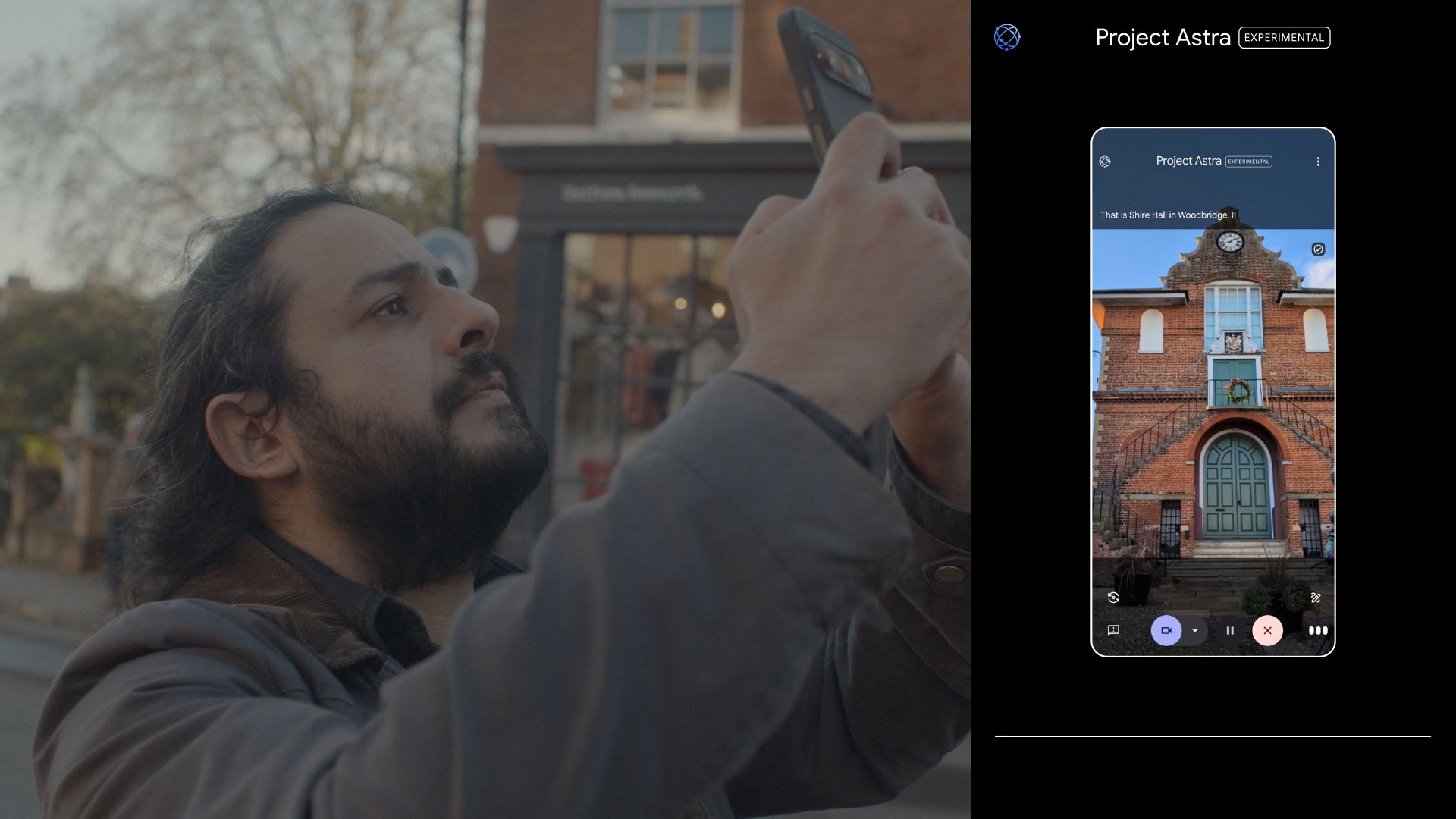
A tester uses the experimental Project Astra app on his mobile device to identify a building. Credit: Google
Google is showing off an updated version of Project Astra, the all-seeing, all-hearing and all-remembering experimental AI assistant it showed a glimpse of earlier this year.
Why it matters: Astra offers a preview for some of the ways future AI assistants will help navigate the physical world.
How it works: Astra uses either an Android app or prototype glasses to record the world as a person is seeing it. Astra can then summarize what it sees and answer a wide range of questions, drawing on an array of Google services including Search, Maps, Lens and Gemini.
- The updated version of the prototype, powered by Gemini 2.0, adds a longer memory. For example, it stores 10 minutes of video, as opposed to the 45 seconds' worth it had when Google demonstrated an early version at Google I/O in May.
- Astra expands its language support and reduce the lag between asking a question and receiving an answer — making conversations feel more natural.
- It's also more personalized overall, remembering past conversations and individual preferences.
Yes, but: Astra still has plenty of limitations — and it's not yet widely available.
- Astra can't access an individual's email or photos, can struggle to distinguish multiple voices in a noisy environment, and can't perform action tasks like setting a timer that the basic Google Assistant has long been able to do.
Zoom in: In a meeting at Google's Mountain View headquarters, the company demonstrated Astra summarizing a travel book, suggesting wine pairings for a beef dinner, and identifying several pieces of famous art, among other tasks.
- Given a few minutes to try Astra for myself, I decided to merge two of the tasks, and have it read and summarize a 1970s math textbook, and then recommend a wine pairing for the reading from the bottles Google had assembled for the demo.
- The combo didn't throw Astra. "Given the intellectual nature of the essay and the fact you have a sparkling Rosé in view, a chilled glass of Mumm might pair quite nicely, but it's worth noting that the light bodied white and the dark red are also good choices."
What's next: Google is making the updated Astra available to trusted testers — and starting a waitlist for those who would like to give it a try.
