U.S. working to destroy Syria's remaining chemical weapons, official says

Add Axios as your preferred source to
see more of our stories on Google.
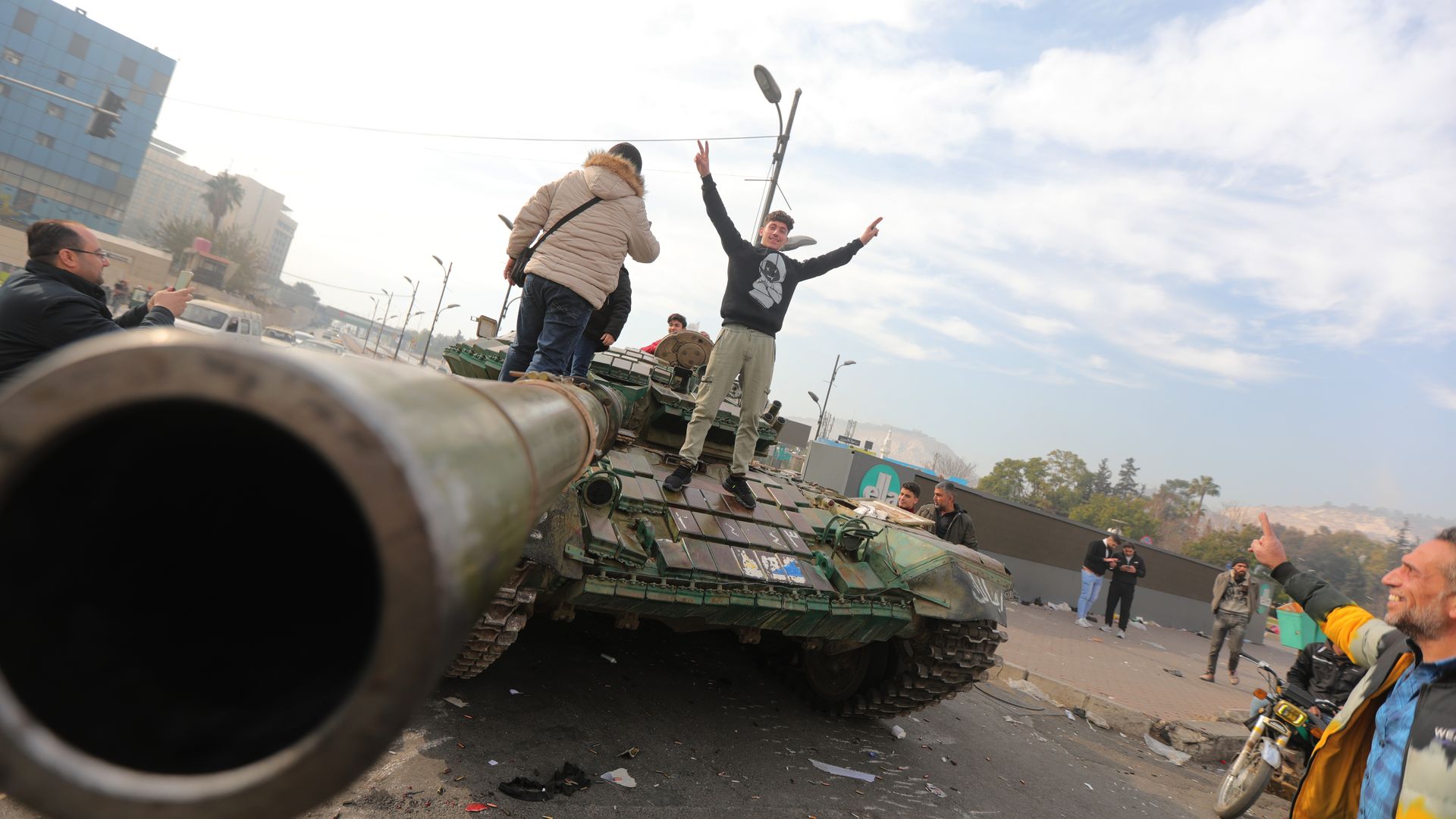
Syrian civilians celebrate the fall of the Assad regime in Damascus. Photo: Bekir Kasim/Anadolu via Getty Images
The U.S. is working with several other countries in the Middle East to prevent chemical weapons possessed by the Assad regime from falling into the wrong hands, a U.S. official told reporters.
Why it matters: The U.S. and its allies are concerned that the collapse of the Syrian army and other security forces — and the chaos engulfing the country — will allow terrorist groups to seize dangerous weapons held by the Assad regime.
- "We will support Syria's neighbors — Lebanon, Iraq, Jordan and Israel — from any threat that could arise from Syria," President Biden said in a speech on Sunday.
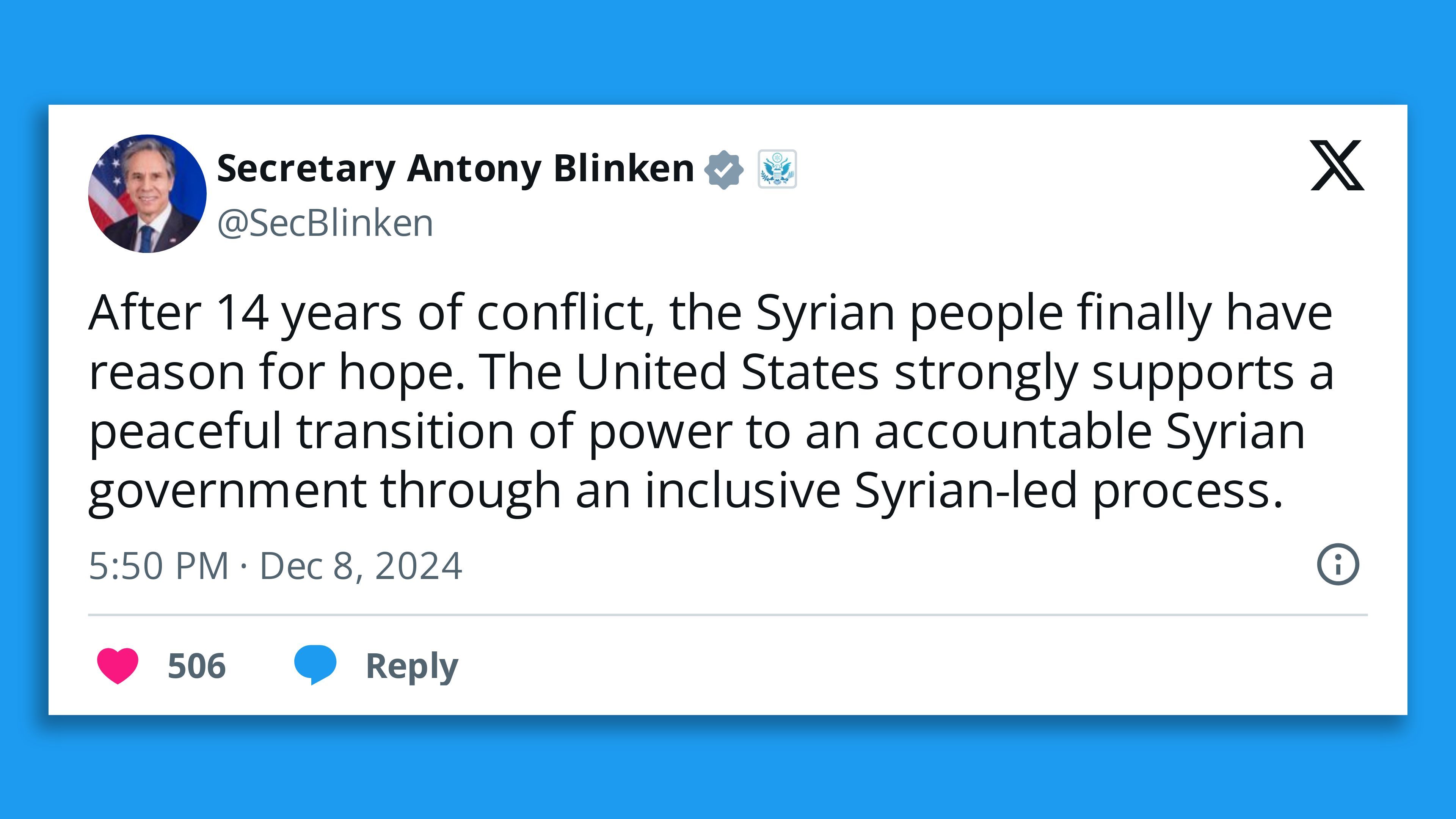
- Secretary of State Tony Blinken said in a statement Sunday, "We will support international efforts to hold the Assad regime and its backers accountable for atrocities and abuses perpetrated against the Syrian people, including the use of chemical weapons."
Flashback: The Assad regime used chemical weapons against Syrian civilians in 2013, violating the "red line" President Obama had set a year earlier when discussing what would trigger U.S. military intervention.
- Obama ultimately backed off on his threats to bomb Syria and cut a deal with Russia to destroy the Assad regime's chemical weapons stockpiles.
- But U.S. and other Western intelligence officials believed the regime violated the deal and retained some of its chemical weapons.
State of play: Over the past 48 hours, the Israeli air force has conducted air strikes against dozens of Syrian military bases, arms depots and facilities that were part of Syria's chemical weapons and ballistic missile programs, Israeli officials said.
- "We have a responsibility to make sure strategic weapon systems don't fall into the wrong hands," an Israeli official told Axios.
- Meanwhile, the U.S. Central Command (CENTCOM) announced that it had conducted "dozens of precision airstrikes" that were designed to eliminate ISIS camps in central Syria on Sunday.
- The strikes were part of an ongoing mission "to disrupt, degrade, and defeat ISIS, in order to prevent the terrorist group from conducting external operations and to ensure that ISIS does not seek to take advantage of the current situation to reconstitute in central Syria," per a CENTCOM statement.
Behind the scenes: A U.S. official who briefed reporters on Sunday said the Biden administration has been focused in recent days on Syria's chemical weapons.
- The official said the U.S. has "good fidelity" on the status of Syria's weapons inventory and that U.S. intelligence experts believe it is still under control.
- "We are taking very prudent measures about this ... We are doing everything we can to ensure that those materials are not available to anyone and are cared for," the official said.
- "We want to make sure that chlorine or things that are far worse are destroyed or secured. There are several efforts in this regard with partners in the region," they added.
The other side: As the Syrian rebels were making their way to Damascus on Saturday, they issued a statement from their joint war room stressing that they had no interest in the Assad regime's chemical weapons.
- The rebels said they would treat the Assad regime military bases and facilities with responsibility, pledging to secure the infrastructure and not allow it to fall into the wrong hands.
- The rebels also said they were willing to coordinate with the international community on the monitoring of weapons and sensitive sites in Syria, and to provide assurances that they will not used any weapons banned by international law.
The big picture: Biden laid out U.S. policy regarding the crisis in Syria for the remaining 43 days of his administration in a speech on Sunday.
- Biden said he will speak to Middle East leaders in the coming days and send senior U.S. officials to the region to discuss the situation.
- "We will engage with all Syrian groups to establish a transition towards an independent, sovereign Syria that serves all Syrians," Biden said.
- He stressed that it is up to the Syrian people to determine their future, but that the U.S. is ready to support the process.
Between the lines: Biden sent a message to the leader of the main Islamist group, Abu Mohammed al-Jolani, without mentioning him or his Hayat Tahrir al-Sham (HTS) organization by name.
- "Some of the rebel groups that took down Assad have their own grim record of terrorism and human rights abuses," Biden acknowledged.
- "We have taken note of statements by the leaders of these rebel groups in recent days. They're saying the right things now, but ... we will assess not just their words, but their actions," he warned.
The intrigue: The U.S. official who briefed reporters hinted that the Biden administration has been communicating in recent days with all Syrian opposition groups, including HTS.
- "We are in contact with all Syrian groups and we have ways to communicate with everybody in Syria," the official said.
What's next: Biden stressed that any future government in Syria should respect the rule of law and protect minorities.
- He called the end of the Assad regime "a fundamental act of justice" but cautioned: "It will be a waste of this historic opportunity if one tyrant were toppled, only to see a new one rise up in its place."
Go deeper: Syria's Bashar al-Assad fled to Moscow, Kremlin says
Editor's note: This article has been updated with comment from Secretary of State Tony Blinken.
