Trump-district Democrats put speakership in reach for Hakeem Jeffries

Add Axios as your preferred source to
see more of our stories on Google.
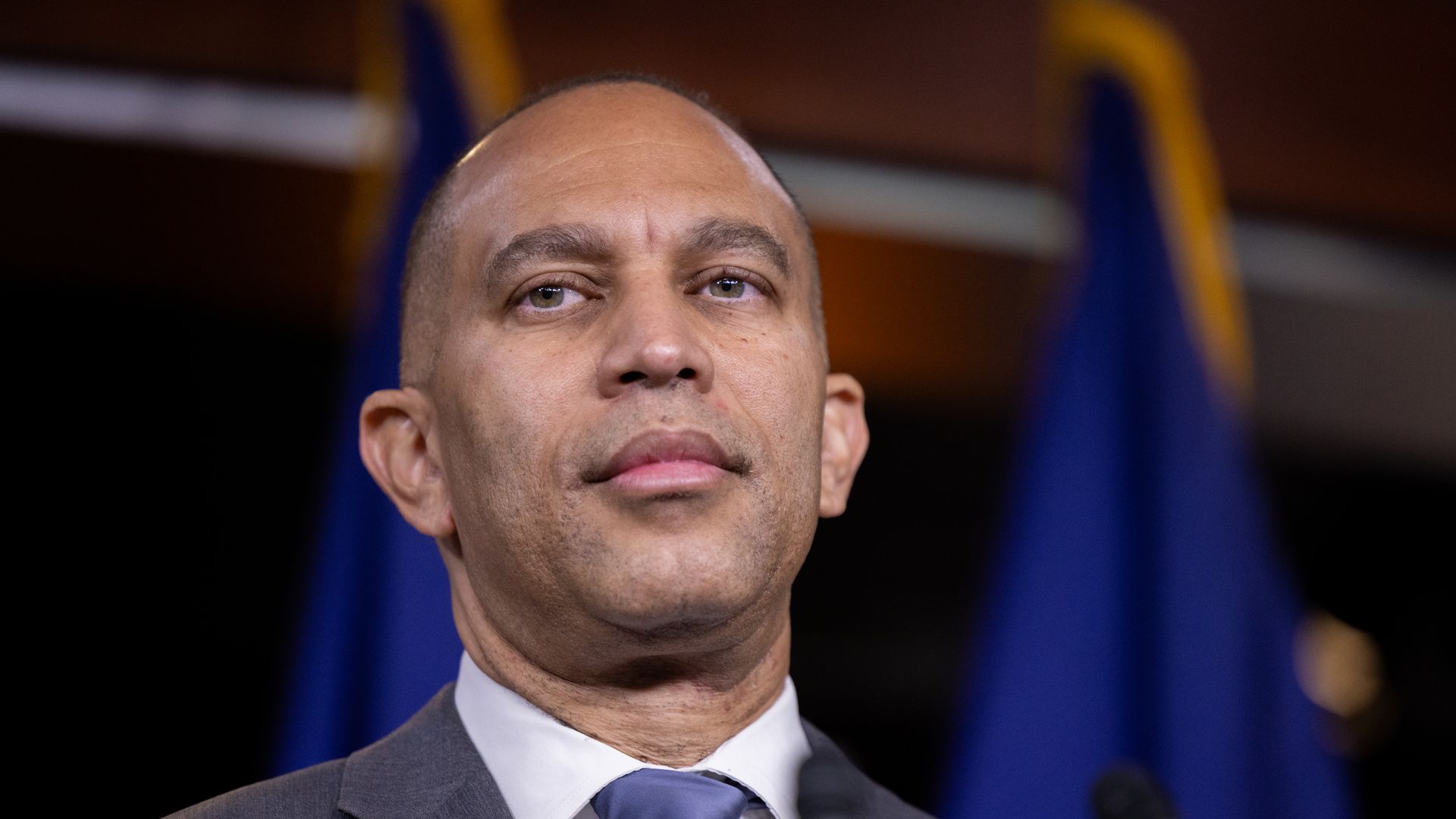
Photo: Nathan Posner/Anadolu via Getty Images
House Minority Leader Hakeem Jeffries' (D-N.Y.) path to the speakership will run through President-elect Trump's home turf.
Why it matters: The strategy (and math) are pretty basic for Jeffries, who needs to pick up just three seats in the next midterms to win the majority.
- Return all 13 Democrats who won in what appear to be Trump districts.
- Then pick off three of the four GOP lawmakers who won in what appear to be Harris districts.
- Redistricting has shrunk the number of House districts that are truly competitive. That's making those races nasty, brutish and anything but short.
Zoom out: For a leader who wants to seize his party's resistance mantle, the existence of 13 Democrats in Trump districts will make his job harder. Jeffries, like Pelosi before him, knows a unified caucus will make him a more powerful force.
- With Republicans sitting on a three-seat cushion (which will be zero for several months), Jeffries can drive a hard bargain on everything from funding the government to raising the debt ceiling.
- If he maintains strict party discipline, he has the opportunity to embarrass Johnson on nearly every vote for the next two years.
- But Jeffries will have to choose his battles wisely and determine when to give those 13 Democrats a pass on tough votes. Sometimes, members will have to vote their districts at the expense of party unity.
By the numbers: November's elections showed both parties it's possible, but expensive, to beat entrenched incumbents.
- Democrats took out seven of the 16 GOP incumbents in Biden districts.
- Republicans took out two of the five Democratic incumbents in Trump districts.
- The challenge for Democrats in 2026 is that the four Republicans that now represent Harris districts are proven survivors. Still, Democrats think they'll be more vulnerable to drive out when Trump isn't on the ticket.
The intrigue: For Democrats, the 2026 map is almost a reverse image of the 2024 one, when Speaker Mike Johnson had to defend incumbents in 16 Biden seats with only five Democratic targets in Trump districts.
- Turnout in midterms varies significantly from a presidential cycle, a phenomenon that's been particularly pronounced in the Trump era.
- That means districts that looked Trumpy in 2024 might be more purple in the midterms.
- And there's always a chance the parties can draw more favorable seats via redistricting, like Republicans did in North Carolina.
What they're saying: "In a difficult national political environment, House Democrats defied political gravity, returned the overwhelming majority of our battleground incumbents, flipped 10 GOP-held seats this year and eradicated any extreme MAGA Republican hope of a so-called overwhelming mandate," said Justin Chermol, spokesperson for Jeffries.
- "In the new Congress, we will hold the narrow Republican majority accountable for any instance of overreach and self-dealing that undermines working-class Americans."
