Biden envoy: Lebanon and Israel now at decision point on ceasefire deal

Add Axios as your preferred source to
see more of our stories on Google.
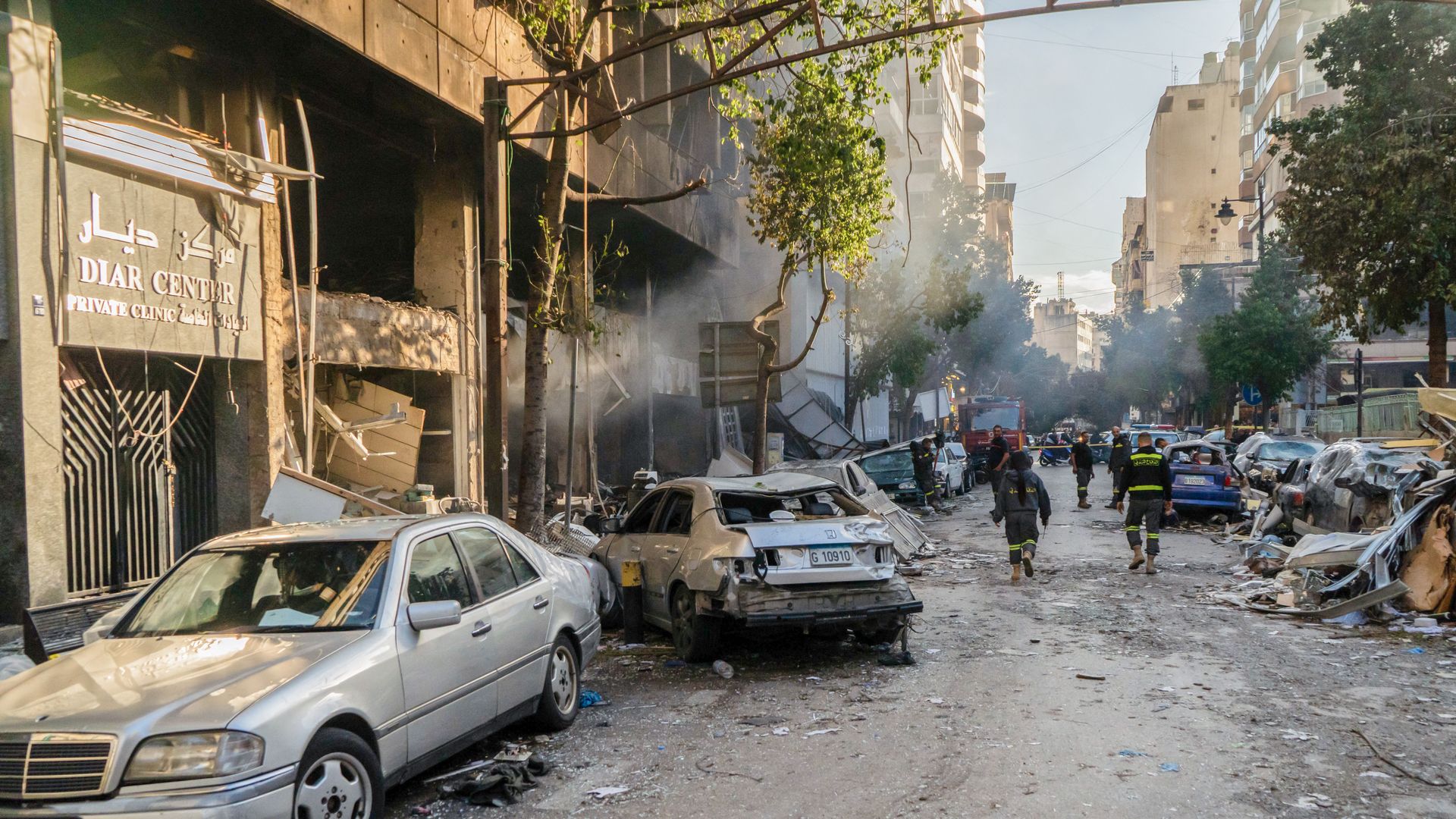
Aftermath of the Israeli strike that targeted the neighborhood of Mar Elias in central Beirut, Nov. 18 2024. Photo: Nael Chahine/Middle East Images/AFP via Getty Images
President Biden's envoy Amos Hochstein said on Tuesday in Beirut that Lebanon and Israel have reached "a moment of decision-making" regarding a ceasefire agreement.
Why it matters: Hochstein traveled to Beirut on Monday in an effort to finalize a deal to end the war between Israel and Hezbollah.
- The draft agreement includes a ceasefire and 60-day transition period — during which the Israeli military would withdraw from southern Lebanon, the Lebanese army would deploy in areas close to the border and Hezbollah would move its heavy weapons north of the Litani River.
- More than 3,500 Lebanese have been killed and close to 15,000 injured in the fighting, which has been escalating since Hezbollah first attacked Israel on Oct. 8, 2023.
- A ceasefire deal would be a major achievement for Biden in his final months in office. It would also serve President-elect Trump's interests and take one Middle East crisis off his plate.
The latest: Hochstein met on Tuesday in Beirut with speaker of parliament Nabih Berri, who is negotiating on Hezbollah's behalf.
- Hochstein said the meeting was "very constructive" and added that talks are continuing to narrow the gaps on the ceasefire deal.
- "We have a real opportunity to bring this conflict to an end. This is a moment of decision-making for the parties...an end to the conflict is within our grasp," he stressed.
Driving the news: Hezbollah's response to the draft agreement, delivered Sunday night, was a "yes, but," U.S. officials said.
- Hochstein was supposed to leave for Beirut on Monday morning, but decided to delay his departure until getting a clearer answer about the Lebanese position, U.S. officials told me.
- Two hours later, the Lebanese came back with an updated response that convinced Hochstein to go to Beirut.
- If talks in Beirut are successful, Hochstein is expected to travel to Israel on Wednesday.
State of play: Israel has significantly increased the number of airstrikes in Lebanon, including Beirut, in recent days, and it's expanded its ground operation in southern Lebanon.
- Israeli officials said the aim was to increase the pressure on Hezbollah to agree to the ceasefire agreement.
Between the lines: According to the Lebanese press, Hezbollah and the Lebanese government are concerned about a clause in the ceasefire agreement that says Israel will have the right to defend itself against threats from Lebanon.
- Israel has asked the Biden administration for a side letter that would guarantee its "freedom of action" in Lebanon.
- The letter would include a U.S. commitment allowing Israel to take military action in Lebanon if the Lebanese army and UN peacekeepers don't prevent Hezbollah from reestablishing military activity near the border, or from smuggling heavy weapons into Lebanon, U.S. and Israeli officials said.
What they're saying: Israeli Prime Minister Benjamin Netanyahu said on Monday at the Knesset that Israel is demanding that Hezbollah withdraw its forces north of the Litani River. Israel also must have the ability to prevent Hezbollah from rearming, he said.
- "We won't allow Hezbollah to go back to where it was on Oct. 6," Netanyahu said.
- State Department spokesperson Matthew Miller said on Monday the U.S. is "making progress" on the Lebanon ceasefire talks and added "we are determined to get the negotiations over the finish line."
