Why Trump is demanding recess appointments for his Cabinet

Add Axios as your preferred source to
see more of our stories on Google.
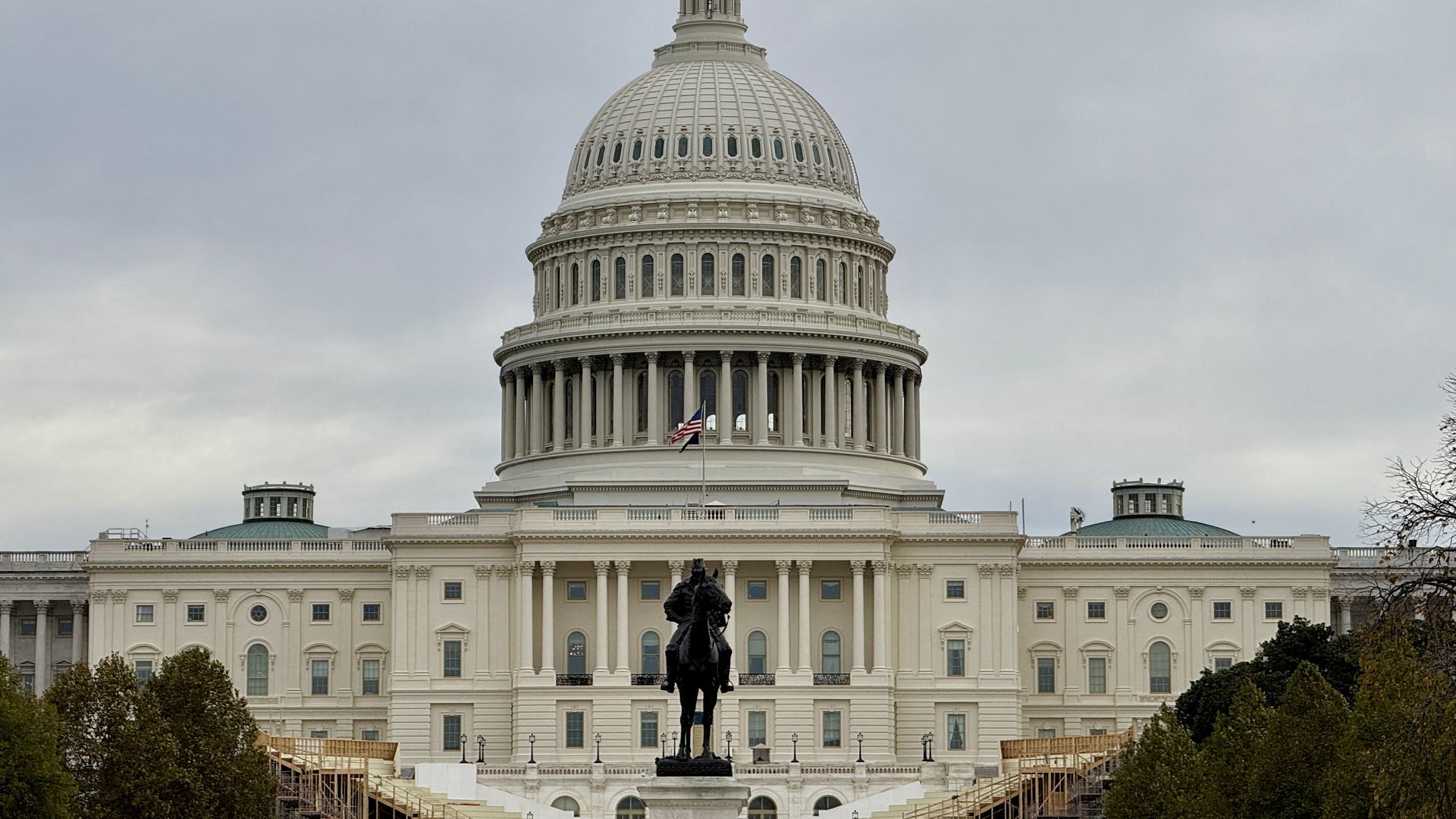
The U.S. Capitol is seen in Washington, D.C. on Nov. 10. Photo: Daniel Slim/AFP via Getty Images
As President-elect Trump rolls out his Cabinet picks, he has called on the Senate to allow for recess appointments — a process that would allow him to install officials without congressional approval.
Why it matters: By demanding recess appointments, Trump is asking the Senate to surrender its advise-and-consent role for Cabinet confirmations, a key lever in the system of checks and balances against presidential power.
- Trump could use this power in an unprecedented way, potentially forcing Congress into a recess, then using it to make unilateral appointments, Charles Cameron, a professor of politics and public affairs at Princeton University, told Axios Thursday.
- Trump's "gambit would be a gigantic delivery of power to the President," the professor said.
- "This power transfer goes against senators' very DNA," he added.
Driving the news: Ahead of the Senate Republican leadership race, Trump laid out his demands on social media Sunday.
- "Any Republican Senator seeking the coveted LEADERSHIP position in the United States Senate must agree to Recess Appointments (in the Senate!), without which we will not be able to get people confirmed in a timely manner," Trump wrote.
- "We need positions filled IMMEDIATELY!" he added.
- Sen. John Thune (R-S.D.), who won the leadership election Wednesday, has already signaled an openness to recess appointments.
What are recess appointments?
One of the main duties of the president is to make appointments across the federal government, including Cabinet positions, ambassadorships and judges.
- A president can expect to make roughly 4,000 political appointments, about 1,200 of which require Senate confirmation, according to the Center for Presidential Transition.
The big picture: Since Congress isn't continuously in session, the Constitution allows for "recess appointments," permitting the president to temporarily install officials without approval while Congress is adjourned.
- This is meant to help avoid prolonged vacancies and keep the government running smoothly.
- However, these appointments are still expected to eventually be confirmed by the Senate when it returns from recess by the end of the two-year congressional term, Cameron pointed out.
Why does Trump want them?
Trump claims he wants to use recess appointments to speed up the pace of appointments, since the process would allow him to circumvent public, lengthy, and potentially thorny Senate confirmation hearings.
- Yet recess appointments have frequently been used as a political maneuver to circumvent congressional opposition and appoint officials that might not get enough Senate votes.
Between the lines: That could come in handy for Trump, who has outlined an array of controversial, MAGA-aligned Cabinet picks.
- No one is sure to test the Senate's patience more than Matt Gaetz, Trump's nominee for attorney general who the House Ethics Committee was investigating for sexual misconduct and illicit drug use.
- If appointed, Gaetz will lead the Justice Department, which last year decided not to bring charges against him over sex trafficking allegations.
- Gaetz has denied the allegations against him, which included having a sexual relationship with a 17-year-old girl.
Have recess appointments been used before?
Past presidents have frequently used recess appointments, though neither Trump — during his first term — nor President Biden have made use of them, per the Wall Street Journal.
- President Obama made 32 recess appointments during his time in office, while President Clinton made 139 and President George W. Bush made 171, according to the Congressional Research Service.
Caveat: The Supreme Court outlined limits to recess appointments in 2014, ruling that Obama had overstepped his constitutional authority by using them in 2012.
- The ruling established that the Senate had to be on break for at least 10 days before recess appointments could be made.
How exactly would it work?
The logistics of how Trump would execute the recess appointments could get tricky, since his proposal "has never been done before," Cameron told Axios.
- Whether Trump can unilaterally make the appointments before the new Senate convenes in January is questionable and subject to debate among constitutional lawyers, Cameron noted.
- The most "obvious" way to go about it would be to allow the Senate to form in January and then make the appointments when it first goes on recess, the politics professor said.
Zoom in: If that doesn't work, the Constitution gives Trump the power to adjourn Congress if one chamber goes on recess and the other doesn't.
- While it's unclear whether the incoming Republican-majority Senate would actually refuse to recess, Trump's nomination of Gaetz has drawn sharp opposition within the GOP.
- "So if the Senate refuses to recess but the more cooperative Republican House does, Trump could recess the whole Congress and do his recess appointments," Cameron said.
Go deeper: Trump's middle finger: Gaetz for attorney general
