Deal reached on proceeds from DNA data-sharing

Add Axios as your preferred source to
see more of our stories on Google.
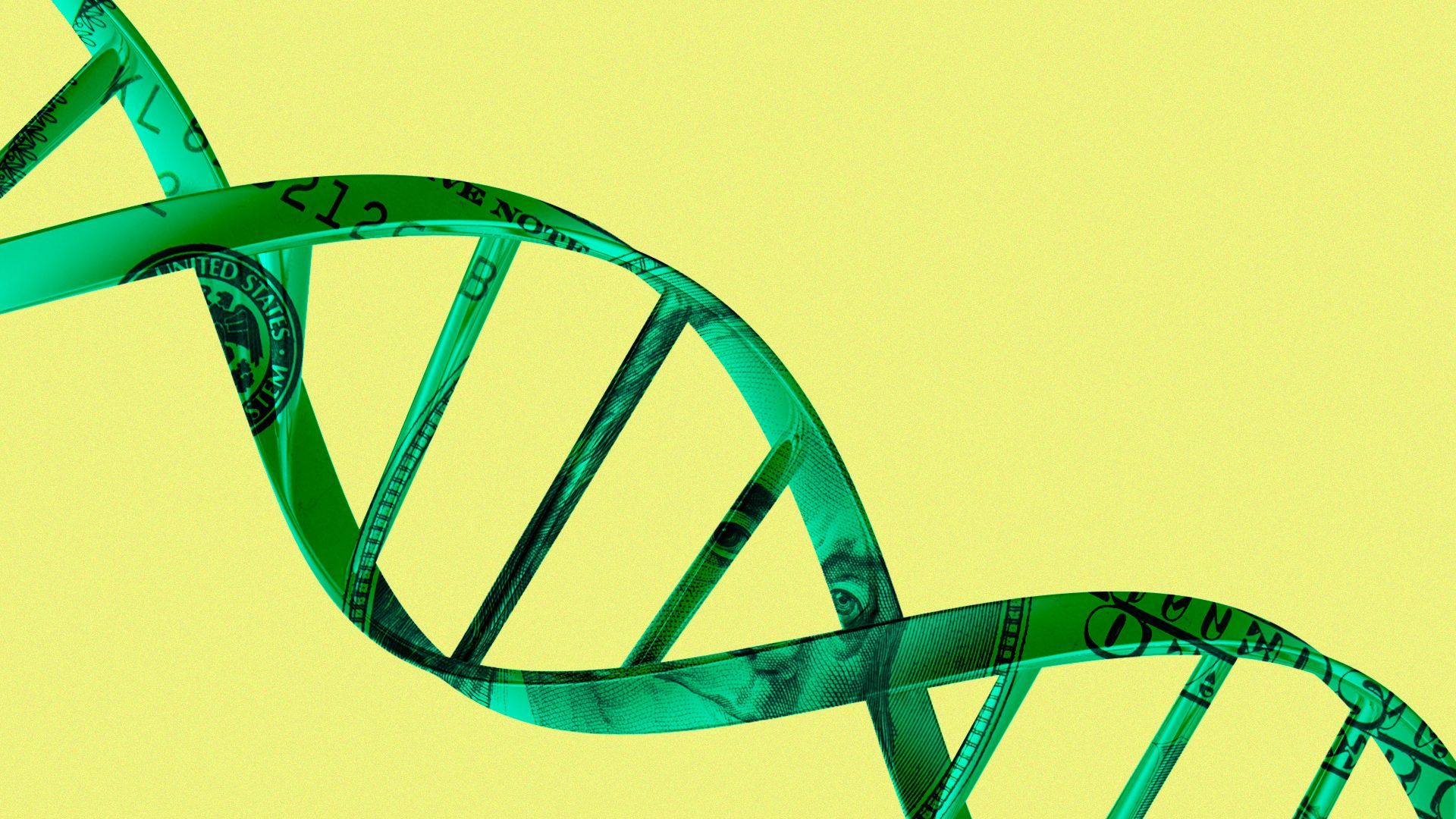
Illustration: Gabriella Turrisi/Axios
Almost 200 countries at a UN biodiversity conference in Colombia agreed on a system for distributing proceeds from products derived from genetic information into a global conservation fund.
Why it matters: Countries are seeking fair compensation for their resources, which they could restrict access to without a system for sharing the billions of dollars and other benefits from using genetic sequences to make drugs, cosmetics and agricultural products.
Driving the news: The benefit-sharing plan hammered out at the Convention on Biological Diversity and finalized last weekend is voluntary and states that "large companies and other major entities benefiting commercially" from genetic sequencing information stored in databases "should contribute" to the fund.
- Companies should pay 1% of their profits or 0.1% of their revenue, according to the agreement.
- Academic, public research institutions and other entities that use genetic sequence information but don't directly benefit from it financially are exempt.
- Half of the funds are expected to support Indigenous people and local communities.
- 196 nations were represented at the talks in Cali.
What they're saying: The International Federation of Pharmaceutical Manufacturers and Associations on Saturday said the decision "does not get the balance right between the intended benefits of such a mechanism and the significant costs to society and science that it has the potential to create."
- But there's still concern among some that the plan doesn't do enough to discourage companies from shortchanging lower-income countries, Nithin Ramakrishnan, a senior researcher at Third World Network, which advocates for human rights and benefit sharing, told Vox.
- UN Under-Secretary-General Inger Andersen said in a statement that the new mechanism is a "big win" that "will ensure that those who profit from biodiversity give back to nature, countries and communities."
What to watch: The specifics of how the fund will be divided still need to be decided, and will depend on factors including the extent of their biodiversity and the amount of genetic information they produce.
- There is still a long list of decisions and negotiations about how the nonbinding plan is implemented in different countries.
- The U.S. is not a member of the Convention on Biological Diversity treaty that would facilitate the benefit sharing.
- But companies that are based in the U.S. could still contribute because they operate in the EU and other places where "this new plan will likely be honored," per Vox.
