What's behind Trump's big lead in prediction markets


Add Axios as your preferred source to
see more of our stories on Google.
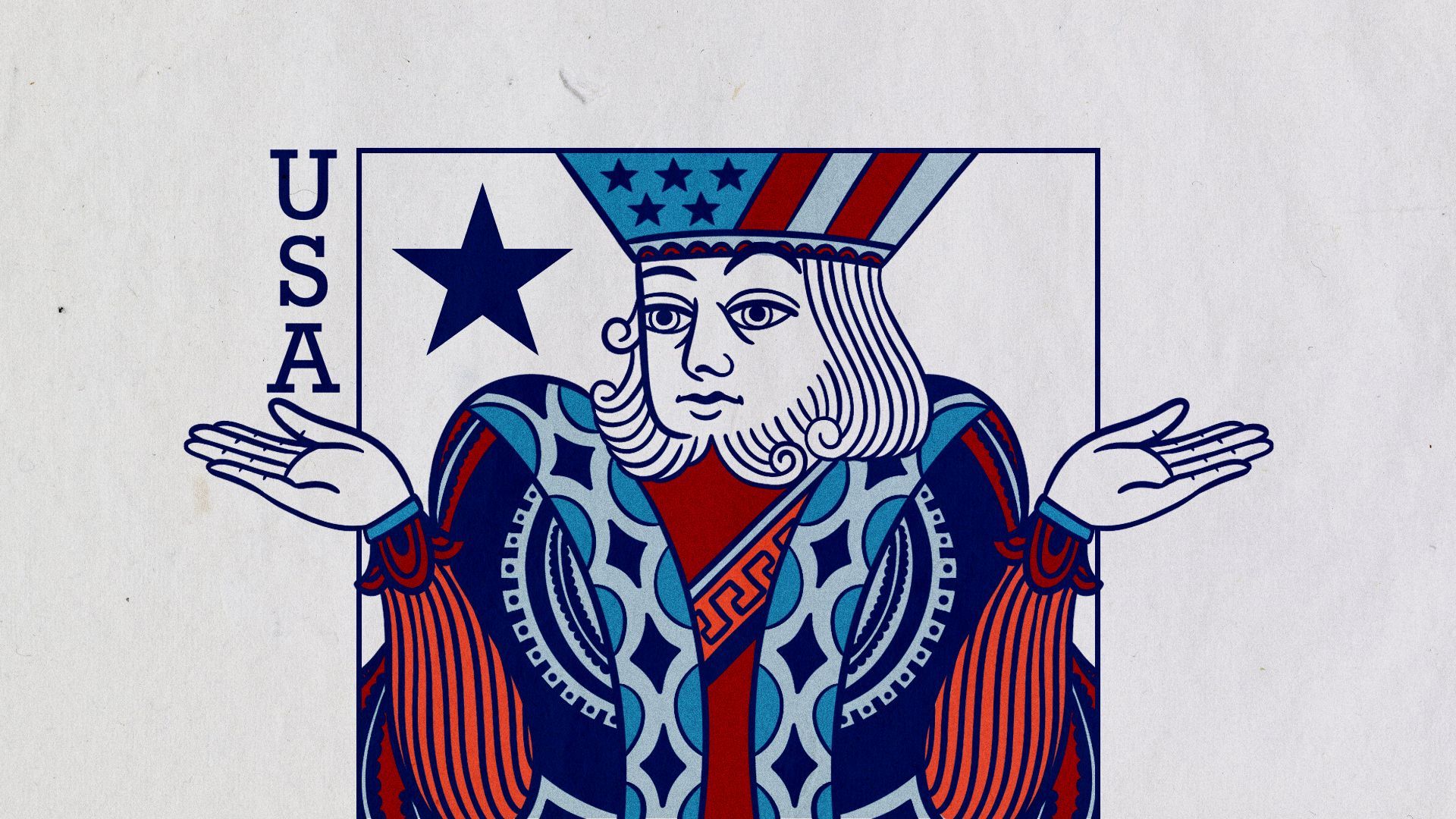
Illustration: Maura Losch/Axios
The stark disparity between how prediction markets and political analysts view the 2024 presidential election is casting a spotlight on an increasingly influential but still poorly understood force in politics: betting.
Why it matters: Prediction markets — like Kalshi, PredictIt and Polymarket — give Donald Trump a much better shot to win the U.S. presidency, leading some observers to suggest that if Kamala Harris prevails, it will represent a failure of the market's predictive power.
How it works: In the typical prediction market — say, the market for who will become the next president — bettors can buy shares in each market for whatever price the market deems fair, based on the odds of the outcome.
- An unlikely outcome might trade for 33 cents, and a likely outcome might trade for 88 cents — those prices are determined entirely by demand (which is why they are called markets).
- The profit from a bet is the difference between the price of each ticket and that final $1 payout.
The intrigue: Large bets can sway prediction markets, in part because there aren't enough bettors to prevent the biggest wagers from having an outsized impact.
- Cryptocurrency-based Polymarket has reportedly fielded $30 million in bets in recent weeks from four accounts — possibly the same person, according to an expert quoted by the WSJ — that have called attention to whether someone may be attempting to influence public sentiment about the election.
- The company has since said a French national with "extensive trading experience and a financial services background" was behind all four accounts, and that there was no evidence to suggest attempted market manipulation.
State of play: On Polymarket, the largest global operator (albeit illegal in the U.S.), Trump had a 59.3% chance of winning as of Wednesday afternoon.
- But the political analysts at 538 put it at a tossup, with Trump at a 51% chance of winning.
What they're saying: "These markets can be moved by big money, and that big money is not necessarily making bets based on who they think is actually going to win the election," Brad Allen, senior analyst at consultancy Eilers & Krejcik Gaming, tells Axios.
The other side: Kalshi, which provides markets legally to U.S. bettors, says betting activity on its platform indicates its market is operating exactly how it should — pros who see mispriced odds appear to have stepped in with big Harris bets. Without those, the market would be even more lopsided in Trump's favor.
- There are 1.5x the number of people betting on Trump on Kalshi as there are on Harris. Kalshi acknowledges that biases could be fueling the greater number of Trump bettors. For instance, the pro-Trump demographic could be more prone to using political betting sites. Or what if they are just more confident in a Trump victory than Harris bettors are?
- Meanwhile, on average, Harris bets are now much larger than bets for Trump. "The indication is that these are the sharps" — or sophisticated traders — "and market makers balancing out the grassroots Trump support," the company says.
Reality check: Even if you think these markets are easily manipulated, consider this: The larger, more liquid foreign sportsbooks that offer betting lines on the U.S. election — and are not so easily influenced by big wagers — are aligned with the prediction markets.
- For example, on BetMGM Canada, the betting line on Trump to win the election was -175 on Monday afternoon (i.e. you have to bet $175 to win $100).
- That's an implied probability of 63.6%.
The big question: If the prediction markets stick to favoring Trump, and Harris wins, does that mean the market got it wrong?
- Not necessarily. A 4 in 10 chance at winning is still very realistic.
- "When we say a prediction market implies a 60% chance of a candidate winning, it means that if the election were held many times under similar conditions, we would expect the candidate would win 60% of those times and lose 40%," says Lloyd Danzig, managing partner at Sharp Alpha, an investment firm focused on sports, gaming and entertainment.
Yes, but: If the prediction markets don't favor the winner in 2024's most high-profile race, perhaps the public will be less apt to look there for answers in the future.
The bottom line: Odds aren't oracular — even a 99% chance is not a sure thing.
