Election betting is cleared, for now, by U.S. appeals court

Add Axios as your preferred source to
see more of our stories on Google.
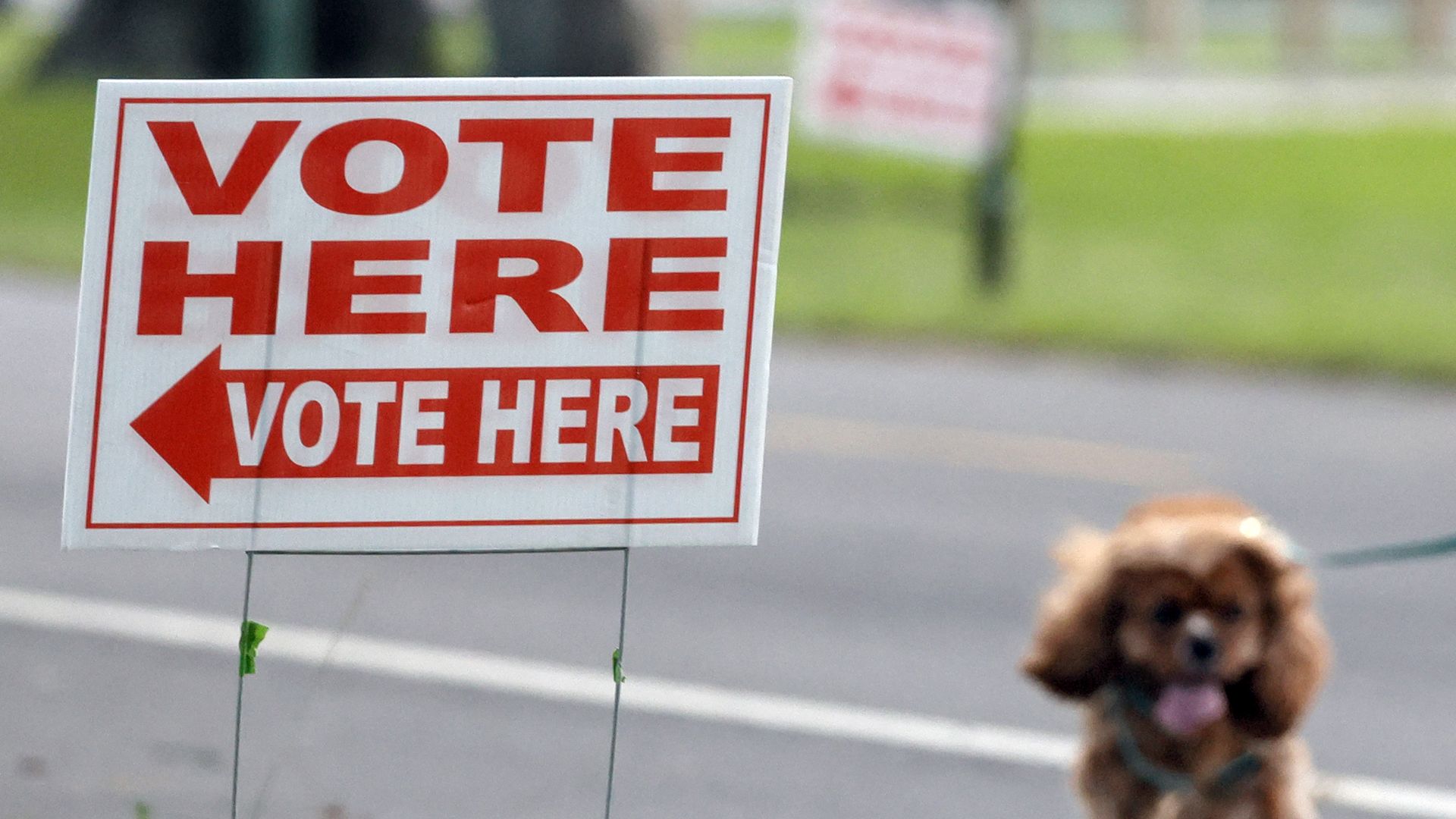
Primary election day in Florida. Photo: Amy Beth Bennett/South Florida Sun Sentinel/Getty Images
The prediction market startup Kalshi is clear, for now, to offer markets on which party will control each house of Congress after the next election.
Why it matters: Smaller markets offering bets on elections have existed for a long time and, per a federal appeals court ruling Wednesday, regulators objecting to Kalshi's markets were not able to show compelling evidence that those markets caused real harm to the public interest.
Driving the news: The D.C. Court of Appeals denied a motion from the Commodity Futures Trading Commission to block Kalshi from offering the betting contracts while it appeals a prior court decision.
- "The Commission has failed to make the essential showing of irreparable harm. But such a showing is not out of reach," Judge Patricia Millett writes for the D.C. Court of Appeals.
- The court enumerated some harms that might be seen if these markets open up. If they were to arise, then the court is open to reconsidering a stay.
- "This ruling is without prejudice," Millett noted, meaning that it's not permanent.
Between the lines: Simply showing the possibility of harm isn't enough to justify a stay, the court writes.
- "More to the point, the Commission has not explained why traditional tools for regulating market manipulation will not work in the election-contract context. For example, the Commission can serve subpoenas, call witnesses, and hold hearings to investigate whether someone is manipulating an event contract."
Catch up quick: Kalshi sought to be a regulated marketplace offering events-based markets for election outcomes, but the CFTC, its regulator, turned them down.
- Markets are currently available on Kalshi for events like: whether there will be another presidential debate, Rotten Tomatoes scores for films or recalls on Teslas.
- After the CFTC turned it down, Kalshi sued and won in district court, but the CFTC immediately appealed.
As of this writing, Kalshi has not listed the markets on its politics page.
The CFTC declined to comment to Axios. Kalshi did not immediately reply to a request for comment.
The other side: "The point here is that there is no way to undo the potential damage to the public interest of allowing bets in the final weeks of an election year," Stephen Hall, the legal director at Better Markets, an advocacy group, said in a statement.
- "We have yet another reason to be concerned about the upcoming elections."
The intrigue: On Polymarket, another prediction market startup, there's been $1.8 million bet on which party will control the U.S. Senate. In total, $660,000 has been bet on control of the House of Representatives.
- Polymarket is the current market leader for these sorts of bets, but it made an agreement with the CFTC in a 2022 settlement to take steps to exclude U.S. citizens from participating in its markets.
- "Whether Polymarket has complied," Millett noted in today's opinion, "is in question."
- Polymarket has not immediately replied to a request for comment on that line from Axios.
