Regulation is slowing deal environment, Nasdaq CEO says


Add Axios as your preferred source to
see more of our stories on Google.
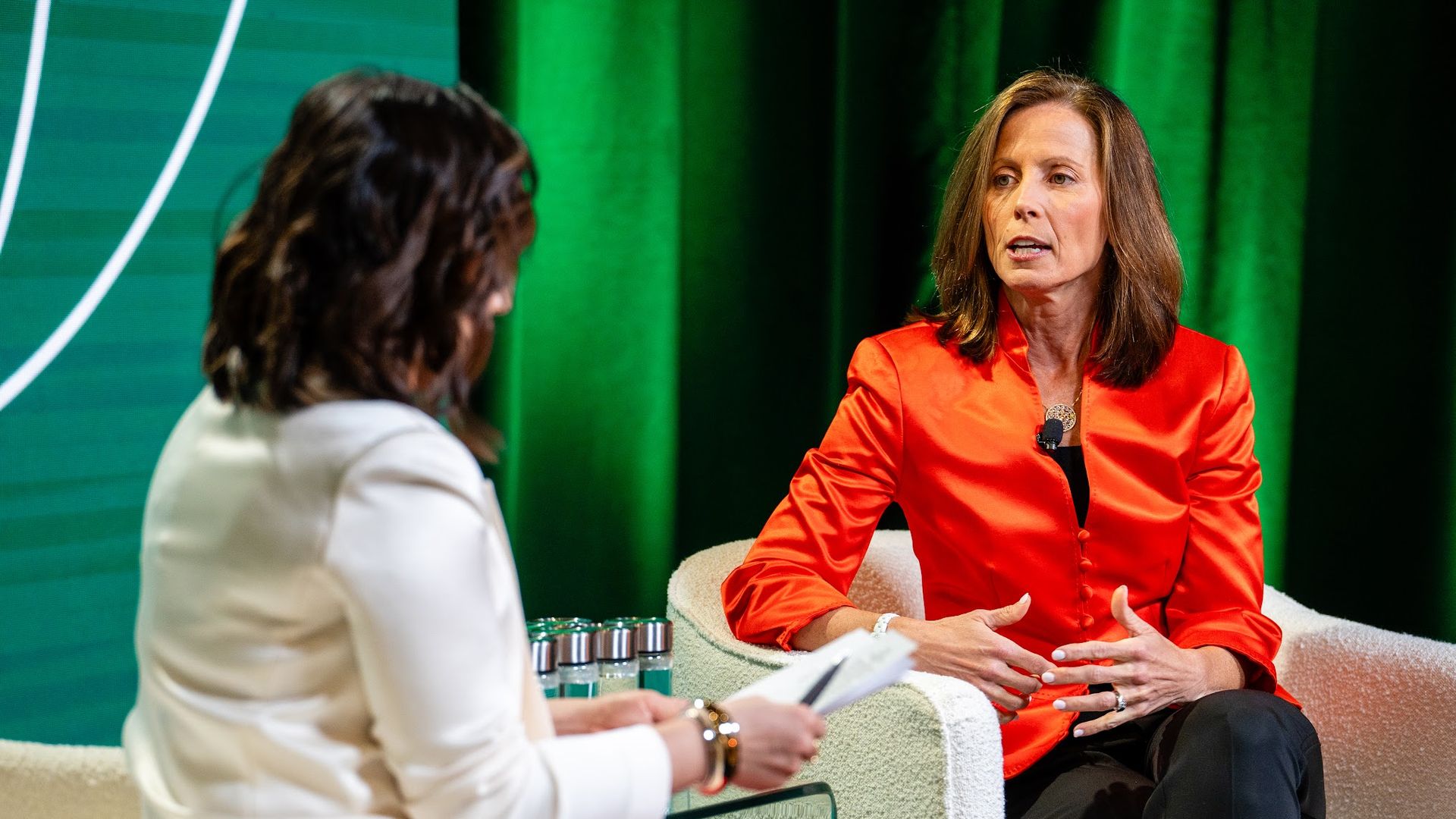
Nasdaq CEO speaks with Axios' Hope King at Axios BFD. Photo courtesy: Sam Popp on behalf of Axios
Heightened regulation is a major stumbling block for innovation and dealmaking, Nasdaq CEO Adena Friedman told Axios on Tuesday.
Why it matters: The FTC and DOJ have ramped up enforcement actions in response to the growing number of large transactions, leading to nearly a dozen mergers abandoned or restructured last year alone.
What they're saying: "If you're not careful, the antitrust process can have a huge chilling effect on the entire innovation ecosystem," Friedman tells Hope King at Axios' BFD event in New York.
- "The atypical approach that we're seeing within the FTC could have a ripple-down effect" on investors being willing to underwrite risk, she says, noting this dynamic tamps valuations and makes it more difficult for young companies to fundraise.
Between the lines: Friedman specifically called out the Federal Trade Commission's "non-standard" review processes, saying she was grateful that the Department of Justice oversaw Nasdaq's $10.5 billion acquisition of financial software provider Adenza last year.
- "It was a little bit more of a standard process. We closed the deal in five months."
The big picture: Dealmaking and public listings are facing myriad regulatory and economic pressures. FTC chair Lina Khan has specifically cited inflation and consumer protection as central to the agency's agenda.
Yes, but: "Over the last 15 to 20 years, inflation has stayed extremely low, which has allowed the country to maintain a very low cost of capital," Friedman says.
- "[Khan] may be responding to a very short-term situation which has nothing to do with acquisitions, and it has everything to do with other factors in the economy right now."
- The difference between the interest rate and the inflation rate is quite high, so we have to start to bring that down," Friedman says.
Zoom in: As the effects of lowered interest rates trickle down, Friedman sees IPO bright spots in health care (see Waystar and Tempus), noting the sector is a "big part of the portfolio that we have at Nasdaq."
- Large companies are getting even bigger, as "the index itself is weighted toward larger companies," — meaning public investors are reaping benefits, while smaller companies keep waiting for a better capital cost environment.
What's next: "As we get a more normalized and balanced cost of capital, I think you're going to see that the public markets become more attractive," Friedman says.
- While Friedman says both presidential candidates have Big Tech in their crosshairs, the election's outcome is otherwise not weighing heavily on the market.
The bottom line: Nasdaq is responsible for helping companies make a smooth IPO transition — but the government also has a duty to make it less onerous to be a public company, Friedman says.
Axios' Emily Hamilton contributed reporting.
