Courts foiling GOP's late push for election changes

Add Axios as your preferred source to
see more of our stories on Google.
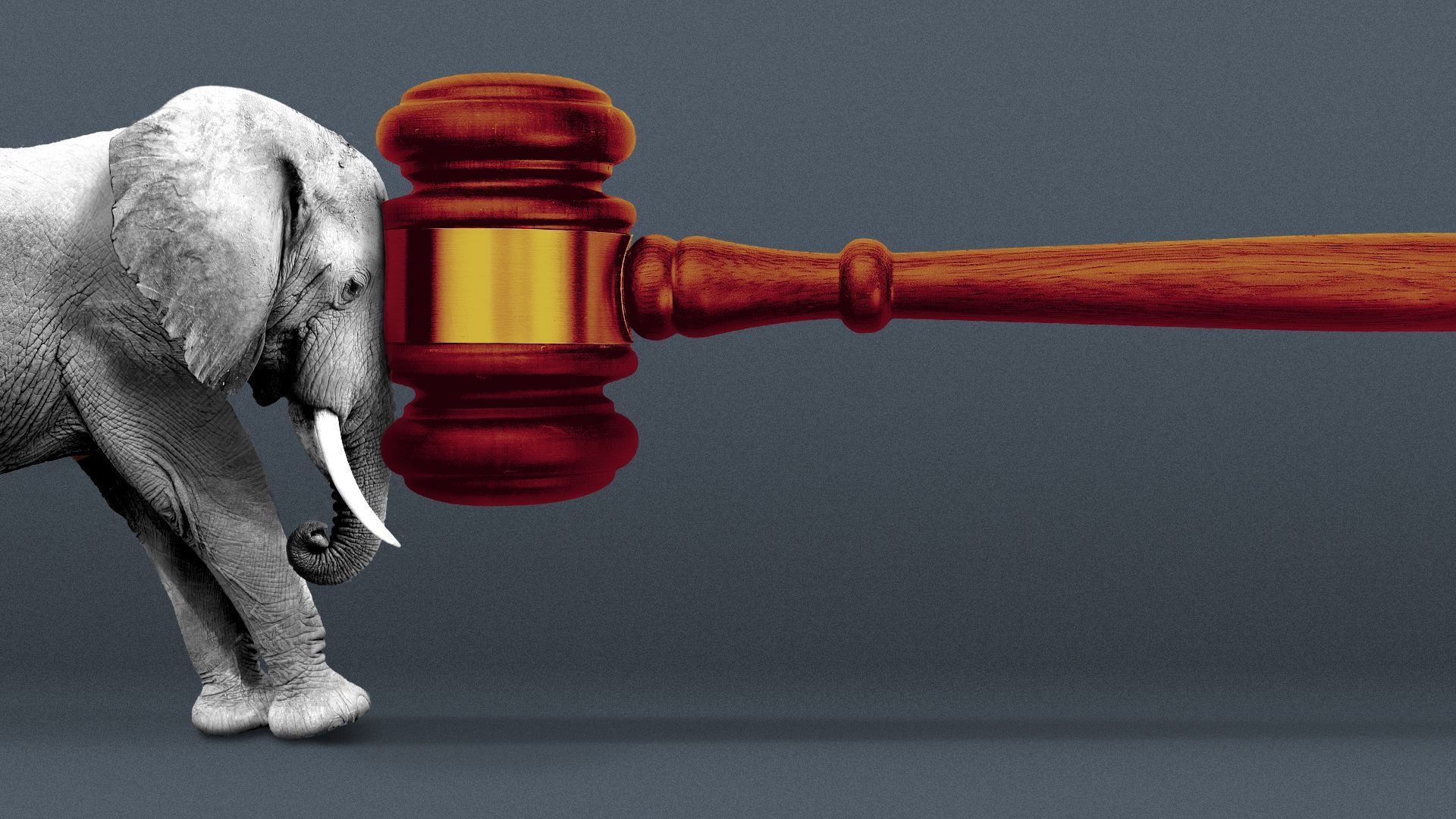
Illustration: Brendan Lynch/Axios
Judges in some of the nation's most important election battlegrounds have rejected a string of last-minute efforts by conservative and Trump-aligned groups to impose new voting rules ahead of Election Day.
Why it matters: Even as courts have shot down several of these challenges, election law experts are warning that the rejections could be used to promote conspiracy theories and misinformation about what polls suggest will be a very close presidential election.
- The challenges have come as former President Trump and his allies have built a roster of excuses for claiming fraud and rejecting the results of the 2024 election if he loses — much as he did in 2020.
Driving the news: In Georgia, a Trump-aligned majority of the state's election board passed a flurry of rules last month that would have changed how the election would be run in the state — including a measure to require poll workers to hand-count millions of ballots.
- Fulton County judges overturned that rule and others, including one that would have allowed Georgia county election officials to delay certifying election results merely by citing suspicions of fraud.
- Republicans have appealed the decisions, which Republican National Committee chair Michael Whatley called "the very worst of judicial activism."
In Arizona, a federal judge blocked an effort that would have required Arizona's 15 counties to check the citizenship of every federal election-only voter, which amounts to about 42,000 in the state.
- A federal judge ruled this month that the challenge from conservative advocacy group Strong Communities Foundation of Arizona lacked standing and was filed too close to Election Day.
In North Carolina, a Trump-appointed federal judge partially dismissed a lawsuit filed by GOP groups, including the Republican National Committee, that sought to remove 225,000 voters from the rolls in the swing state over improper voter registration.
In Nevada, a federal judge on Friday dismissed a suit by the RNC and Nevada's Republican Party challenging the state's voter rolls.
- The suit alleged in part that at least three counties had inconsistent numbers of registered voters compared to their number of adults over 18, per Democracy Docket.
In Nebraska, the state Supreme Court said last week that the state's top election official can't block people with felony convictions from voting after they serve their sentences.
- The ruling means that approximately 7,000 felons are now eligible to cast ballots in Nebraska, where the state's system of splitting electoral votes by congressional district could decide the election.
What they're saying: "What we've seen ... is courts across the country doing exactly what they're supposed to do: Defend the Constitution and protect our right to vote," said Jim Messina, a former campaign manager for Barack Obama and chair of the Democracy Defenders super PAC.
- "These courts stepping in is the last line of defense," he said, and they are "playing a key role in keeping things fair and making sure the game isn't rigged."
- Democracy Defenders will support state parties and their allies "to ensure that efforts by Trump and his followers to subvert the election results fail, just like they did in 2020," per the PAC's website.
The other side: Claire Zunk, the RNC's election integrity communications director, said Republicans' "unprecedented election integrity operation is committed to defending the law and protecting every legal vote."
- "We have engaged, and won, in record numbers of legal battles to secure our election. We have stopped Democrat schemes to dismantle election safeguards and will continue to fight for a fair and transparent election for all Americans," Zunk said.
- The RNC touts some of its successes with challenges over voter registration rules and mail-in ballot protocols in some swing states.
Zoom out: The number of lawsuits being brought over voting rolls doesn't seem to be "substantially higher" this cycle than previous ones, said David Becker, executive director of the Center for Election Innovation and Research.
- But "what's significantly different [this cycle] is when those lawsuits are being brought," he said.
Between the lines: The Justice Department requires states to complete "systematic programs aimed at removing the names of ineligible voters from voter registration lists" to be imposed no later than 90 days before a federal election, otherwise known as the "quiet period."
- The DOJ has sued Alabama and Virginia, accusing them of violating the "quiet rule" by flagging thousands of voters as noncitizens or potential noncitizens within this 90-day period.
- Trump has used the DOJ lawsuit in Virginia to falsely claim that the department is trying to help Democrats "cheat on the election."
What to watch: "Courts are not going to fall for this, they're not going to let people just make crazy claims in court and allow that to stand as evidence in elections," Becker said during a media briefing last week.
- "But we'll absolutely see it on social media," he added. "We'll absolutely see claims being made by losing candidates that (are) designed to fuel anger."
