Mark Cuban takes his PBM fight to employers

Add Axios as your preferred source to
see more of our stories on Google.
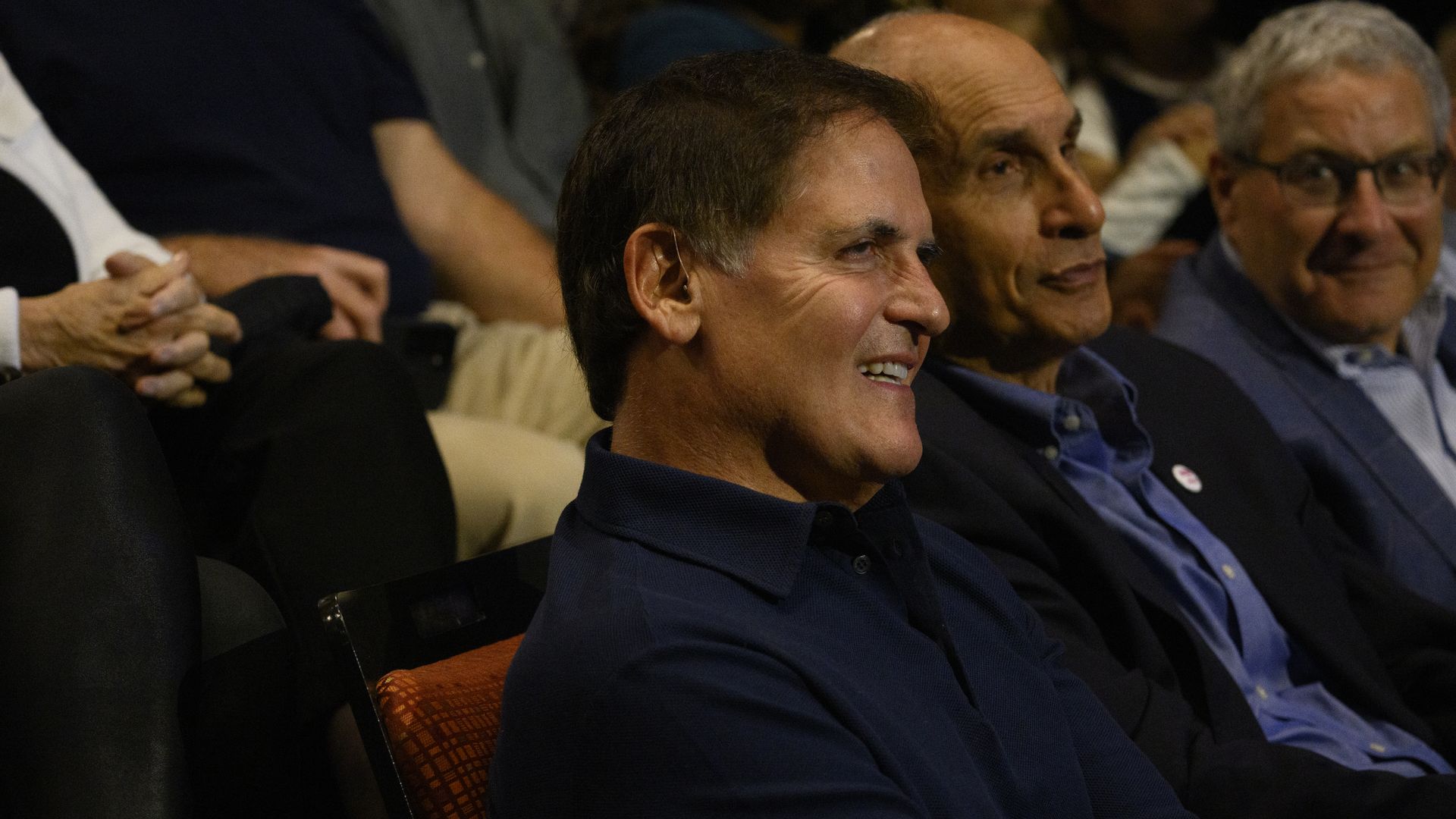
Mark Cuban. Photo: Jeff Swensen/Getty Images.
The latest calls to revamp the prescription drug market and lower prices are coming from billionaire Mark Cuban, who's urging corporations to dump the middlemen that handle their drug benefits and shop for better deals with providers and smaller companies that will pass through their savings.
Why it matters: Cuban, a prominent backer of Vice President Kamala Harris, believes a streamlined, more transparent system will generate more savings than direct government price negotiations.
- The problem is large employers so far are loath to get involved in direct give-and-take with the health industry.
- "They have no idea what they're doing with health care and so they defer to somebody who defers to somebody else," Cuban told a group of reporters in Washington, D.C., this week.
Zoom in: The co-founder of Cost Plus Drugs disrupted health care with his direct-to-consumer online pharmacy that cut wholesalers, pharmacies and insurers out of the equation.
- His latest focus is pharmacy benefit managers like CVS Caremark, Express Scripts and Optum Rx that corporations hire to help them manage their drug costs but that critics say don't always find the best deals.
- He said he sees a tipping point coming, because companies increasingly face a legal threat if they mismanage workers' health benefits or just don't deliver on promises to hold down medical bills.
- "I'm going out there and talking to a lot of CEOs ... explaining to them they're getting ripped off."
Cuban latest venture, Cost Plus Wellness, is direct contracting with providers to cut middlemen out of health insurance for his roughly 4,000 employees.
- He said he's told providers the company will pay in cash when a procedure is done or a medication is prescribed, eliminating the risk they won't get paid in a timely fashion or at all.
- "Nobody's saying 'No,' and in some cases, I'm getting lower than Medicare pricing," he said.
- The most important part, he said, is he plans to publish the contracts, whether on the health care side or the pharmacy side, so other employers can see the deal and better negotiate deals for themselves.
Inside the room: Transparency is part of a bigger message he's been pushing directly with the Harris-Walz campaign.
- "If you introduce transparency, even to the point of requiring PBMs and insurers to publish their contracts publicly, then you start to introduce an efficient market."
- The message appears to be getting through: Harris outlined a plan Tuesday for a Medicare home care benefit, to be funded in part by PBM reforms.
Yes, but: The question is how many big employers will follow suit. CVS, Express Scripts, and Optum still control almost 80% of U.S. prescriptions.
- And while 54% of employers recently told the Business Group on Health they're strongly considering or implementing transparent PBM models, change could come slow.
- A comparatively small number of firms have begun making the jump to smaller PBMs that pass through their savings and offer transparent pricing.
- Moving to direct contracting arrangements can be resource-intensive and complex.
The other side: "CVS Caremark is proud of the work we continue to do to protect American employers, unions, and patients from pharma price gouging," the company said in a statement to Axios.
- A spokesperson pointed to its TrueCost product that offers greater visibility and predictability in pricing.
- "We are clear-eyed about where the PBM industry needs to go over the next few years, and we have been leading the way with differentiated solutions that make pharmacy benefits simpler, more transparent, and more affordable."
- A spokesperson for the PBM trade group PCMA said the vast majority of U.S. employers hire PBMs because they save employers and patients billions on their drug costs.
Between the lines: PBMs already are facing increasing scrutiny from policymakers and regulators.
- Last month, the Federal Trade Commission sued the three biggest, alleging they inflated insulin prices.
- CVS, UnitedHealth Group and Cigna moved on Tuesday to block Democratic commissioners on the FTC from weighing in on the agency's pending challenge to the industry. They are following an increasingly common playbook tested by companies like Meta and Amazon.
- The two Republican members of the commission have already been recused.
Reality check: Cuban stands to make money on the disruption of PBMs.
- For instance, Cost Plus Drugs is working to get more branded drugs on its list of available products. But drug manufacturers are often saying they can't do business with Cost Plus because it might risk their spot on a large PBM formulary.
- "I'm not looking to make a nickel here and make a nickel there, arbitrage the whole thing," Cuban told Axios. "If you don't use Cost Plus, but you just kick the big three or big five or six PBMs to the curb, that's spiritual karma. I'll take it."
