Two states blasted by storms tweak voting rules

Add Axios as your preferred source to
see more of our stories on Google.
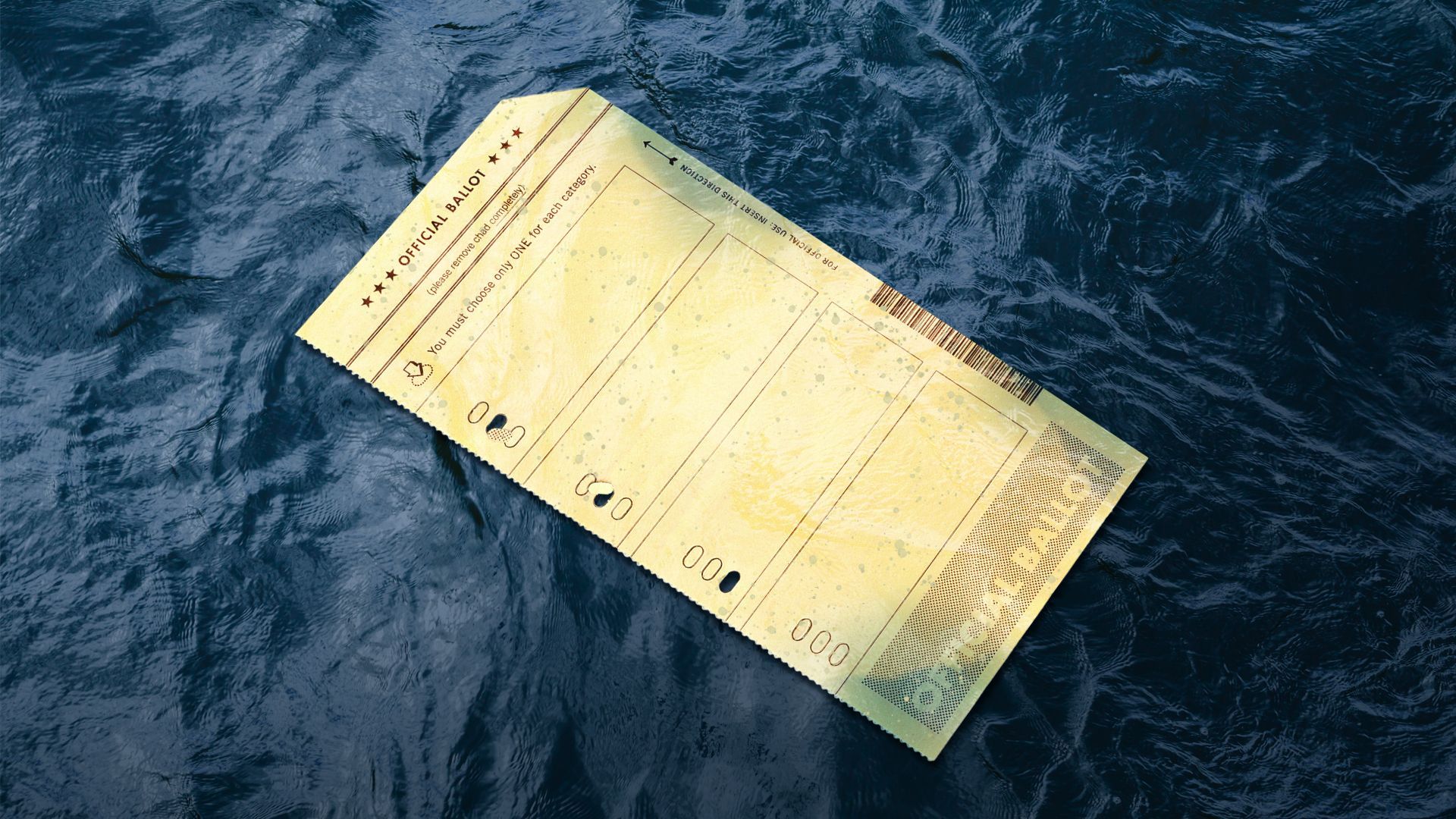
Illustration: Sarah Grillo/Axios
Officials in North Carolina and Florida are racing against the clock to put in new voting procedures aimed at making it easier to cast ballots after the devastating storms that tore through the states.
Why it matters: The changes — which include modifying early voting days and increased flexibility with some voting locations — reflect the growing concerns about the storms' impacts on the Nov. 5 election.
- Together, the states account for 46 Electoral College votes in what's expected to be a very close election. North Carolina, with 16 electoral votes, is among the seven swing states likely to decide who wins the White House.
- "There is and should be real concern that if we don't get this right, we'll see really big dropoffs in turnout," said Kevin Morris, a senior research fellow and voting policy scholar with the Brennan Center's Democracy Program.
Unlike the 2020 election, when Republicans opposed pandemic-related changes such as expanded mail-in voting, both parties are encouraging new rules to help people vote.
- One possible reason for the GOP's change of heart: In North Carolina — a swing state that's particularly key to former President Trump's pathway to victory — 8% of eligible voters are in counties impacted by Hurricane Helene.
- Those include many voters in rural, Republican-leaning areas.
State of play: North Carolina's elections board this week unanimously approved emergency measures for the 13 western counties hit hardest by Helene.
- The changes include allowing county election boards to modify early voting days, hours and sites — and open a polling place in another county if their own polling site has been impacted.
- Boards also may allow any voter in the county who is unable to get to their Election Day precinct voting site to cast a ballot at the county's elections office.
- North Carolina lawmakers on Wednesday also approved legislation to give $5 million to the State Board of Elections for post-storm administration costs — and expand the emergency rules to 25 counties.
The changes could help many North Carolinians vote, but voting isn't likely to be top of mind for those with profound losses.
- "If your basement is flooded, or if you are displaced and you have to go live with your grandma in another state ... voting is going to drop down your list of priorities," Morris said.
In Florida, Gov. Ron DeSantis (R) signed an executive order after Helene that authorized election changes in the hardest-hit counties.
- The order allows election supervisors to consolidate voting centers or relocate them to a different site if a polling place has been destroyed. It also eases some rules for mail-in ballots.
But some voting rights groups are urging DeSantis to do more, such as re-opening voter registration.
- Voting rights advocates also point to what happened after Hurricane Michael, which hit Florida's Panhandle a few weeks before the 2018 midterms. They say consolidating polling centers might have contributed to a drop in voter turnout then.
Between the lines: Vice President Harris' North Carolina team says it's spent more than $30,000 on voter relief efforts in the state. It's also working in 28 local offices to support voters across the state.
- Harris' team has a unit dedicated to voter protection. It's tracking changes to voting procedures in the state — and communicating the changes to voters, according to a source familiar with the efforts.
- Similar efforts are underway in Florida, a source familiar with that plan told Axios.
What they're saying: "We are working closely with our legal and voter-protection teams and the N.C. Democratic Party to ensure that every eligible voter is able to safely make their voices heard," Dory MacMillan, spokesperson for Harris' North Carolina team, said in a statement.
Trump, who has amplified false claims about federal assistance to those impacted by Helene, said during a town hall this week that "we're trying to make it convenient for them to [vote], but they just lost their house."
- His team has donated supplies, food and fundraising to affected families, according to a campaign official.
- Trump's campaign says it's also working with local officials and state lawmakers to help elections run smoothly — and trying to make sure dispersed residents have voting information.
- Republican National Committee chair Michael Whatley praised North Carolina's legislature for its "quick and comprehensive action" to help North Carolinians vote.
Reality check: Trump's sudden embrace of expanded access to voting is a reversal not just from his efforts in 2020, but also from his rhetoric during this campaign cycle, when he's generally backed restrictions to voting.
Go deeper: How N.C. will administer an election in Helene's wake
Axios' Lucille Sherman contributed reporting from Raleigh, N.C.
