Axios Crypto

October 10, 2024

GM! I'm in Salt Lake City for Permissionless III. This town is wildly well-kept. If you want to learn more about the place, check out our newsletter there.
- Have thoughts? [email protected]
Today's newsletter is 1,022 words, a 4-minute read.
1 big thing: 🧼 Market fakers
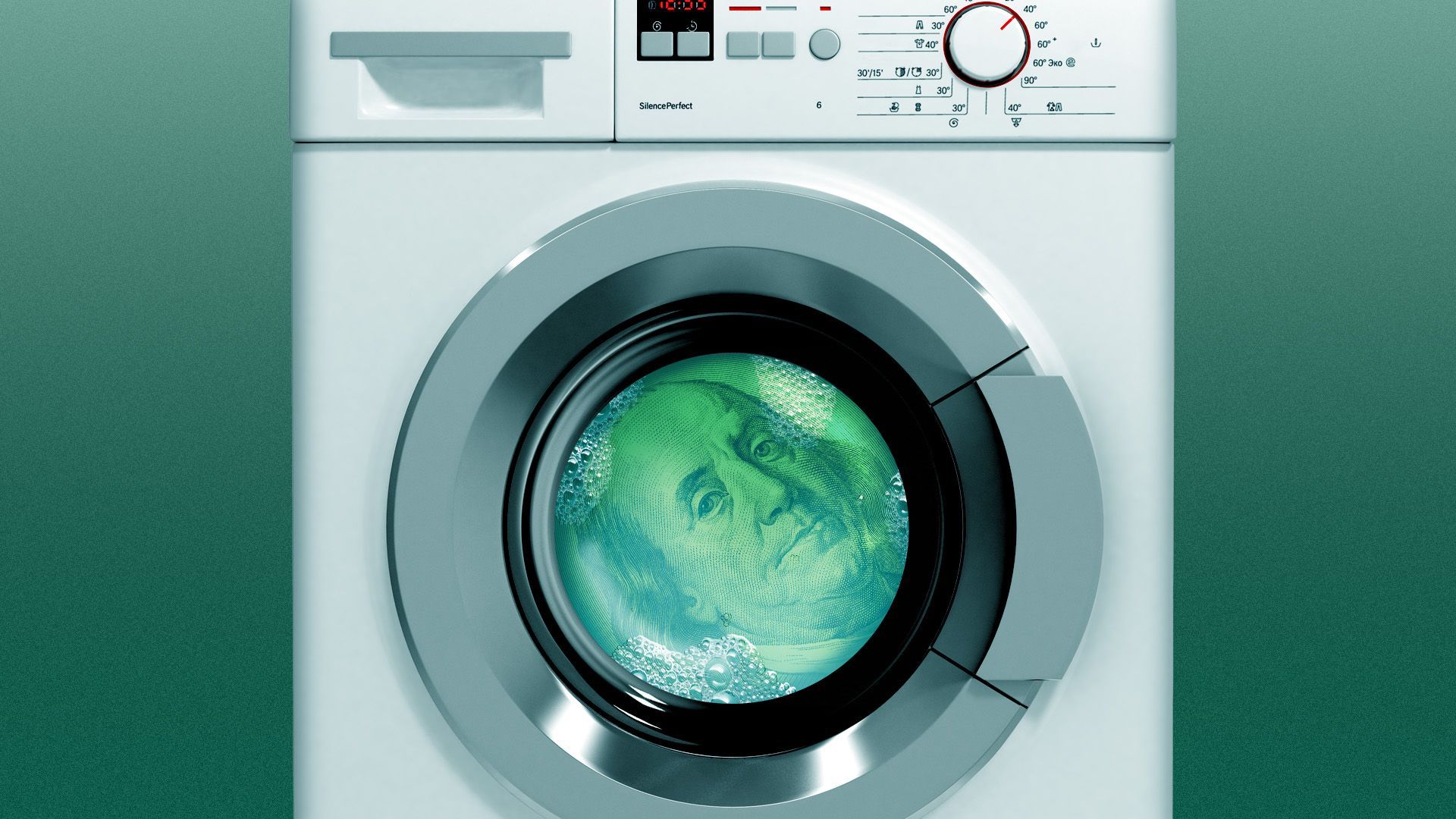
The Justice Department and the SEC have accused a group of firms of faking volume on crypto exchanges to make certain tokens look more popular than they are.
Why it matters: One of the reasons regulators have been reluctant to put the stamp of legitimacy on digital assets (such as by approving exchange-traded products) is because the space is known to be filled with market manipulation.
The latest: The two agencies took action yesterday against multiple individuals for "wash trading."
- The DOJ brought charges against 18 people and entities.
- The SEC brought action against three companies and nine individuals.
How it works: Wash trading is the practice of setting up multiple accounts on exchanges (centralized and decentralized) and executing trades for a token between all those accounts.
- It's essentially buying a bunch of things from yourself.
- The trades appear to represent demand for the asset, but it's all fake.
- Done in enough volume, it supports or raises the price of a token. And this can lead to other traders buying it just to take advantage of the momentum.
Driving the news: "What the FBI uncovered in this case is essentially a new twist to old-school financial crime. 'Operation Token Mirrors' targeted nefarious token developers, promoters, and market makers in the crypto space," said FBI special agent Jodi Cohen of the Boston Division.
The intrigue: Law enforcement created a fake crypto company, NexFundAI, as part of its investigation.
Fun fact: One of the firms named, Gotbit, is familiar to close followers of crypto news. The co-founder, Alexey Andryunin, described to CoinDesk in detail how generating fake volume works back in 2019.
Zoom out: There's a perverse incentive here for exchanges because they will earn fees for all the transactions needed to execute a wash trade scheme.
- But there's also a corresponding disincentive: They lose trust if users believe they're not taking measures to combat fake trading.
The bottom line: Market making is a legitimate business. It's not unusual for firms in various financial markets to contract with someone to be ready to buy and sell a given asset if someone comes to do business.
- What's not OK is taking both sides of most of the trades to make it look like there's more demand than there is.
2. 🔢 By the numbers: Ohio gets tighter
/2024/10/10/1728573349935.gif?w=3840)
A race we've been following closely, Ohio's U.S. Senate campaign, got tighter this morning, according to new polls from Marist and the Washington Post.
Why it matters: Ohio is the most expensive Senate race in the nation. It's driven in no small part by crypto money that's poured in to support Bernie Moreno, the Republican challenger to Senate Banking Chair Sherrod Brown.
The latest: Marist shows Brown leading 50% to 48%, but that's within its 2.9% margin of error.
- The Washington Post puts it closer: Brown leading, 48% to 47%, with a 3.5% margin of error.
- That's either a four- or five-point jump for Moreno, since the late September New York Times/Siena poll.
Between the lines: Brown has been seen as an obstacle to moving crypto legislation in the Senate, which is why so much attention has been on the Senate Ag Committee.
- Moreno has launched a blockchain company.
What they're saying: "Before our investment, one of the leading anti-crypto senators was on a path to victory. Now a pro-crypto leader is in a position to win," a Defend American Jobs spokesperson tells Axios.
3. 🥸 AI fueling more fakery

AI has unlocked a powerful tool being sold to money launderers to create phony accounts on cryptocurrency exchanges, according to new research from Cato Networks, a computer security firm.
Why it matters: Fraudsters need lots of accounts to cash out ill-gotten gains, as they play Whac-A-Mole with the trust and safety teams at the digital asset platforms.
Between the lines: Etay Maor of Cato CTRL, Cato Networks' threat intelligence lab, has released research that details how the attack works.
- First, AI swiftly generates fake documents, such as passports. In the example they've seen, it's been done for a person who doesn't exist.
- These accounts often require live proof of humanity, such as selfies or a video. And that's where the deepfake comes in:
- AI can generate photos or a video that matches the document and fools an automated agent.
"These accounts are important because they are a vital point in the attack life cycle," Maor tells me.
Threat level: Abilities like this allow fraudsters to scale the operational end of their money moving.
- "While in the past I've seen this done in a very professional manner with document forgers, now it's done in just a much more accessible manner," Maor says.
Zoom in: A ransomware, pig butchering or identity fraudster needs to give their victim someplace to send the money so they can cash out. Obviously, they don't want to put their name on the account retrieving the ill-gotten gains.
- With services like these, criminals can change identity with every payment. This decreases the friction at a key bottleneck for fraud.
In the weeds: A video with the blog post demonstrates how an AI photo can be used to create an identity for dozens of companies.
- An AI program makes a fake video from that photo that matches the specifications of a specific cryptocurrency exchange.
- It also syncs up so the video seems to be coming from the device's camera.
What we're watching: Social engineering.
- Fraudsters proficient at manipulating support employees at companies in real time are likely to find these kinds of tools extremely useful for extending the reach of their cons.
Maor recommends that companies look for glitches in the artifacts sent their way and introduce some randomness in their approach from account to account.
- For example, if they verify with video, they can vary the instructions given from video to video.
- Humans can be brought in to double-check, but of course, this increases the onboarding friction for legitimate users.
4. 🏃 Catch up quick
🏦 Apparently, the Trump-endorsed World Liberty Financial really is looking to be part of the world of Aave, the leading DeFi lending application. (The Block)
💰 Coinbase Ventures is shifting its strategy to fewer, bigger bets. (Axios Pro: Fintech Deals)
🐊 Prosecutors recommended 18 months in prison for Razzlekhan. (CoinDesk)
This newsletter was edited by Pete Gannon and copy edited by Carolyn DiPaolo.
😕 That Bitcoin documentary on HBO was a bummer on multiple levels: lots of rehashing well-worn stuff and a thin new assertion about the identity of Satoshi. How did that thing get a green light? —Brady
📌 Axios BFD, our dealmakers summit, will take place in NYC on Oct. 22 featuring leaders from Nasdaq, Mastercard and Consensys. Request an invite here.
Sign up for Axios Crypto