Locals turn to legacy media as hurricane rumors swirl


Add Axios as your preferred source to
see more of our stories on Google.
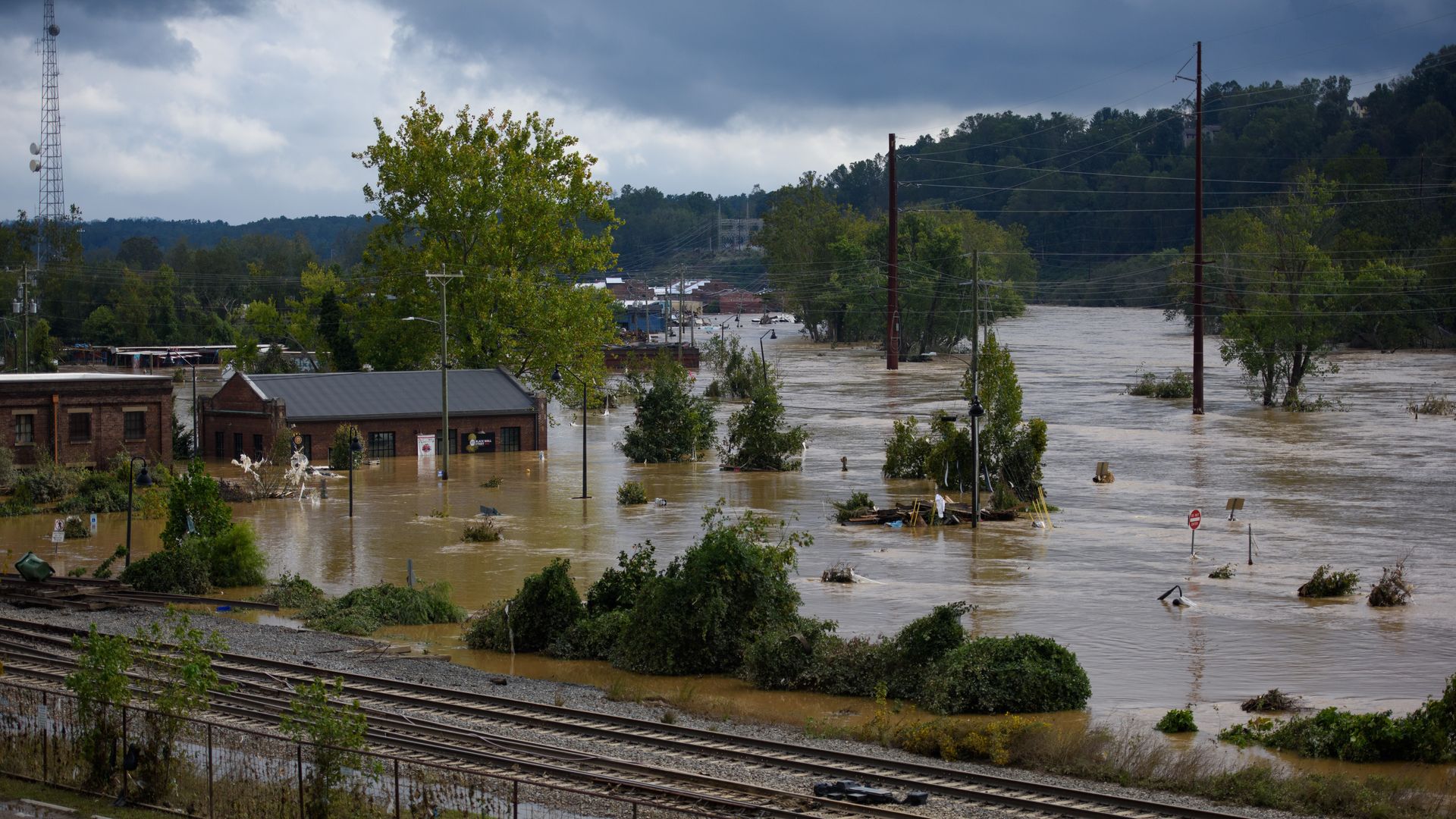
Heavy rains from Hurricane Helene caused record flooding and damage on Sept. 28 in Asheville, N.C. Photo: Melissa Sue Gerrits/Getty Images
Old-fashioned legacy media — especially radio — have become a vital information lifeline in the chaotic aftermath of Hurricane Helene.
Why it matters: Power outages, lost cell signals and hundreds of road closures have stifled on-the-ground reporting, giving way to falsehoods that can spread quickly online — and creating an urgent need to correct them.
- Local reporters are working overtime to correct the record. In many cases, they're filling an information void left by local government officials who were caught off guard by the severity of the storm's flooding in mountainous regions around Asheville, North Carolina.
Driving the news: Fact-checkers and local reporters have debunked dozens of viral photos and videos that were doctored or posted out of context, including an AI-generated video of a tornado looming over a local shopping mall and others of first responders rescuing deer in boats.
- They're also helping to debunk online rumors about the safety of drinking water and the security of critical dams.
- In one case, an online hoax about a dam collapse caused unnecessary evacuations in North Carolina, officials said.
The intrigue: A viral photo of a washed-out Interstate 40 near the border of North Carolina and Tennessee on Friday illuminated the perils of newsgathering on social media.
- The photo turned out to be real. But when state officials couldn't verify it themselves and called its authenticity into question, several news organizations and meteorologists with large followings deleted posts that included it.
- Knoxville's local TV station ultimately obtained video to prove the damage was real.
State of play: Local radio has become a lifeline for people inside and outside the region dealing with poor cell signals and no electricity.
- Blue Ridge Public Radio and News Radio 570 WWNC are taking calls live on the air from people hoping to connect with loved ones.
- Radio tends to be one of the most resilient signals during major weather catastrophes, but Blue Ridge Public Radio has also established a web page for hurricane updates should any of its signals go down.
Even with minimal resources, local media has proven critical in providing real-time updates to locals about everything from road damage to trash services and rescue operations.
- The Asheville Citizen-Times, a Gannett-owned paper that's endured numerous staff reductions in the past decade, has been all over the storm coverage, with photos and stories on relief efforts.
- Independent outlets like the Smoky Mountain News and Mountain Xpress have been making first contact with local leaders to get information out about water deliveries and other relief efforts.
Yes, but: Even their reporters are struggling to find power and cell service, as Smoky Mountain News publisher Scott McLeod noted in a post Sunday.
Go deeper: How to support western N.C. communities devastated by Helene
