School cellphone bans spread nationwide

Add Axios as your preferred source to
see more of our stories on Google.
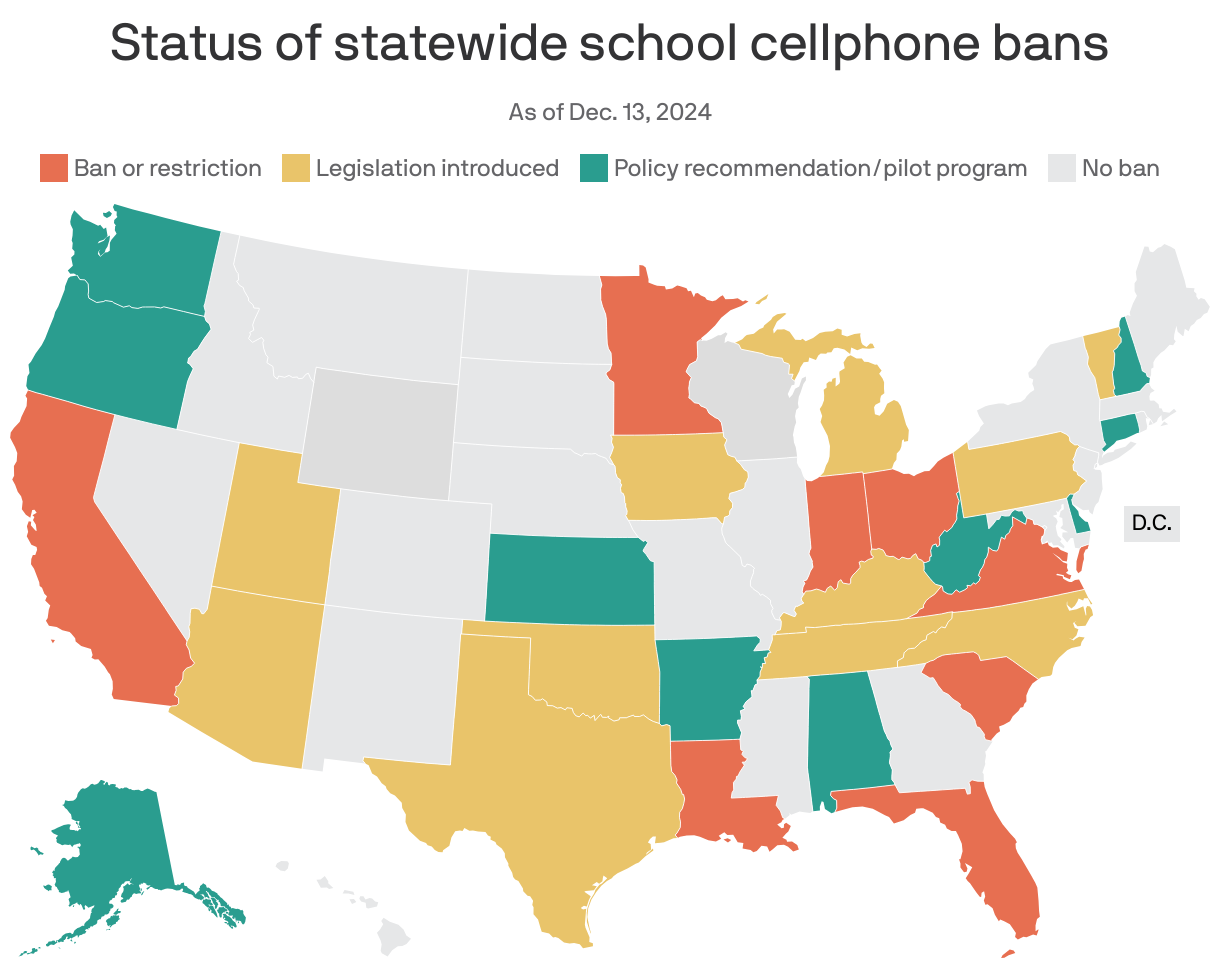
More than half of U.S. states have taken steps to ban or restrict cellphone use in K-12 schools, a new analysis finds.
Why it matters: Even some students admit that their phones can be hugely disruptive during class, and cyberbullying is a persistent issue — but many parents see phones as critical safety tools in the event of a shooting or other emergency.
Driving the news: Seven states, including Florida, Louisiana and Virginia, have already banned or restricted school cellphone use, per a recent KFF analysis.
- State education departments have issued policy proposals or launched pilot programs in another six.
- Legislation restricting or banning cellphone use in schools has been introduced in 14 others.
Caveat: Some states that KFF categorized as having a statewide ban or restriction, such as Minnesota, have told school districts to come up with their own policies, but have not said what those policies should be.
How it works: In some schools, students are expected to put their devices in a secure pouch they can unlock when leaving for the day, or in case of emergency.
Between the lines: Many school districts are getting out ahead of their state education departments, issuing their own rules around cellphone use and access that aren't captured in the map above.
What's next: The jury's still out on whether cellphone bans actually make life better for students.
- "Emerging research on student outcomes is mixed, with some studies suggesting improvements in student mental health and academic performance and a reduction in bullying, and others showing little to no change," per KFF.
