What's killing working-class men

Add Axios as your preferred source to
see more of our stories on Google.
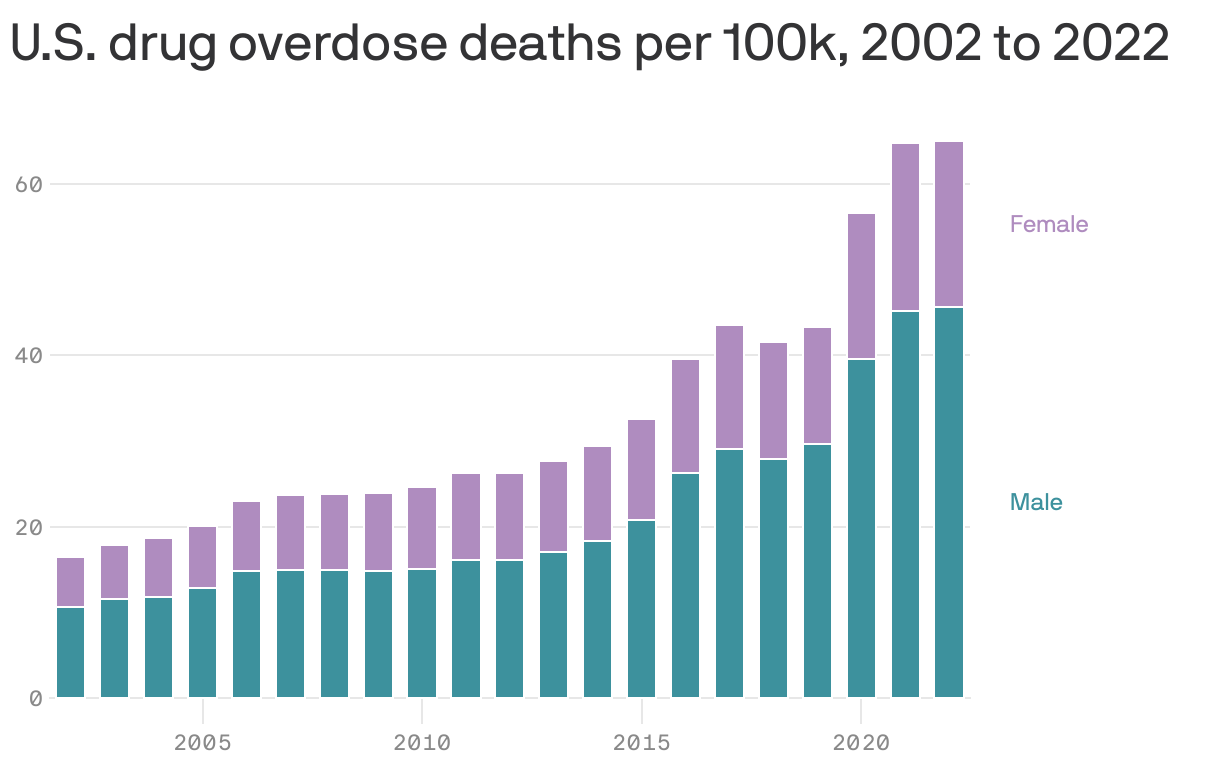
The rise in overdose deaths and the gender disparity in suicides evidence a troubling American reality: Working-class men are in crisis.
Why it matters: By many metrics, working-class men are worse off today than they were 50 years ago.
Zoom in: They're faring worse than working-class women and non-working-class people of both genders on multiple fronts — from mental health to economic status to social lives.
- Working-class men are most likely to have no close friends and least likely to be married or have children, according to a report from the American Institute for Boys and Men.
- They make up the majority of fatal drug overdoses, alcohol-related deaths and suicides. However, of note, after years of sharp rises, overdose deaths are starting to fall.
Zoom out: Massive changes in the U.S. economy — like women's workforce rise and the shift from producing goods to selling services — have resulted in some working-class men feeling left behind and not needed, says Richard Reeves of the American Institute for Boys and Men.
- But this is tricky to talk about because a lot of those changes have been positive, particularly those for women.
- "We haven't yet settled into the new equilibrium," says Reeves. "The presumption that they are needed has significantly changed and almost certainly declined for many men."
