How companies are shifting to smarter, subtle messaging on ESG

Add Axios as your preferred source to
see more of our stories on Google.
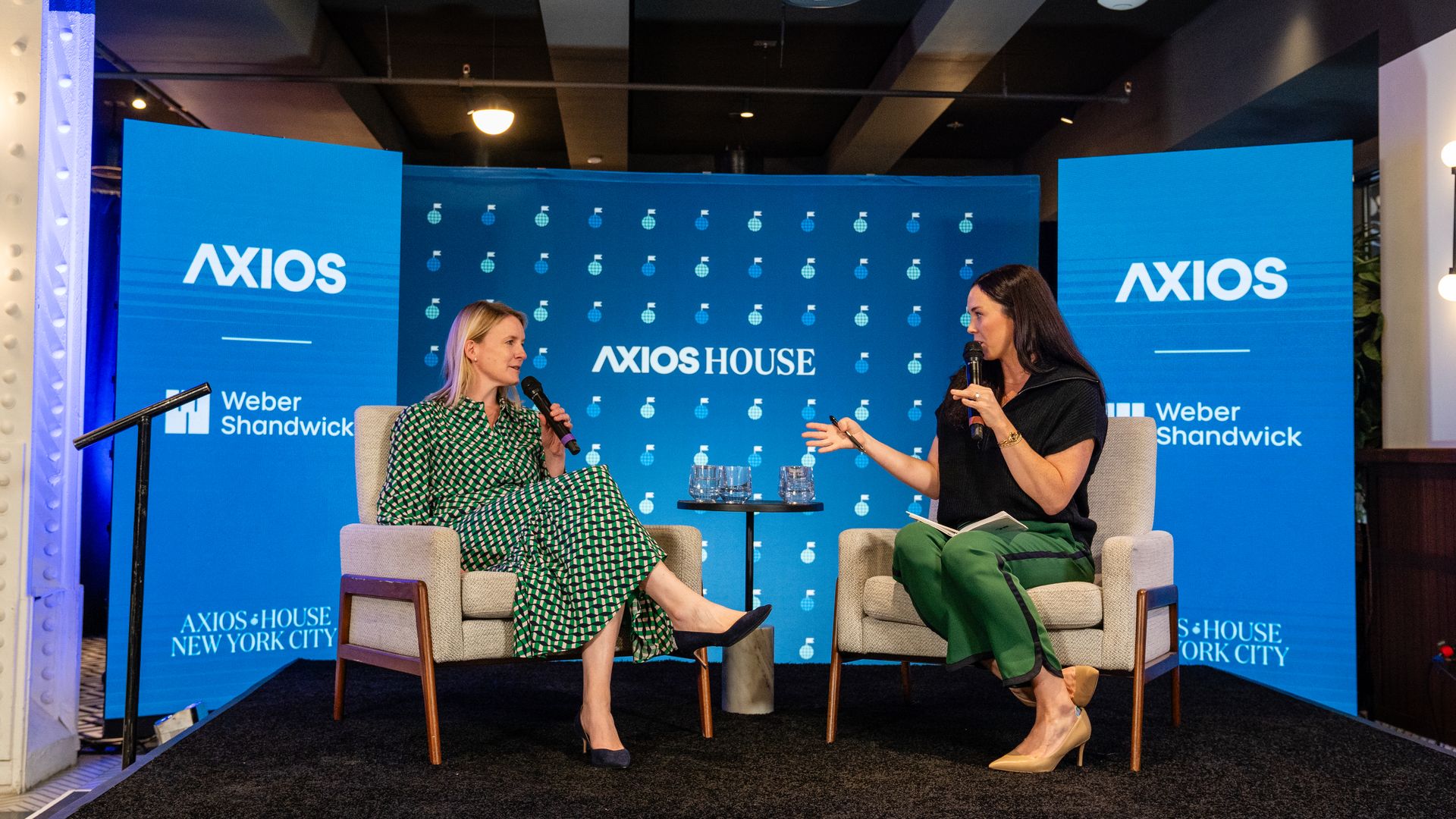
Danone SVP of corporate affairs, Gemma Hart at Axios House in NYC. Photo: Sam Popp on behalf of Axios
The idea that big brands are going silent is misleading, communication experts tell Axios.
- Instead, they are communicating about environmental and social issues in a smarter way.
Why it matters: This mirrors what we've been covering here week after week. Communicators are increasingly being asked to help modern CEOs, companies and brands navigate this complex moment in time.
Driving the news: Roughly 150 communications and corporate affairs professionals joined us at Axios House to hear how leaders from Ralph Lauren, Danone North America and Weber Shandwick (who sponsored our event) are safeguarding against the ESG backlash movement.
Between the lines: Don't expect companies to come out louder and prouder after the election season has passed, because this isn't just a reflection of the current political environment — it's a more refined strategy all together.
- Where companies often get hung up is in response to outside geopolitical or societal events that might go against their ESG or DEI commitments.
What they're saying: It's less about reacting to outside noise and more about aligning the commitments to your business and its mission or values, says Ralph Lauren chief global impact and communications officer Katie Ioanilli.
- "There are plenty of examples where companies, brands, leaders have stumbled because they were using language to make a point that was perhaps divisive or not aligned to who they are as a brand," she says.
- "In 2020, when every company, every brand was faced with 'sign this,' 'say this,' 'do this,' I would sit with Ralph and we'd talk about it and he'd say, 'We don't have to be the first. We don't have to be the fastest. We have to stay true to who we are, we have to have integrity and it has to be authentic,'" Ioanilli added.
At Danone, they consider three things before weighing in, said senior vice president of corporate affairs Gemma Hart.
- "First: Is what's happening relevant in the outside world, or is it just relevant internally? Second: Do we have the right to talk about it? And can [we] make a difference in the world by speaking up?"
- Danone leaders then determine how and when to communicate the message to ensure they reach the stakeholders who care most, she added.
Zoom in: It's the role of communicators to understand their key audiences and help shape these messages for them, says Hart.
- "We have a huge responsibility to bring that external perspective, and then also to take what we're doing internally and to translate it in a way that lands with external audiences. A lot of what we're trying to do, especially on the ESG front, is big and messy and complicated, and our job is to we help break that into bite-size pieces so that it's accessible for people."
Yes, but: When it comes to sustainability, shoppers do care how food is sourced and clothes are made, but it's not the only factor.
- "The sustainability message still has the power to drive loyalty and connection. It just can't be the hero message," says Ioanilli. "Our hero message is about its timeless style."
The bottom line: These commitments to more sustainable or inclusive business practices aren't going anywhere, says Weber Shandwick North America CEO Jim O'Leary.
- "There's clearly deliberate effort to back away from some of that language, but I think fundamentally, what underpins DEI and ESG is very much still a priority for the world's leading businesses," he says.
More on Axios: Corporate America is rebranding ESG
