The purest form of homeownership

Add Axios as your preferred source to
see more of our stories on Google.
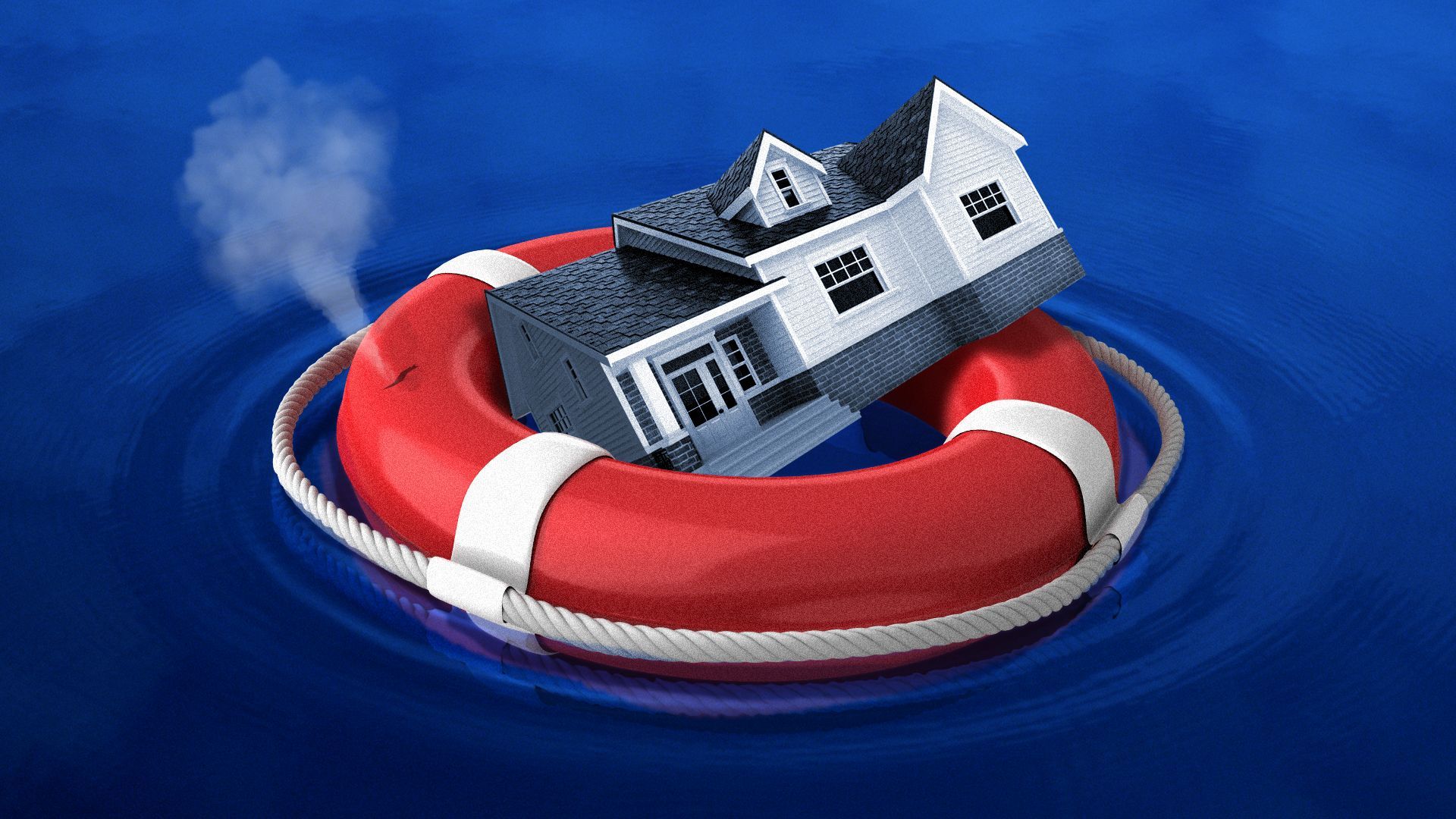
Illustration: Sarah Grillo/Axios
Millions of Americans live in housing that offers neither the wealth-building promise of traditional homeownership nor the flexibility of renting.
Why it matters: Thanks to climate change, the number of uninsured homes is in the millions, and rising fast.
- Owning one of those homes, voluntarily or otherwise, provides shelter — for some unknowable amount of time — but could never be considered a rational investment.
Between the lines: Uninsurable homes still change hands on the housing market, even though it's generally impossible to take out a mortgage on them.
- The price paid is a good indication of how much shelter is worth as an intrinsic good, separated from its value as an asset that might appreciate in value.
How it works: Americans have historically had two options when it comes to finding a place to live — either rent, and feel as though you end each month with nothing to show for the money you've spent, or buy, thereby acquiring something that can rise in value over time.
- The 30-year fixed-rate mortgage — contingent on being insured — is a powerful engine of wealth creation because it acts as a low-risk commitment device, forcing homeowners to increase their home equity every month.
- It also provides enormous leverage, where a 20% rise in the value of a home means the value of the initial downpayment doubles or more.
Zoom out: The wealth-building component of homeownership accounts for a large part of boomers' riches, but also helps explain why local homeowners make it so hard for developers to build enough new housing.
- After all, as long as supply exceeds demand, home values remain supported.
By the numbers: More than 6 million homeowners live in homes without homeowners' insurance.
- Most of them are poor: The states with the highest proportion of uninsured homeowners are Mississippi, New Mexico and Louisiana.
- That number will only increase as climate change makes insurance uneconomic in ever-greater swaths of the country.
Zoom in: One of the lessons of the Florida real estate market is that uninsured houses are far from worthless.
- Some 15% of Miami homeowners lack insurance, and some have even seen their property value go up.
- At the very top end of the market, billionaires are happy to buy beachfront homes and simply run the risk that they'll be destroyed by a hurricane. For them, Florida housing is more of a consumption expense than an investment.
- Elsewhere, owners are rationally unwilling to part with their property for less than they feel they'd need to pay in rent somewhere else.
What's next: The cash-only market for uninsured houses will inevitably grow, even as the dance between homeowners, local government, insurers, and reinsurers continues over the coming decades.
- Even if the houses are bought based on "I'll live here until I die or the house is destroyed, whichever comes first," many people will die before their home is destroyed, putting it back on the market.
- The number of potential buyers remains tiny, however. An insured house is a much safer investment — and doesn't require an all-cash purchase.
The bottom line: If you have a six-figure bankroll and a healthy risk appetite, you can probably buy one of these houses at a significant discount to its insurable peers. Just don't expect any return on that investment.
Bonus: Where the uninsured houses are


