South Florida sends 300 corals to Texas in effort to save reefs

Add Axios as your preferred source to
see more of our stories on Google.
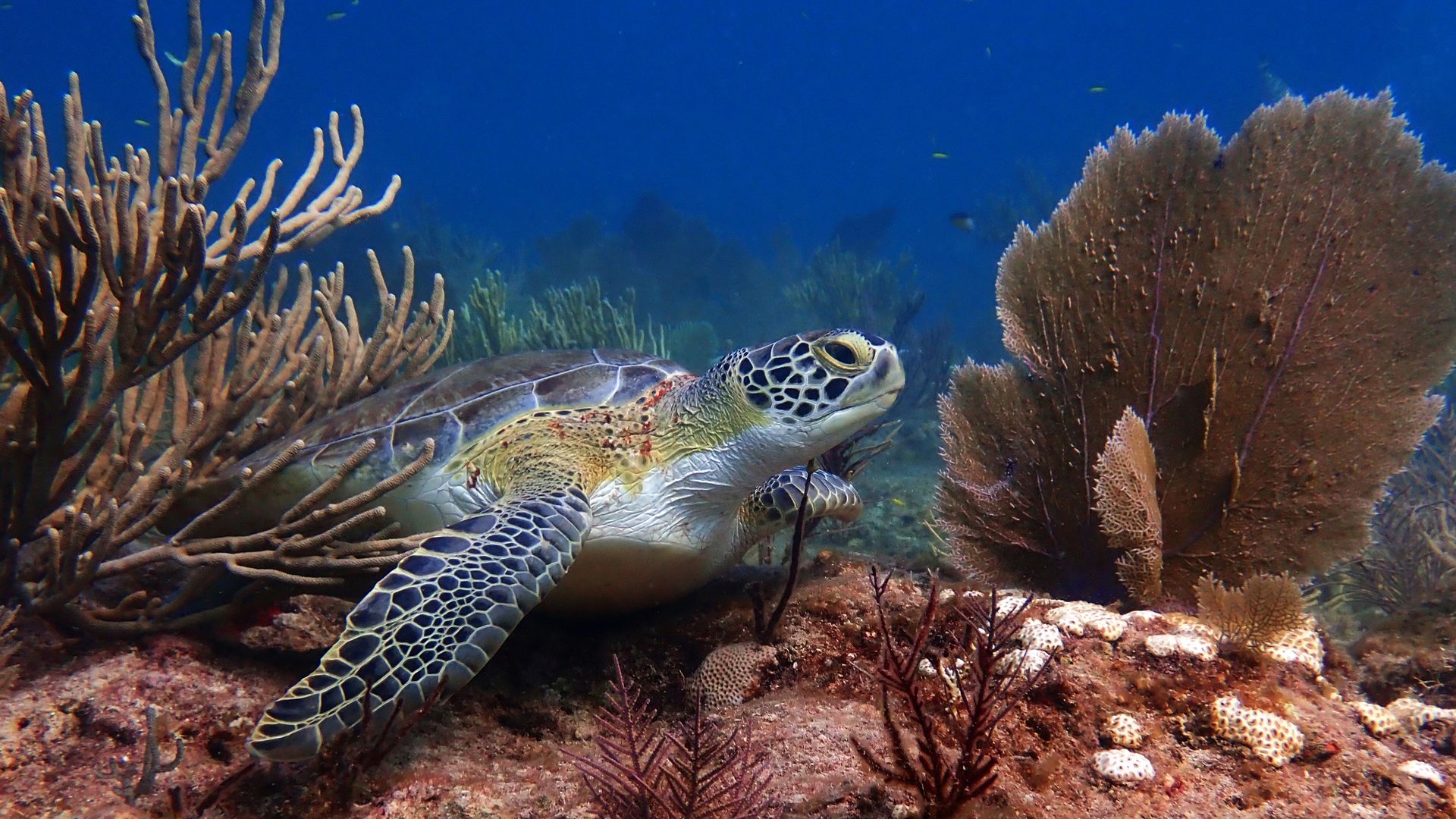
A sea turtle swims near different types of coral at Alligator Reef in the Florida Keys in 2023. Photo: Carolyn Cole/Los Angeles Times via Getty Images
Scientists sent hundreds of critically endangered corals from South Florida to the Texas Gulf Coast on Wednesday in a research and restoration project.
Why it matters: Last year's severe marine heatwave caused corals in the Florida Keys to expel algae that lives in their tissues, turning them white in a widespread coral bleaching event. Many of these corals, which are havens for biodiversity, were wiped out.
- That's according to a statement from Nova Southeastern University (NSU), which arranged to have about 300 corals carefully delivered from its nursery to the Texas State Aquarium as part of a project with Texas A&M University-Corpus Christi (TAMU-CC).
- NSU research associate Shane Wever said in a statement Monday that the transfer "acts as another layer of defense to safeguard" Florida's staghorn coral populations from climate change.
State of play: "Coral reefs across the Caribbean have been declining since the 1970s due to land-based stressors — sedimentation, nutrient pollution, coastal development — and rising water temperatures," said TAMU-CC researcher Keisha Bahr Wednesday evening.
- "While Nova and other coral nurseries have been making strides in breeding and restoring corals, current conditions are alarming," added Bahr, who's chair for coral reef and ocean health at the Harte Research Institute for Gulf of Mexico Studies at TAMU-CC.
Driving the news: Bahr said in her email that she learned of the need to relocate the coral after contacting the NSU about acquiring corals for a study on the impact of dredging-related sediment on coral health.
- Now, the Texas and Florida researchers are working together to conserve and protect coral species.
- The researchers have relocated 71 genotypes of staghorn coral to Texas, "safeguarding these genetic populations," per Bahr.
What they did: Researchers packaged each coral with fresh, clean sea water and extra oxygen "inside of a protective case, inside of insulated and padded coolers," according to NSU.
- They transported the coral via van from NSU to a nearby private airport and it was flown to Texas to minimize time and ensure the corals remained healthy.
Threat level: Coral bleaching poses a threat to the entire ecosystem of the Florida Keys, which houses 6,000-plus species of marine life — including turtles, whales, dolphins and manatees — and is home to over 285 bird species.
- It also has widespread repercussions to Florida's economy and the coastal communities that rely on this ecosystem.
- "Tourism, which heavily depends on vibrant coral reefs, suffers as bleached reefs lose appeal, impacting local businesses," Bahr said.
- "The fishing industry is also affected, as coral reefs serve as essential habitats for numerous fish species, harming both commercial and recreational fishing."
- Meanwhile, coral reefs act as natural barriers against coastal erosion. Bahr noted their decline "increases the vulnerability of shorelines to storms, raising costs for infrastructure protection and repairs."
Between the lines: The combination of long-term, human-caused climate change and the El Niño climate cycle contributed to record-high ocean heat content worldwide in 2023, per Axios' senior climate reporter Andrew Freedman.
What we're watching: Scientists expect to see more frequent and severe coral bleaching events as ocean temperatures rise, which Bahr said would make it harder for corals and their reefs to recover.
The bottom line: Carbon emissions must be urgently reduced to slow the rate of ocean warming, Bahr warns.
- "Where reductions aren't feasible, we must implement carbon offset strategies to slow ocean warming and give corals a fighting chance."
More from Axios:
