Israel didn't tell U.S. in advance about Hezbollah pager attack, officials said

Add Axios as your preferred source to
see more of our stories on Google.
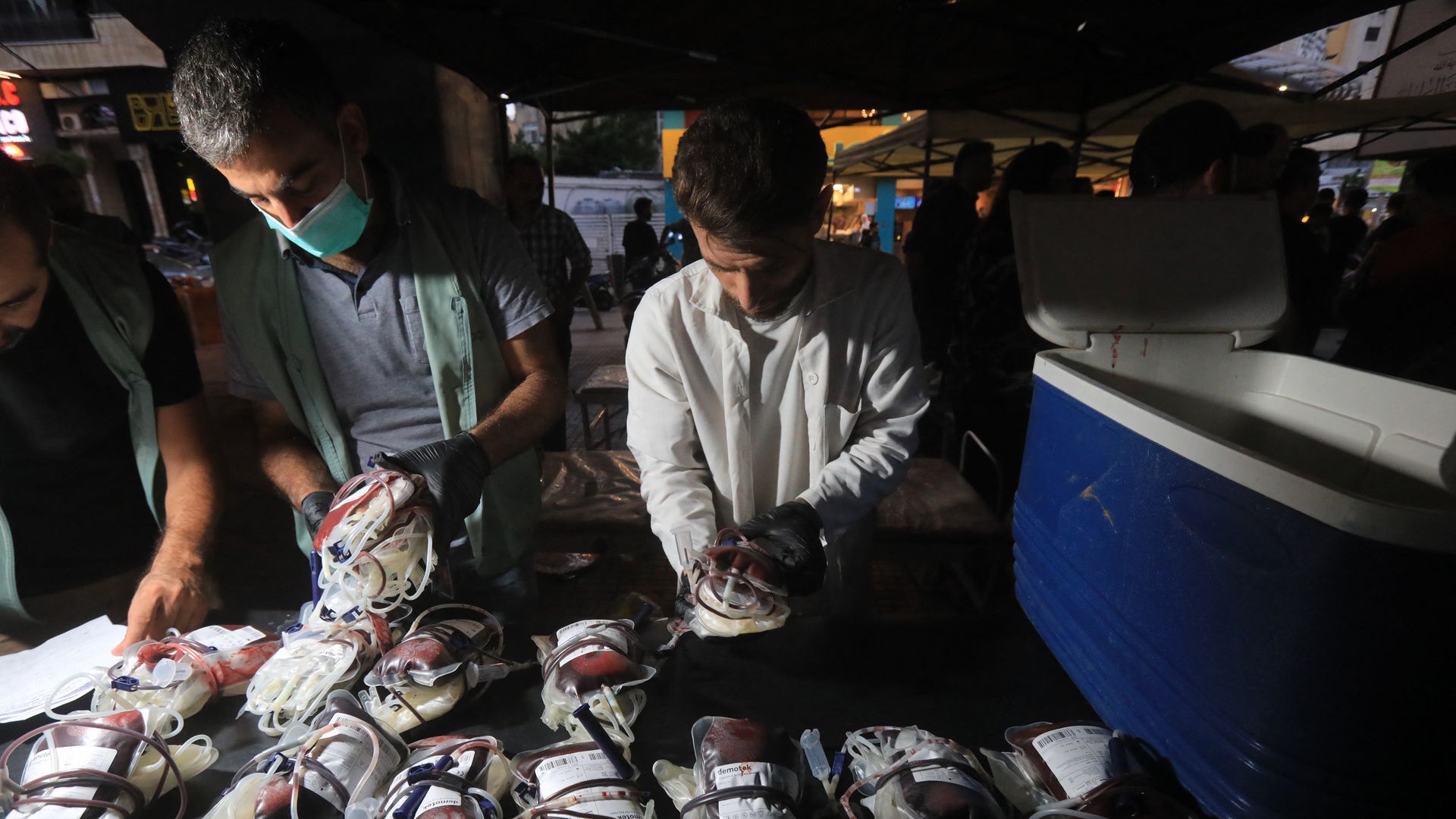
Medics collect blood donations in Beirut's southern suburb on Sept. 17, 2024. Photo: -/AFP via Getty Images
Israel didn't inform the Biden administration in advance about its intelligence operation to explode thousands of Hezbollah members' pager devices, two U.S. officials told Axios.
Why it matters: The explosions killed at least nine people, including a child, and wounded 2,800 others, among them many members of Hezbollah and its military units.
- The operation also shut down a significant part of Hezbollah's military command and control system.
- Hezbollah accused Israel of conducting the attack and pledged to retaliate.
- Israeli officials said they are aware that a major escalation on the northern border is possible after the attack and said Israel Defense Forces are on high alert for a possible response by Hezbollah.
A U.S. official said that several minutes before the pagers started exploding across Lebanon, Israeli Minister of Defense Yoav Gallant called U.S. Secretary of Defense Lloyd Austin and told him Israel was going to conduct an operation in Lebanon soon, but refused to give any specific details.
- The U.S. official said the Israelis didn't tell the U.S. about the specifics of the operation, but added that Gallant's call was an attempt to avoid keeping the U.S. totally in the dark.
- Nevertheless, U.S. officials said they didn't see Gallant's call as a serious prior notice. "We were not aware of this operation and were not involved," U.S. State Department spokesperson Matthew Miller told reporters on Tuesday.
- Austin spoke to Gallant on the phone twice on Tuesday and discussed the situation, Israeli and U.S. officials said.
Driving the news: The operation was approved earlier this week during security meetings with Israeli Prime Minister Benjamin Netanyahu and senior members of his cabinet and the heads of the security services, a source with knowledge said.
- It took place a day after U.S. envoy Amos Hochstein visited Israel and warned Netanyahu of the consequences of a major escalation in Lebanon.
- On Tuesday, Netanyahu and Israel's Minister of Defense Yoav Gallant spent several hours at the IDF command center in Tel Aviv, an Israeli official said.
Between the lines: The Israeli security cabinet decided on Monday night to update the goals of the war to include the safe return of displaced Israelis to their homes on the border with Lebanon.
- "Israel will continue to act to implement this goal," the Prime Minister's office said.
- The decision to update the goals of the war was meant to signal that Israel is going to turn its attention from Gaza to the Lebanese front, Israeli officials said.
Behind the scenes: A source with knowledge of the issue said Israel conducted the operation in order to take its fighting against Hezbollah into new phase, while attempting to still not escalate to the level of an all out war, one source said.
- The Israeli operation was aimed at undermining Hezbollah's confidence and creating a feeling in the ranks of the militia that it is totally penetrated by Israeli intelligence services, the source said.
- The source said Israeli intelligence services assessed ahead of the operation that Hezbollah would likely retaliate with a major attack against Israel.
Editor's note: This story has been updated throughout with new details, including the Lebanese health ministry's latest statement that nine people were killed and 2,800 were injured in the attacks.
