DIY medicine draws frustrated patients to online forums

Add Axios as your preferred source to
see more of our stories on Google.
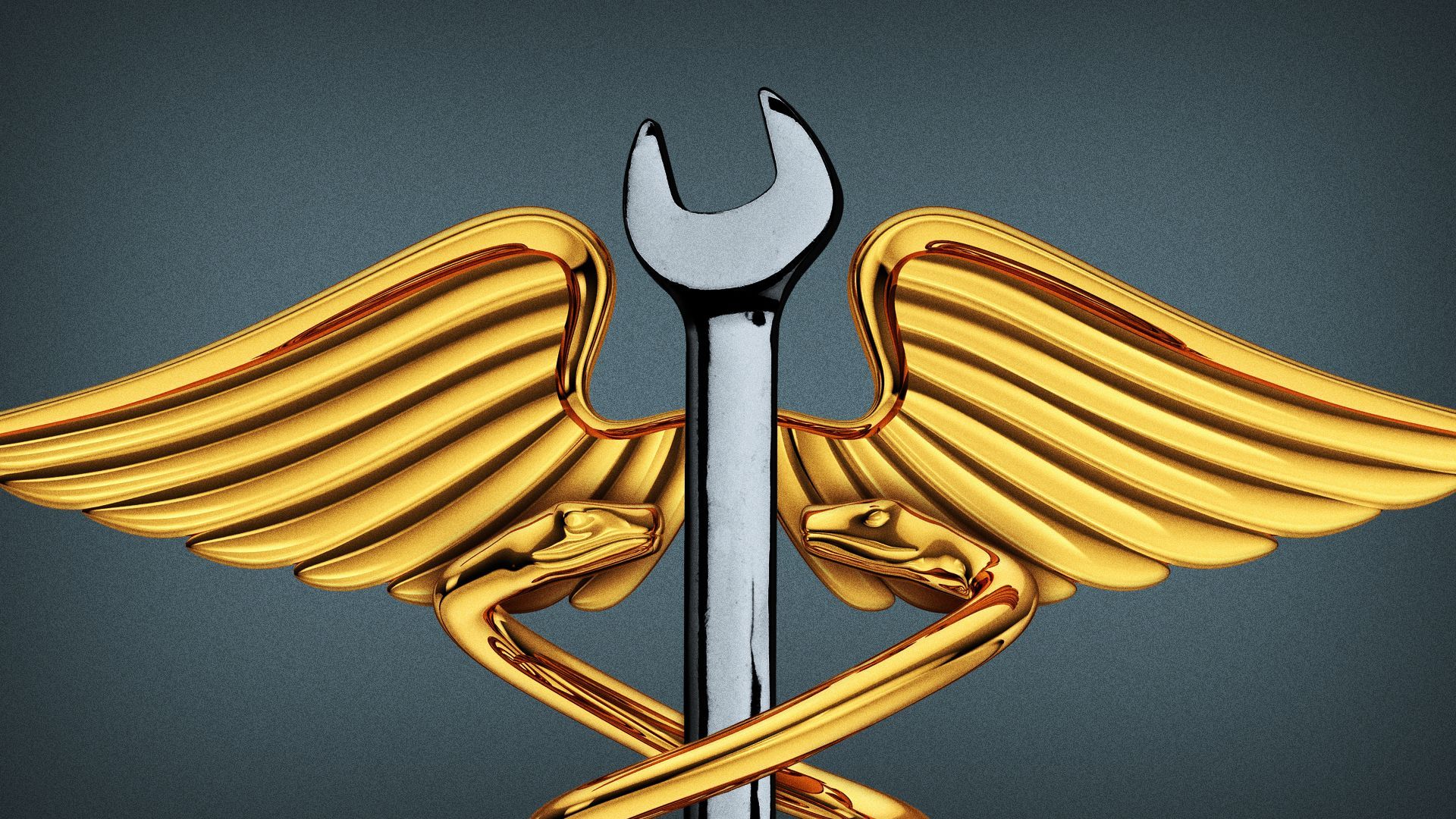
Illustration: Maura Losch/Axios
Patients are increasingly joining online communities to learn how to make pirated versions of abortion pills, GLP-1s and other prescription drugs and medical treatments.
Why it matters: It's an outgrowth of frustration with high prices and bottlenecks in the health system, combined with a broader medical freedom movement built around patient empowerment and fueled by social media.
The big picture: Patients already are self-managing more of their care through wearable monitors, telehealth and direct-to-consumer offerings like at-home testing.
- But a subset fed up with long wait times or a lack of answers from doctors is embracing do-it-yourself cures, digging into clinical trials, following the scientific method, and, in some cases, coming up with hacks to treat their conditions, such as brain stimulation and even an open-source artificial pancreas, NPR reported.
- They are also often organizing into online communities and sharing what they find, including how to make pharmaceuticals, including the abortion drug misoprostol or a copy of costly hepatitis C drugs, 404 Media reported recently
Driving the news: One of the latest manifestations, seen on Reddit boards and elsewhere, promotes breaking open auto-injector pens for GLP-1 weight-loss drugs, with users offering detailed instructions for how to stretch doses.
- "I'm wondering if any of you lovely folks can help me? I would like to split my 7.5 [mg pen] into two months worth of doses," one user on Reddit wrote last week.
- Another user responded with instructions about how to extract the doses into a vial of bacteriostatic water in order to stretch the dose.
- "I highly recommend the 31G 6mm Becton Dickinson ultra-fine syringes. Superb," another chimed in.
What they're saying: "The Reddit phenomenon is amazing because it's really sharing a culture of people who get what you're going through and what your desperation is," said Michael Snyder, medical director of the bariatric surgery center at Rose Medical Center in Denver.
- Patients want to be cost-effective "without all the medical shenanigans," he said.
- "But this is a powerful drug," he said, warning of the dangers of injecting improperly dosed medication or failing to keep a sterile environment. "If you're going to jailbreak any of this stuff, I really would talk to your doctor about it."
Between the lines: Doctors' knee-jerk reaction is to deride attempts at DIY medicine, but they generally "pop up where we see access barriers to treatment" and a patient is willing to do anything to alleviate suffering for themself or a loved one, said Anna Wexler, an assistant professor at the Perelman School of Medicine at the University of Pennsylvania who has studied do-it-yourself medicine.
- About a decade ago, patients frustrated with the soaring price of EpiPens similarly began to look for alternatives online.
- It's difficult to quantify the trend, but there does seem to be growing interest in DIY medicine and DIY biology based on an uptick in professional organizations, journals, conferences, and people who join certain websites, said Lisa Rasmussen, a philosophy professor at University of North Carolina, Charlotte, who is writing a book about the broader trend of DIY science.
Zoom in: The DIY movement taps into a deeply held sentiment about an individuals' autonomy when it come to accessing particular health interventions without the gatekeeping of the Food and Drug Administration or the sometimes untenable costs of certain drugs or therapies.
- "Risk tolerance is a legitimate discussion to have," Rasmussen said.
- The line where it becomes concerning depends on the risk of the treatment itself, Wexler said.
- Experimental therapy like fecal microbiota transplants "can be quite risky, because when people do this at home, they're not testing the stool for pathogens," Wexler said.
Friction point: These patients are essentially reformulating or mixing their own drugs and potentially putting themselves at a great risk for harm and even death on the advice of people they've never met, Bruce Scott, president of the American Medical Association, told Axios.
- Injecting a substance into the body is high stakes, he said. "I don't think I can overemphasize the fact that this is scary stuff, and that patients should consult their physicians."
The bottom line: Snyder says patients talking to their doctors, for instance, with the example of splitting GLP-1 doses, could open up a conversation about safer ways to extend the medication such as by spreading doses out along longer intervals. It's a practice that, while off label, has worked for many of his patients.
- "That's a conversation you should have with your physician, and if you can't, you should get a new physician," he said.
