Sep 15, 2024 - Politics & Policy
How Harris shapes her personal story

Add Axios as your preferred source to
see more of our stories on Google.
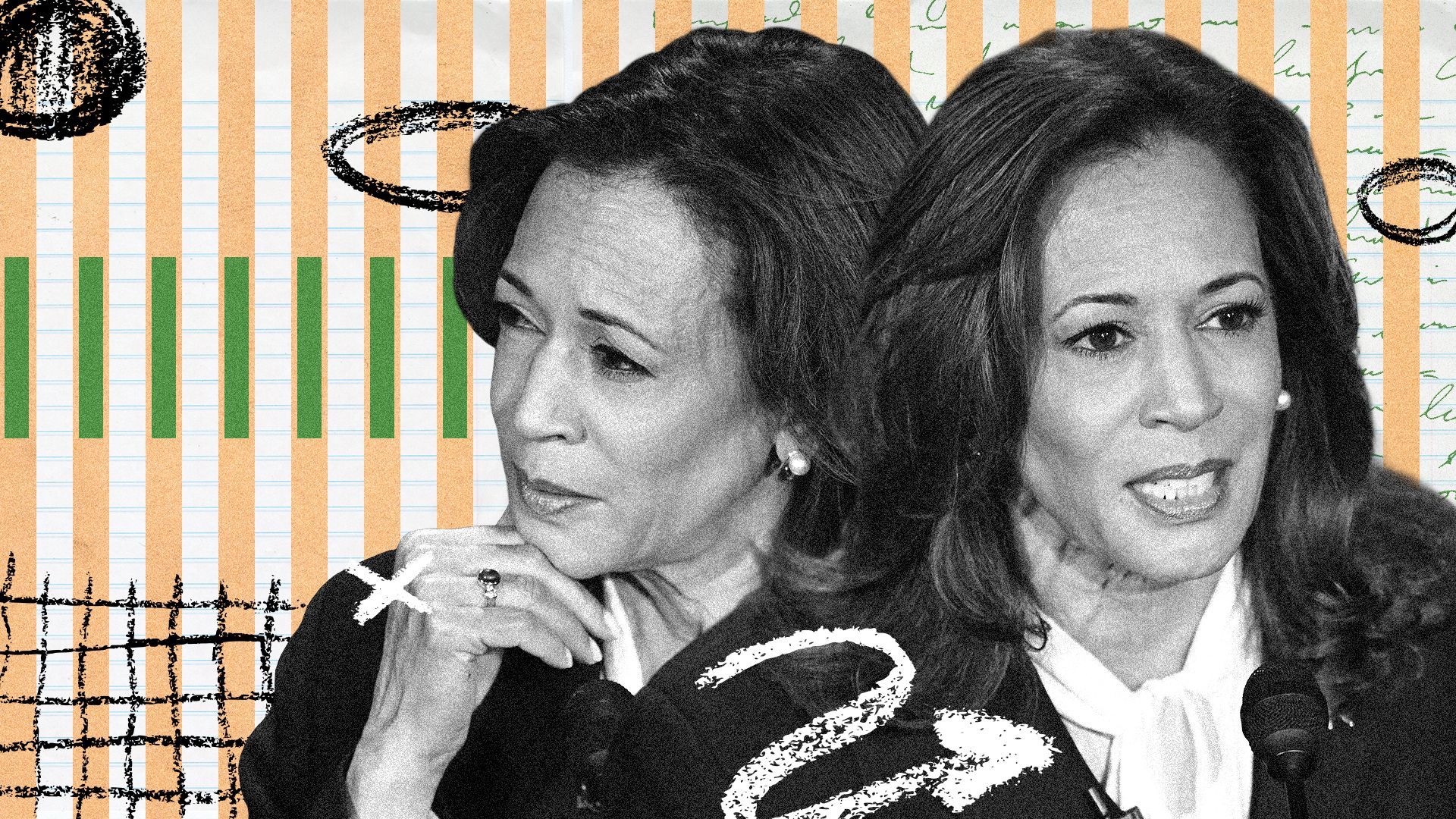
🎤 When the debate moderators gave Vice President Harris an opening to discuss aspects of her identity on Tuesday, she did what she's done throughout her campaign: focus on her values.
- So rather than talk about her race and gender, she chided Trump for making divisive remarks and accused him of having a history of racism.
It was the latest example of how Harris — who could become the first woman to be U.S. president, typically has skirted past such questions and changed the subject.
- 📆 It's a contrast to how Hillary Clinton handled it eight years ago as the Democratic presidential nominee with a chance to make her own history.
Clinton's campaign leaned into the historical nature of her candidacy early and often.
- "We've reached a milestone in our nation's march toward a more perfect union: the first time that a major party has nominated a woman for president," Clinton said in accepting the Democratic nomination in July 2016.
⚡️ Harris also would be the first Black woman and South Asian woman to be president.
- She doesn't dwell much on that either, but in some speeches has mentioned her pride in graduating from a historically Black university (Howard) and belonging to Alpha Kappa Alpha, one of the "Divine Nine" Black sororities and fraternities.
For the most part, Harris has cast her personal story as that of someone who grew up in a middle-class family with immigrant parents.
- 🤔 There's a strategy behind that: it has allowed her to promote her plans to boost the middle class — and contrast her upbringing with Trump's.
- "In bad times, it doesn't help to refer to yourself as the first, the first, the first, because people think that makes you a riskier choice," said Celinda Lake, a Democratic pollster who worked on President Biden's 2020 campaign.
- A Pew Research Center survey this month found that roughly 40% of voters said that Harris' race and gender will help her win; 19% said her race would hurt her, while 30% said her gender would.
- 🗳️ Other polling also has shown that women candidates — particularly women of color — historically have been held to a higher standard of "electability" than male candidates, even if voters believe they're qualified.
