Trump wants to halve energy prices, but experts say that's doubtful

Add Axios as your preferred source to
see more of our stories on Google.
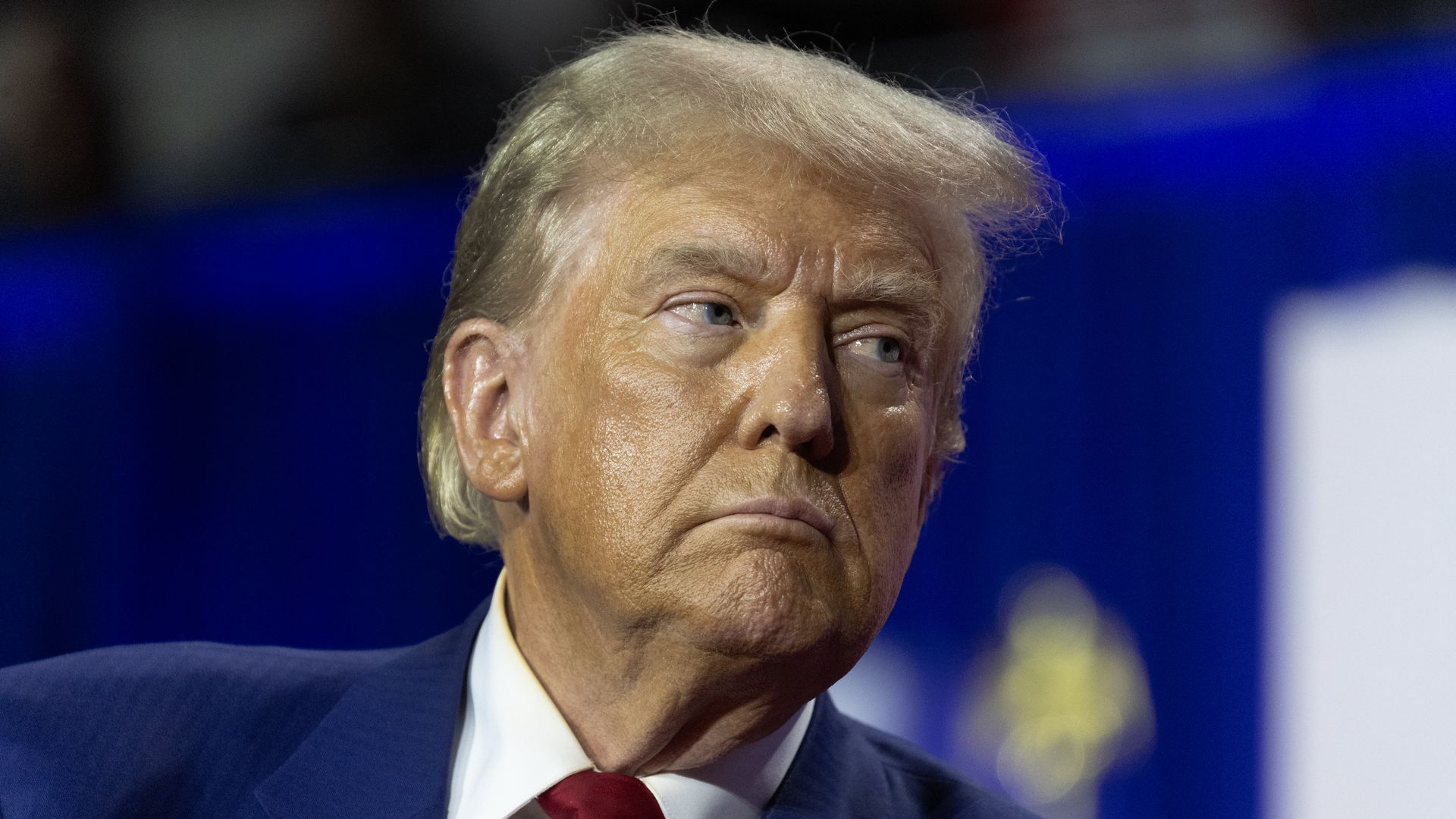
Donald Trump at a town hall event on August 29 in La Crosse, Wisconsin. Photo: Scott Olson/Getty Images
No stranger to bold pledges, former President Trump recently claimed that he could cut Americans' energy costs in half within a year of taking office if he wins re-election in November.
Why it matters: While high energy prices have added to the economic pinch many consumers are feeling, industry experts caution that presidents have limited ability to influence the global oil market.
Driving the news: "Your heating and air conditioning, electricity, gasoline — all can be cut down in half," Trump said at a Michigan rally late last month, adding that he would declare a "national emergency" to increase fossil fuel supply and decrease prices.
The big picture: Global energy prices are shaped by a complex mix of factors, such as economic and population growth, OPEC decision-making, and the cost of technologies, Joseph Majkut, director of the Energy Security and Climate Change Program at the Center for Strategic and International Studies (CSIS), told Axios.
- "It's hard for the stroke of a pen to dramatically change global energy prices without also ... shutting down large parts of the economy," much like it would be difficult to dramatically alter U.S. or global greenhouse gas emissions via executive action, Majkut said.
- The U.S., as a major oil and natural gas producer, has some sway over global energy prices, but it's fairly limited compared to larger economic or geopolitical forces — like the COVID-19 pandemic and Russia's invasion of Ukraine, which sent prices plummeting and then soaring in the space of two years, Majkut said.
- American presidents' ability to influence global energy prices via executive action is also limited, he said.
Reality check: Trump told rallygoers that if elected to a second term, he would approve projects for new pipelines, refineries and reactors, along with new drilling sites.
- Yet these sorts of projects like these take years to come to fruition, Majkut said.
- Furthermore, most companies need higher prices to incentivize them to make those kinds of new project investments, he added.
Zoom in: Many oil producers have focused more in recent years on maximizing profits than increasing production.
- If Trump successfully boosted production and cut oil prices, it could actually make drilling unprofitable, Majkut said.
- Unlike in OPEC countries — where political decisions drive production — U.S. oil and gas producers make market-based decisions. That means they tend to produce more when prices are up and might produce less when prices go down.
What they're saying: "No one has done more to make daily life unaffordable for Americans than Kamala Harris and her weak failed policies which have driven up the prices of everything from gasoline to diapers," Karoline Leavitt, national press secretary for the Trump campaign, told Axios.
- Leavitt said Harris "wants to ban fracking" — a policy position Harris backed in 2019 but has since disavowed.
- She added that Trump would "make America energy independent again" and "bring down prices" for consumers.
- The Trump campaign did not respond to questions about how Trump would slash energy prices within 12 months or about doubts experts had raised concerning the feasibility of his pledge.
Between the lines: Both Republicans and Democrats see the benefits of stabilizing energy prices to help reduce inflation and the strain on household budgets, Robert Johnston, senior director of research at Columbia University's Center on Global Energy Policy, told Axios.
- While oil and natural gas production increased under the Trump administration, it has boomed to new highs under the Biden administration.
- "Democrat or Republican, affordability is the primary issue ... that's what voters are focused on," Johnston said.
Go deeper:
Editor's note: This story has been updated to include a statement from the Trump campaign.
