Less-invasive Pap smear alternative now available

Add Axios as your preferred source to
see more of our stories on Google.
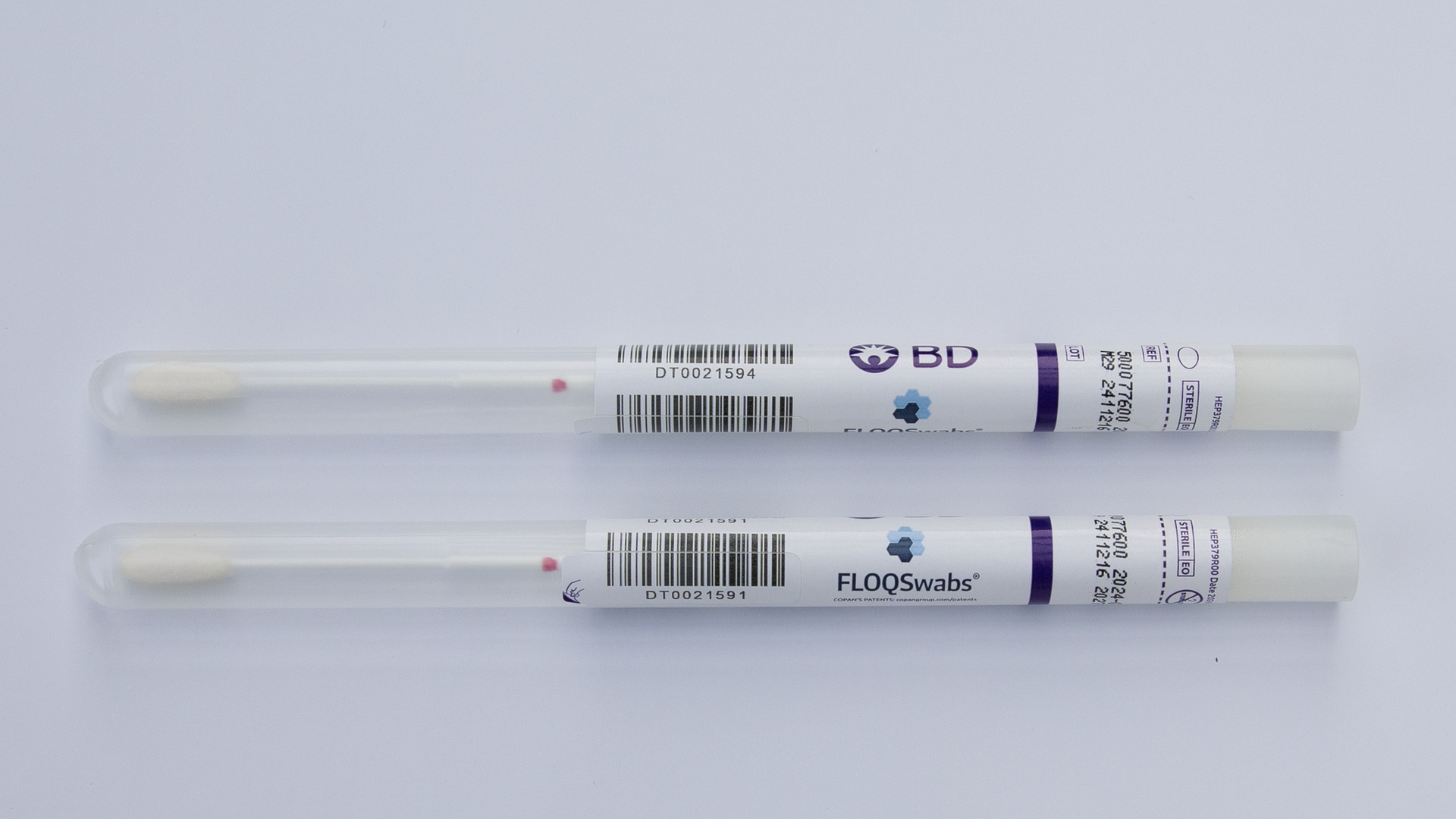
Two self-collection cervical cancer screening swabs. Photos: Courtesy Becton, Dickinson and Company.
The first self-collection kits for cervical cancer screening have been shipped to doctor's offices and other health care facilities today, Axios has learned, providing patients with an alternative to Pap smears.
Why it matters: The less-invasive self-swab requires less equipment, allowing health clinics that don't have speculums and stirrups to start offering screening.
- It's an alternative to Pap smears, which can cause extreme discomfort, including for those patients with a history of sexual trauma or chronic pain.
The big picture: About a quarter of U.S. women are overdue for cervical cancer screening, according to the National Cancer Institute. Women in the South, where screening and preventive care lag behind the rest of the country, are more likely to die from the treatable disease.
State of play: The Food and Drug Administration approved the test from BD (Becton, Dickinson, and Company), along with a version by Roche, in May. Roche's test will be available later this fall, the New York Times reported last month.
- Australia, Denmark, the Netherlands, and Sweden already use self-collected cervical cancer swabs.
How it works: The new test allows patients to collect their own sample of cells from the vaginal walls while at a doctor's office, much like they'd take their own urine sample, said Jeff Andrews, vice president of global medical affairs for diagnostic solutions at BD.
- The cost of the self-administered swab will be the same as a traditional pelvic exam, USA Today reported in May. Insurers are required to cover cervical cancer screening under the Affordable Care Act.
- Labs should be able to turn around test results in the same amount of time it takes them to process a Pap smear.
What's next: Researchers are working toward FDA approval for an at-home version of the test, which would allow people to get screened without going to a health care facility, Andrews said.
