Volkswagen could close plants in Germany, warns of "serious situation"

Add Axios as your preferred source to
see more of our stories on Google.
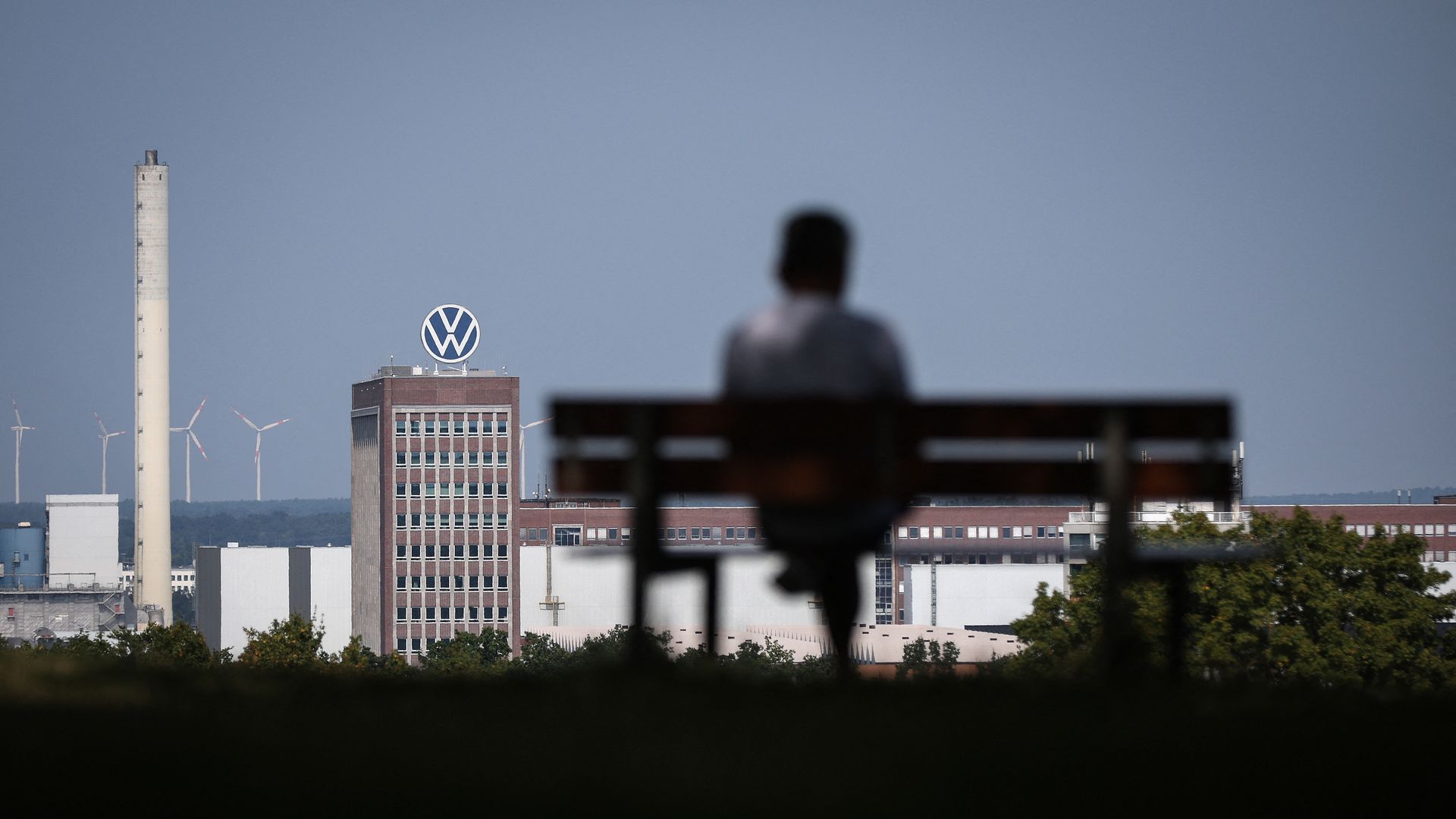
Volkswagen's headquarters in Wolfsburg, Germany. Photo: RONNY HARTMANN/AFP via Getty Images
Volkswagen's vast empire is showing signs of cracking.
Why it matters: As the second largest automaker in the world, VW remains a powerful force in Europe, the U.S. and China in particular — but the company's size is turning into a problem.
Driving the news: The German company says it may close plants in its home country amid what CEO Oliver Blume reportedly called "a very demanding and serious situation" for the European automotive industry.
- That would mark the first-ever German plant closures in the company's nearly nine-decade history.
The big picture: VW is facing a pair of competition-related challenges — one outside its control, and the other of its own making.
- Chinese automakers are wresting market share away from VW in China, where it once held the highest share of any automaker. The company's China sales have fallen from 4 million in 2017 to an estimated 2.5 million in 2024, according to Dunne Insights analyst Michael Dunne.
- And its Chinese competitors are bringing cheap electric vehicles to VW's other critical market: Europe.
Another part of the problem is that VW is a bloated company compared with its competitors, meaning it has less margin for error.
- The company had some 684,000 employees in 2023. That's about 309,000 more than the ever-efficient Toyota, which sold about 2 million more vehicles than VW worldwide last year.
By the numbers: The VW brand's profit margin fell from 3.8% in 2023 to 2.3% in the first half of 2024, moving in the wrong direction from the company's long-term target of 6.5%, according to Evercore ISI analyst Chris McNally.
- Hence the "drastic attempt to cut costs" as the company's bottom line suffers, McNally writes.
The intrigue: But VW isn't just facing operational issues and increased competition in key markets — it's also falling behind on technology.
- The company recently agreed to invest in Rivian to get help from the American startup on EV development despite having 40 times more employees than its new partner.
- And VW's long-awaited ID. Buzz — its EV revival of its famed microbus — recently disappointed enthusiasts with underwhelming battery range of 234 miles and a starting price of about $60,000.
What's next: A bitter fight over which properties could close.
- VW German union IG Metall has already signaled it'll fight any potential factory shutdowns.
