

Driving the Next 50 Years of Growth in Women's Sports

Women athletes aren't earning enough, even as fan interest surges

Add Axios as your preferred source to
see more of our stories on Google.
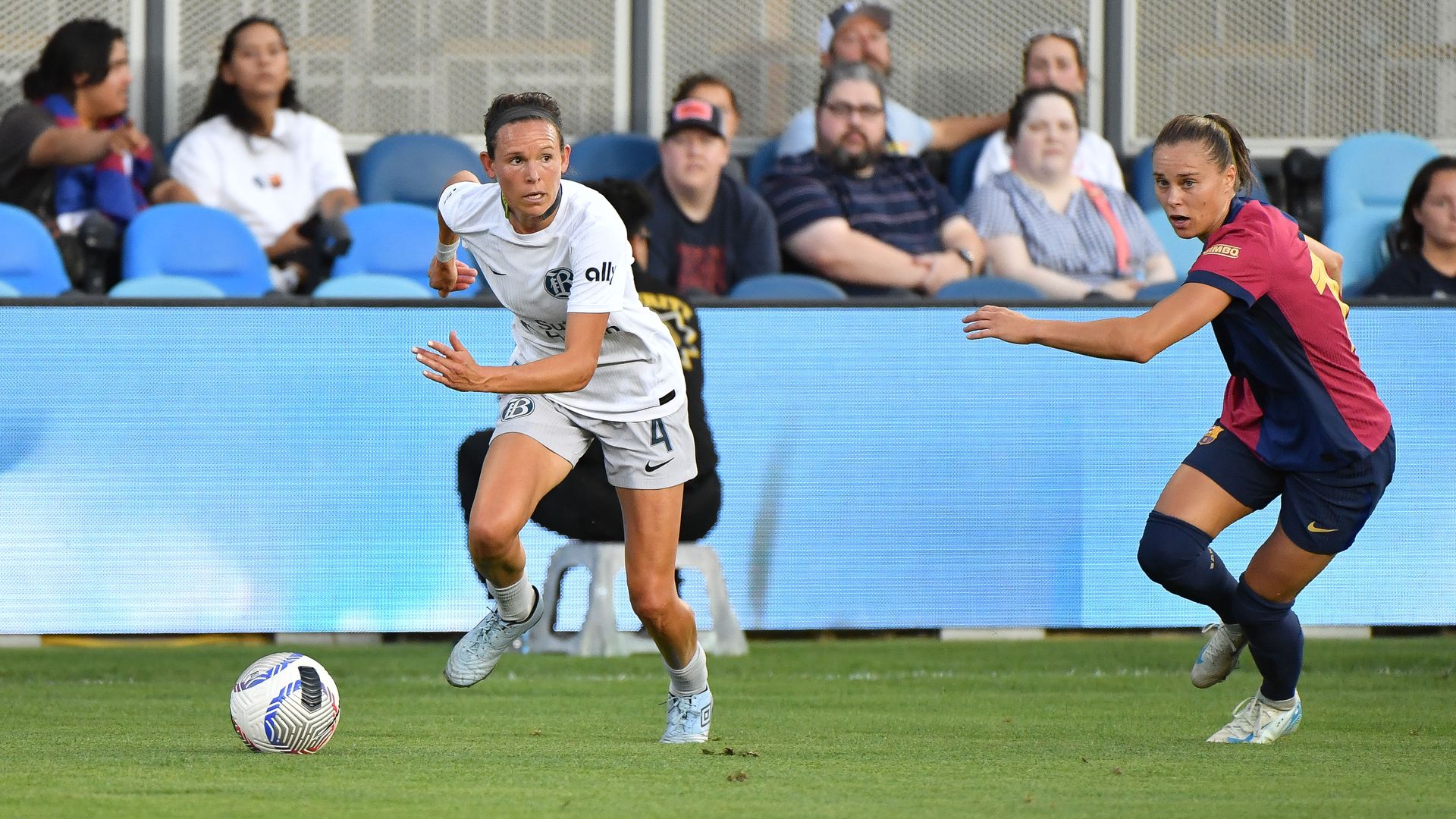
BayFC's Emily Menges dribbles the ball during a game between FC Barcelona and Bay FC at PayPal Park on August 27, 2024. Photo: Lyndsay Radnedge/ISI Photos/Getty Images)
Two recent deals highlight the contrast between the wave of interest in professional women's sports and women athletes' harsh economic realities.
Why it matters: Despite an influx of attention and investment in their leagues, many athletes are still struggling to make a decent living.
- "We've come a long way, and we got a long way to go," soccer legend and Bay FC co-owner Brandi Chastain told Axios, noting that many women soccer players need income beyond what their salary provides. "We still have women who need support."
State of play: A new program, details of which were shared first with Axios, will see sponsor Visa helping all members of BayFC — The San Francisco Bay Area's professional women's soccer team — to earn the maximum amount of appearance fee money available under the league's contract with players.
- Historically, such appearances have been time-consuming, in-person affairs with not enough time or opportunities for most players to earn the maximum allowed under league rules.
- Visa's deal will allow players to earn the maximum amount, should they wish, through social media appearances that can help the athletes elevate their personal brands.
The National Women's Soccer League and its players union have separately announced a new collective bargaining agreement that will offer players higher pay and more say in which teams they play for.
- However, the higher salaries phase in over time and the appearance fee money, still available under the new deal, remains a much-needed way for players to increase their compensation.
Between the lines: The total dollar amounts involved may not sound like a ton of money — it's on the order of $15,000 or so per player, according to a source. But that's a pretty big deal for non-star players in the NWSL, some of whom make as little as $37,000 in salary.
- That's not enough to get by in the Bay Area, which has some of the highest housing costs in the nation.
- The new deal between the league and its players will see minimum salaries rise to $48,500 in 2025 and eventually to $82,500 by 2030.
The big picture: Professional women's sports in the U.S. — especially soccer and basketball — have seen a surge of people wanting to invest their time and money.
- Angel City, Los Angeles' NWSL franchise, was sold earlier this year to USC dean Willow Bay and her husband, Disney CEO Bob Iger, in a deal that valued the club at $250 million, a record for a women's sports team.
- Indiana Fever's Caitlin Clark has helped usher in a new wave of popularity for women's basketball, with a rise in games that sell-out and a trend of moving key matchups to larger arenas.
- "I'm glad they're getting the exposure. They definitely deserve it. Now we just gotta get 'em similar contracts as what some of these NBA guys are making," former NBA star Shaquille O'Neil said last week.
Between the lines: The NWSL's new bargaining agreement is truly a landmark deal. Most notably, the league is eliminating the draft, allowing any player to sign with any team.
- While drafts are the norm in most U.S. pro sports, soccer's global nature mean that many players consider a range of leagues around the world and might opt to sign with a particular European team rather than take a chance on which NWSL team they might end up on.
- "That could be a new example for all the other leagues," Chastain said. "I feel that women's soccer has been that example. We have pushed the envelope. We have we have made people uncomfortable — for good reasons, in good ways."
Yes, but: The gains for women's sports have been uneven.
- Bay FC defender Emily Menges told Axios that what makes the Visa deal exciting "is it gives everybody on the team an opportunity to use their platform and make some extra money."
- "Some teams, you'll get the highest profile players, they're all over the social media," Menges said. "They're the ones who get the sponsorship deals. They're also the ones making the highest salaries. And so it kind of leaves everybody behind."
What's next: Visa and BayFC are working on a separate program that will help foster the professional women's soccer players of the future.
- Visa has a long history supporting women's soccer, notably having insisted in 2023 that at least half the proceeds from their renewed sponsorship of the U.S. national soccer teams go to the women's program.
- It's about "making small steps that we can to address the systematic challenges that that female athletes have," says Mary Ann Reilly, Visa's chief marketing officer for North America.
Bay FC CEO Brady Stewart said it is all about building the world you want to see exist.
- "We spend a lot of our time thinking about, how can we change the world by changing the business model of women's soccer?" she said. "And truly, I think we can change the world by changing the business model of women's soccer."
