How Harris is subtly addressing race in her campaign


Add Axios as your preferred source to
see more of our stories on Google.
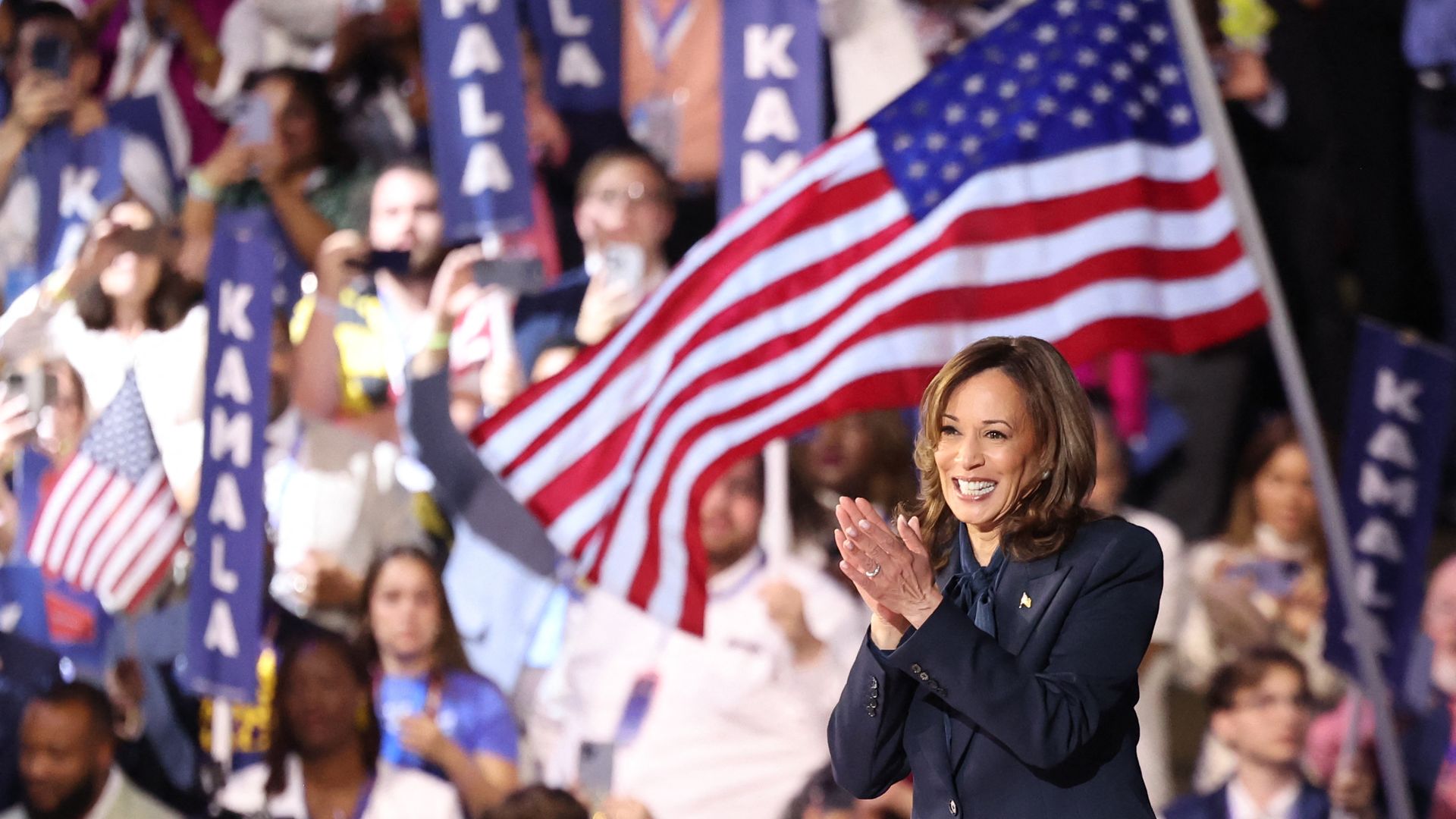
Vice President Kamala Harris waves as she leaves the stage Thursday at the Democratic National Convention in Chicago. Photo: Charly Triballeau/AFP via Getty Images
CHICAGO — Kamala Harris tapped into her family's immigrant story and ties to civil rights during her acceptance speech at the Democratic convention — but notably avoided dwelling on race.
Why it matters: Harris' history-making nomination as the first woman of color to represent a major U.S. party in the presidential election reset the 2024 campaign — and led Donald Trump to launch attacks that many have seen as racist and sexist.
- But Harris, who is of Black and South Asian ancestry, hasn't taken the bait as Trump repeatedly has questioned her intelligence and mispronounced her name — the latter a reminder of his past efforts to brand former President Obama as un-American.
Instead, Harris is reminding Americans that her family's immigration story — her father was born in Jamaica, her mother in India — is much like many of theirs.
- Thursday at the Democratic National Convention, she contrasted Trump's divisive rhetoric by vowing to be a "president for all Americans."
The big picture: Harris' candidacy has excited many Black, Asian American and Latino voters. Just as important, early polls suggest she's drawing some white working-class voters from Trump — a key to winning swing states such as Pennsylvania, Michigan and Wisconsin.
- Her speech at the DNC contained hints about a biracial upbringing that celebrated the Civil Rights Movement and jazz by Black artists.
- Harris' words, like her campaign, were more aspirational than confrontational. She didn't dwell on racial tension or violence.
- Instead, she framed her "unexpected" candidacy as a chance for the nation to reset from old battles — and suggested Trump was part of "the bitterness, cynicism and divisive battles of the past."
State of play: Trump's campaign — which struggled for footing as it pivoted to attack Harris instead of President Biden — has leaned into racially provocative messaging as it has sought to stem the momentum Harris has brought to Democrats.
- On social media, Trump's campaign recently posted a message suggesting that a Harris presidency would turn white suburbia into places overrun by migrants from Africa.
- When Harris first ran for president in 2020, Trump promoted a baseless "birther" conspiracy theory against her, much as he had against Obama years earlier. Trump questioned whether Harris, who was born in Oakland, Calif., was eligible to be president because her parents were born outside the U.S.
Zoom out: So far, Harris has let other Democrats — and some Republicans — call out the former president for his remarks.
- Instead, she essentially has treated Trump as unfit, but dangerous. In her DNC speech, she called Trump "an unserious man" and cast her campaign as the antidote to the chaos and divisiveness Trump has fostered.
- She said her late mother, Shyamala Gopalan Harris, used to teach her to "never let anyone tell you who you are. You show them who you are."
Between the lines: Harris' tactic of brushing off Trump's racist attacks while highlighting the Civil Rights Movement is a way of emphasizing something most Americans agree on, Cynthia Duarte, director of the Sarah W. Heath Center for Equality and Justice at California Lutheran University, tells Axios.
- "It was safe," Duarte said of Harris' speech. "It was real. It was true. She's not espousing radical politics."
- Duarte said Harris used "signals" in her convention speech to communities of color, such as referencing jazz legend Miles Davis and NAACP lawyer Thurgood Marshall.
- Harris twice used the word "self-determination" — to describe her parents' marriage as well as the plight of Palestinians.
- It's a term long used by activist groups, from the Black Panthers to the Chicano movement, and could seen as a signal to activists that she's still a progressive at heart despite moderating her stances on some issues, Duarte said.
Kati Piri, a member of the Dutch House of Representatives who attended the DNC at the National Democratic Institute's invitation, told Axios that in today's politics, it's "frustrating to see identity and heritage being used as a political weapon."
- She said she appreciated how Harris described some details of her life story during Thursday's speech.
- "Most people in America come from somewhere else, right? So this should not be an issue."
Go deeper: Good vibrations: Takeaways from Kamala Harris' DNC finale
