The death of hallways: New home builds are like "Tetris"

Add Axios as your preferred source to
see more of our stories on Google.
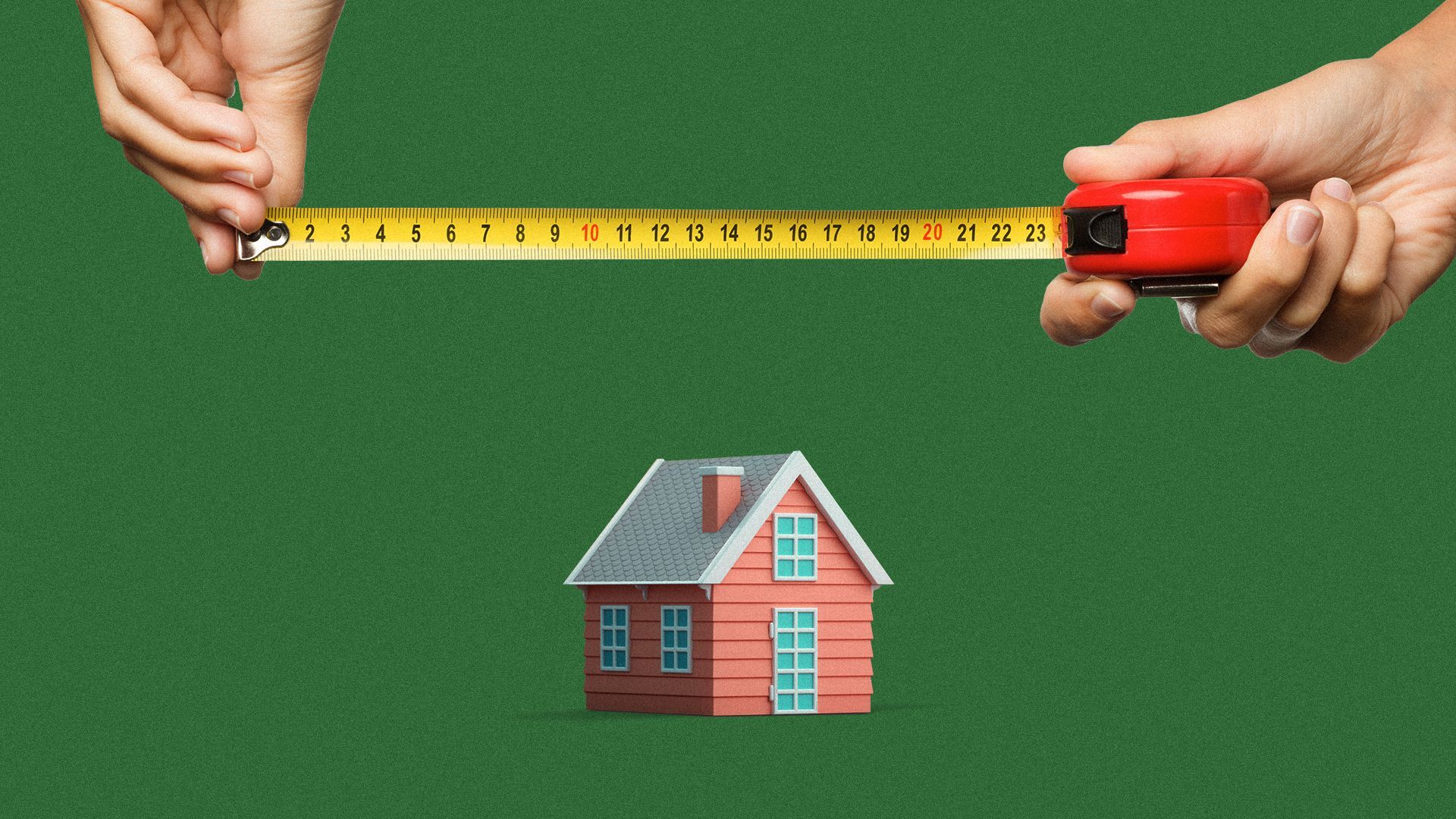
Illustration: Lindsey Bailey/Axios
Expect fewer hallways and more nooks that work as "pocket offices" or kid-friendly alcoves in newly built homes.
Why it matters: Builders and architects say they're using every square foot of space as many shrink houses to cut costs.
- "All that Tetris we played in the '90s has finally paid off," experts at John Burns Research and Consulting wrote in a recent report surveying industry pros nationwide.
State of play: North Texas-based Cadence Homes is building townhouses under $400,000 with workstations tucked just off the kitchen.
- Listed for about $155,000, one of Lennar's brand-new homes in San Antonio, Texas, offers 661 square feet of space — nearly all of which is open concept, except the primary suite and extra bathroom, which are tacked at the ends of each floor.
Reality check: Not everyone is eager to move in.
- "Why not just live in an RV at that point? No property taxes," one X user said about a 763-square-foot house, first reported by ResiClub, that Lennar is building in Fort Worth, Texas.
- It features two bedrooms that split off from a single hall, for under $200,000.
The big picture: Large homebuilders are churning out smaller houses, partly to attract first-time buyers prioritizing "affordability," D.R. Horton CFO Bill W. Wheat told analysts earlier this year.
By the numbers: The national median new home price held steady at $417,300 in June from a year earlier, Census Bureau data shows.
- Compare that with existing home prices, which recently hit a new high of $426,900, per the National Association of Realtors.


Over a third (38%) of U.S. builders say they constructed smaller houses last year, and 26% plan to go even smaller this year, according to the National Association of Home Builders.
- The downsizing comes as high interest rates have hiked costs for both buyers and builders.
Flashback: Builders mostly focused on larger houses after the Great Recession, but more starter homes were developed between 2016 and 2020, according to the trade association's chief economist, Robert Dietz.
- The size of new single-family homes expanded briefly during the post-COVID construction boom, when people sought more space and interest rates were lower.
What's next: Starter homes might look cramped with tighter kitchens and outdoor spaces, John Burns Research and Consulting found.
