New map unveils the deadliest neighborhoods for police killings


Add Axios as your preferred source to
see more of our stories on Google.
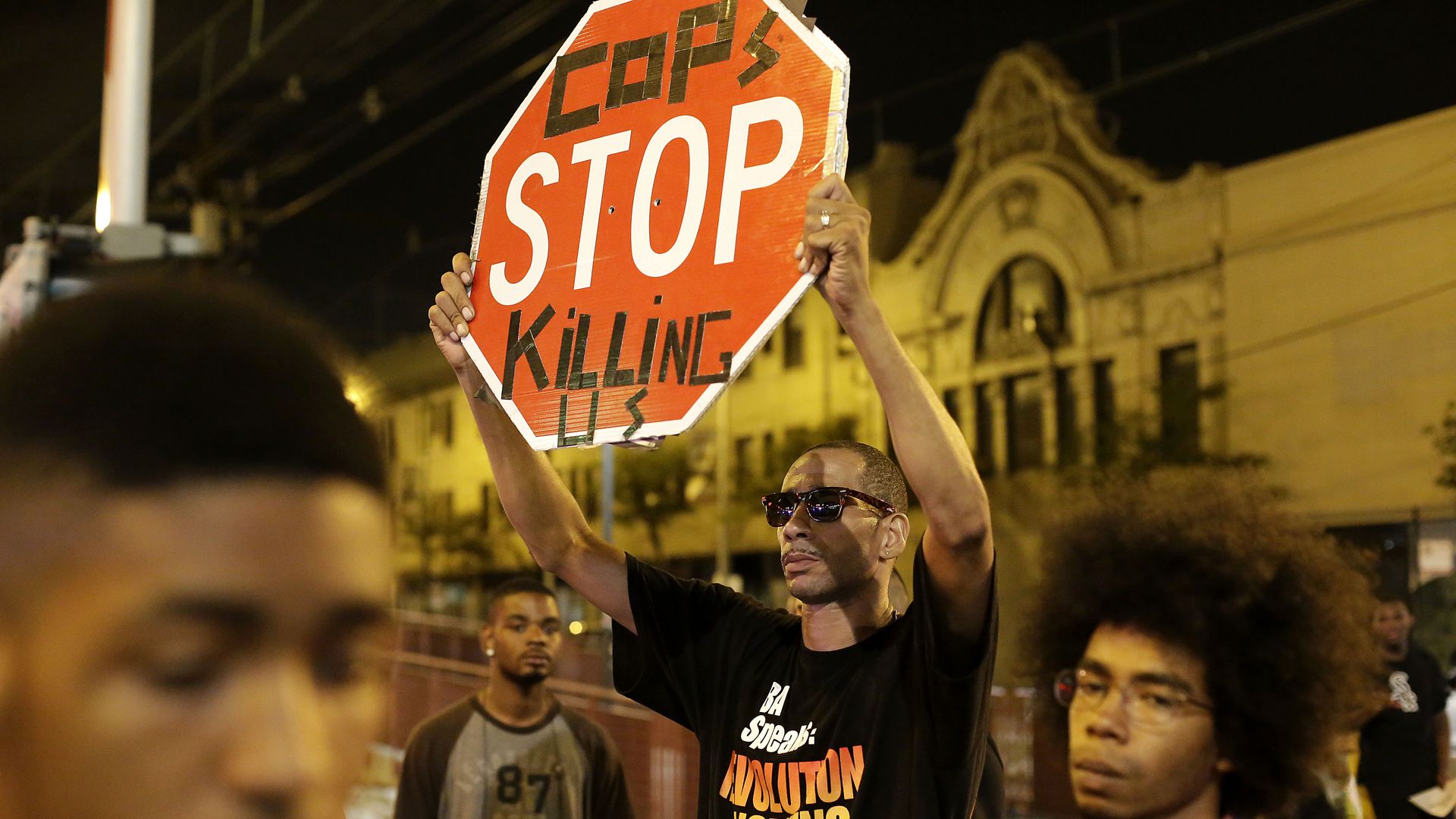
Demonstrators protest the fatal police shooting of Paul O'Neal on August 5, 2016 in Chicago. Photo: Joshua Lott via Getty Images
Nearly 13,400 people have been killed by law enforcement in the United States since 2013 — around 7% of the nation's homicides, according to new data released by the advocacy group Campaign Zero.
Why it matters: Not only does the data show a surge in killings by law enforcement since 2013, but Campaign Zero's new "Mapping Police Violence" shows specific neighborhoods in Chicago and St. Louis, with large Black populations, have a massively high proportion of killings.
The big picture: The detailed neighborhood-level analysis reviewed by Axios suggests aggressive policing in areas with significantly higher percentages of Black, Latino and Native American residents is leading to more killings by police.
- For example, the Campaign Zero data show Black Americans were 2.9 times more likely to be killed by law enforcement in the U.S. than the general population from 2013 to July 23, 2024.
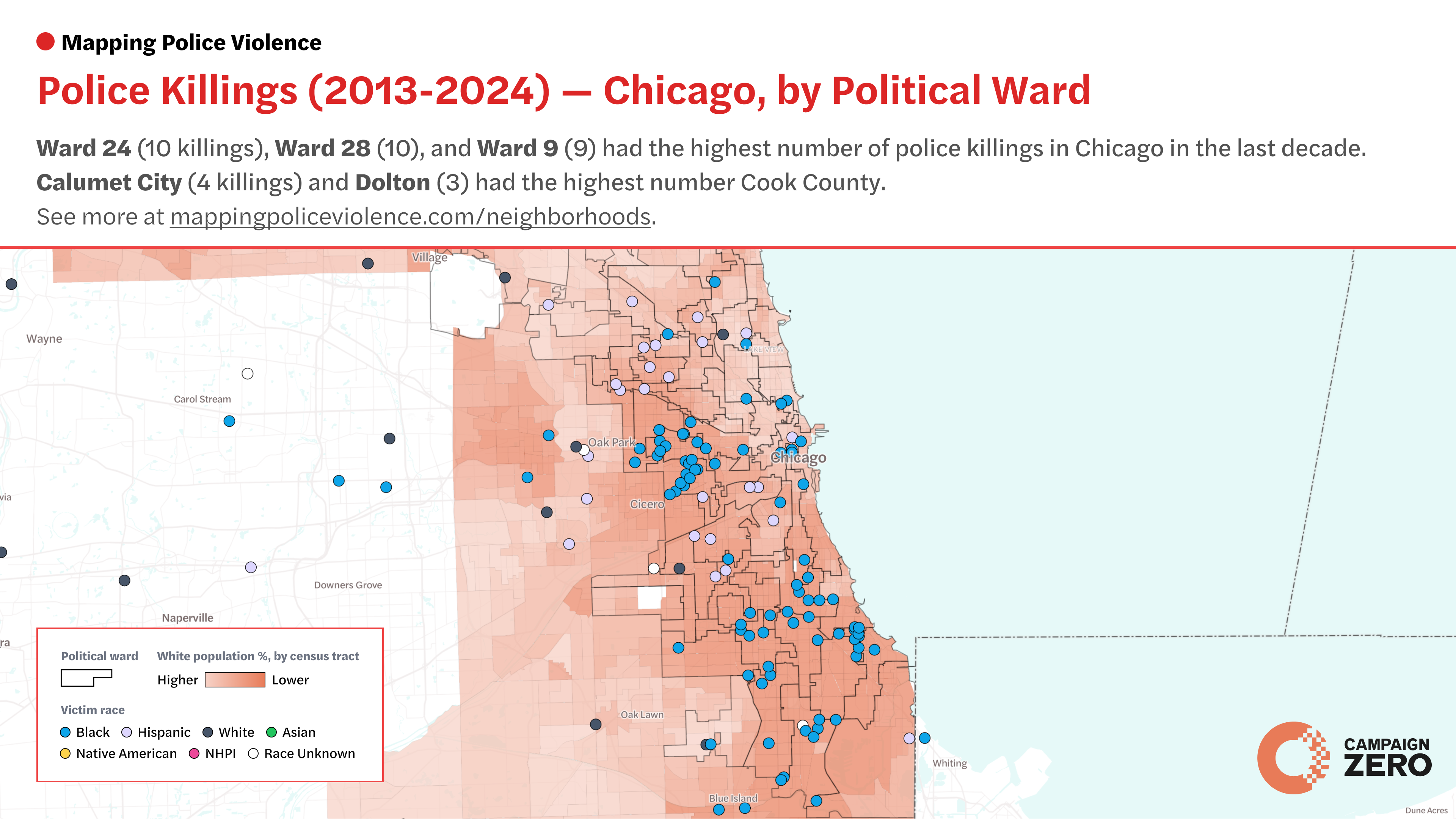
Stunning stat: Black residents in Chicago are 30.6 times more likely to be killed than White residents with massively higher portions of police shootings on certain streets and neighborhoods, the analysis found
- Black Americans also were 10.5 times more likely to be killed than White Americans in St. Louis, with higher portions of police shootings on certain streets and neighborhoods.
- 2023 was the deadliest year for people killed by law enforcement, with 1,352 police killings, according to the database.
The intrigue: The new mapping also shows how Native Americans and Hispanic residents were more likely to be shot by police in rural areas.
- The map gives clues to the high number of Native Americans and Latinos killed by law enforcement in New Mexico's Four Corners region that borders the Navajo Nation.
How it works: The database examines any incident where a law enforcement officer, whether off-duty or on-duty, uses lethal force, resulting in someone's death, regardless of whether the death is ruled "justified" or "unjustified."
By the numbers: The database found that law enforcement killed an average of 1,147 people per year from 2013 to July 2023, with Black Americans accounting for 28% of those deaths nationally.
- Black people in the U.S. are 2.9 times more likely than the general population to be killed by law enforcement.
- The average age of a person killed by law enforcement in the U.S. is 37 years old — 33 for Black people and 44 for White people.
- Since 2013, law enforcement has killed at least 112 people in Chicago and at least 53 people in St. Louis.
What they're saying: "For the first time, we will be able to talk about neighborhoods in a way that we've never been able to," Campaign Zero executive director DeRay Mckesson tells Axios.
- "We've never been able to identify the neighborhoods, but we have the latitude and longitude of all killings."
- Mckesson, one of the early leaders of the Ferguson protests, says the new data will allow city leaders, including city council people representing some of the deadliest neighborhoods, to have more focused conversations about police violence.
- A spokesman for the Fraternal Order of Police did not immediately respond to an email from Axios.
Between the lines: The mapping backs up what many experts have been saying about police tactics in poor neighborhoods — with higher-than-average crime rates — and how that leads to more police violence.
- Derek Hyra, author of Slow and Sudden Violence: Why and When Uprisings Occur, tells Axios that unjust or aggressive policing tends to crop up in impoverished communities.
Public housing projects, some of which were built when homes were destroyed for highways, were razed across the country in the 1990s and 2000s, creating pockets of poverty that are aggressively policed, Hyra said.
- Urban upheaval and removal of Black and Latino communities forced residents to move into neighborhoods that use Section 8 vouchers or low-income tax credits.
- Southeast Ferguson, Missouri, where Michael Brown was killed today 10 years ago, is an example.
