Scoop: U.S. won't sanction IDF unit for human rights violations in West Bank

Add Axios as your preferred source to
see more of our stories on Google.
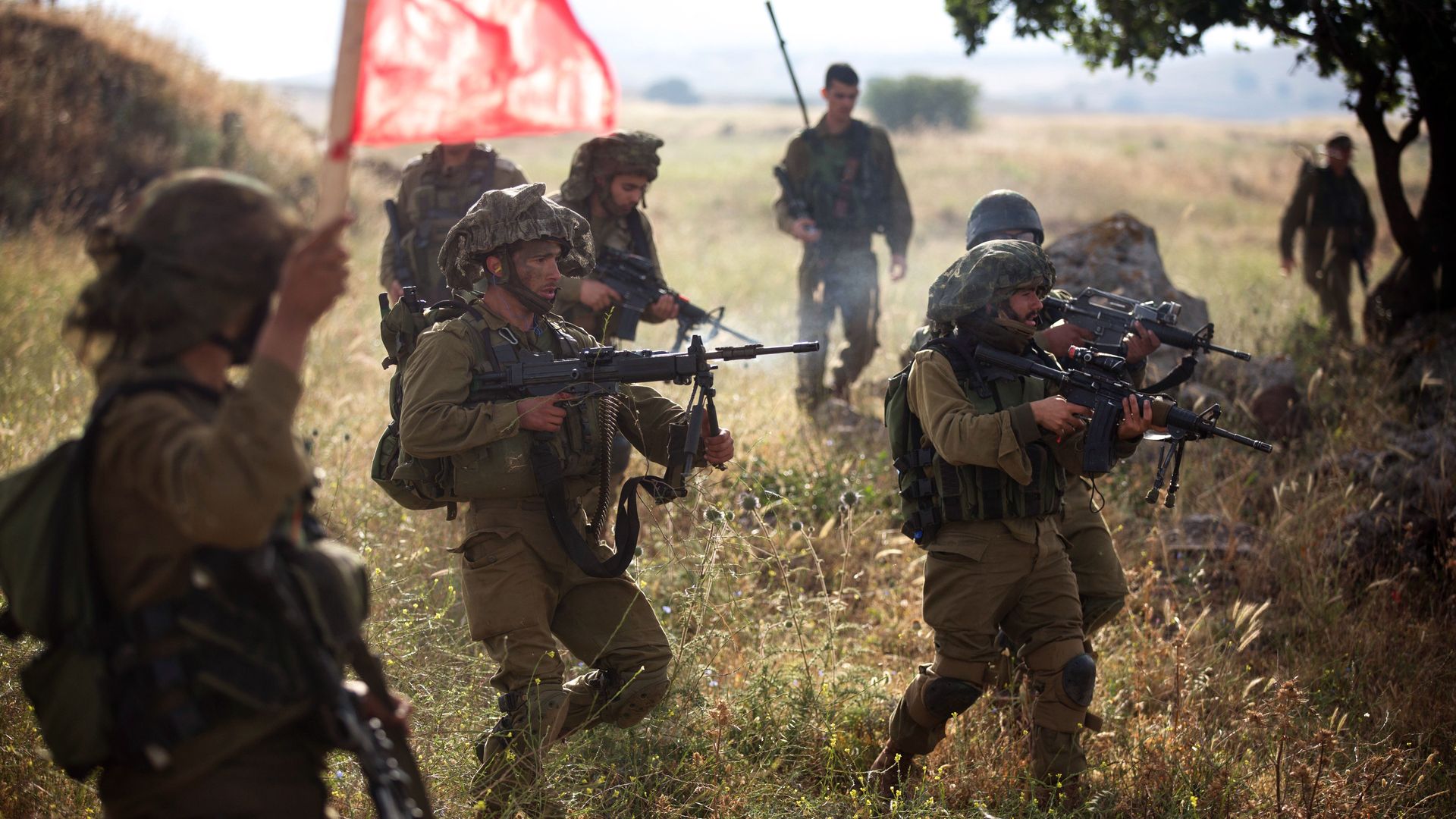
Israeli soldiers of the Ultra-Orthodox battalion "Netzah Yehuda" take part in their annual unit training on May 19, 2014. Photo: Menahem Kahana/AFP via Getty Images
Secretary of State Antony Blinken spoke on Friday with Israeli Defense Minister Yoav Gallant and informed him that he had decided to end the investigation into the Israel Defenses Force's "Netzah Yehuda" battalion for human rights violations in the occupied West Bank and not impose sanctions on the unit, according to two senior U.S. and Israeli officials.
Why it matters: It's a significant diplomatic achievement for Gallant, who in recent months has had quiet talks with Blinken and other senior U.S. officials in an effort to demonstrate the IDF has taken steps to address human rights violations by members of the battalion.
- If sanctions were imposed on the Netzah Yehuda battalion, it would have been an unprecedented move on the part of the Biden administration, and potentially damaged the IDF and relations between Israel and the United States.
- A 1997 law authored by then-Senator Patrick Leahy prohibits U.S. foreign aid and Defense Department training programs from going to foreign security, military and police units credibly alleged to have committed human rights violations.
Driving the news: A senior U.S. official said that while Blinken determined the battalion committed gross human rights violations, the information provided by Israel over the last three months showed the IDF remediated the behavior of the battalion and addressed U.S. concerns.
- The U.S. official said the IDF provided the U.S. evidence that the two soldiers who were involved in the most significant incident investigated were discharged from combat missions and would not be called for reserve service.
- The IDF told the U.S. that the criminal investigation against them didn't materialize because Palestinian witnesses refused to testify.
- The incidents occurred before the Oct. 7 Hamas attack on Israel and all took place in the occupied West Bank.
- The U.S. official added that the IDF showed the U.S. it has taken additional steps regarding the unit to avoid such incidents, including changing the vetting process for soldiers who want to join the unit and holding a two-week seminar about human rights violations specifically for this unit.
What they're saying: "As we made public in April, the Department of State found after a careful review that incidents of gross violations of human rights by two units of the Israeli Defense Forces and two civilian authority units had been effectively remediated," State Department spokesperson Matthew Miller said.
- "The Department has for the past several months continued to review an additional unit to evaluate new information provided by the Government of Israel. After thoroughly reviewing that information, we have determined that violations by this unit have also been effectively remediated. Consistent with the Leahy process, this unit can continue receiving security assistance from the United States of America."
The big picture: The Netzah Yehuda battalion was formed as a special unit for ultra-orthodox soldiers. All of its members are men.
- Over the years, the unit stationed in the West Bank became a destination for many "Hilltop Youth" — young radical right-wing settlers who weren't accepted into any other combat unit in the IDF.
- The U.S. State Department started investigating the battalion in late 2022 after its soldiers were involved in several incidents of violence against Palestinian civilians, Haaretz reported at the time.
Zoom in: One incident was the death of 80-year-old Palestinian American Omar Assad in January 2022.
- Assad was arrested by Netzah Yehuda soldiers at a checkpoint in his village in the West Bank late at night. After he refused to be checked, soldiers handcuffed and gagged him and left him on the ground in the cold. He was found dead a few hours later.
- In January 2023, the battalion was moved from the West Bank to the Golan Heights. Haaretz reported at the time that the decision was a result of the many incidents in which its soldiers used violence against Palestinian civilians.
Editor's note: This story has been updated with additional details.
