Tesla's center of gravity is shifting away from EVs

Add Axios as your preferred source to
see more of our stories on Google.
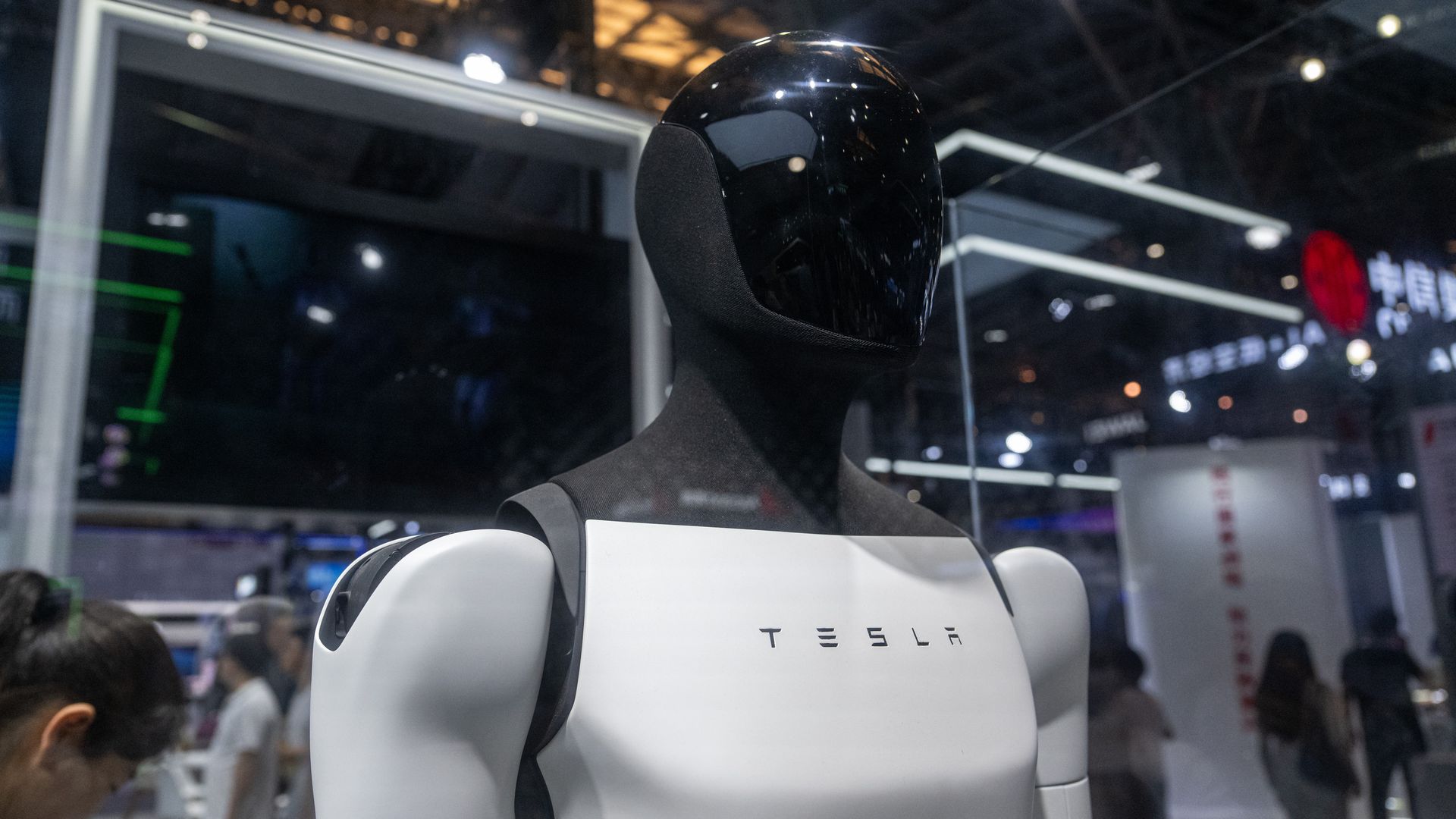
A Tesla humanoid robot on display at a convention this month in Shanghai. Photo: John Ricky/Anadolu via Getty Images
Forget cars. Tesla's future, based on CEO Elon Musk's latest explanation, will be built on robotics.
Why it matters: This new focus — however deviant and realistic — may be a necessity as the company's core business of EVs faces pricklier market and political conditions.
Driving the news: "I think the long-term value of Optimus will exceed that of everything else at Tesla combined," Musk, referring to Tesla's humanoid robot platform, said to investors Tuesday afternoon.
- "I think everyone on earth is going to want one," he continued, forecasting the long-term demand for general purpose, humanoid robots "in excess of 20 billion units."
- "Tesla has the most advanced humanoid robots in the world and is also very good at manufacturing and [we're] the world leaders in real-world AI."
Context: His comments came on the heels of Tesla's latest earnings report, which showed that the company's autos revenue suffered a 7% drop.
- CFO Vaibhav Taneja called out consumers' more watchful spending behavior as a reason for a slew of price cuts and financing deals to spur demand — but industry metrics show that the problem of slowing EV adoption in the U.S. is much broader.
- Meanwhile, competition from Chinese EV makers also continues to put pressure on Tesla's business in a country that makes up more than 20% of its sales.
"There have been quite a few competing electric vehicles that have entered the market, and mostly they have not done well. But they have discounted their EVs very substantially, which has made it a bit more difficult for Tesla," Musk said on the call, without specifically calling out China (this time).
Geopolitics
Musk and co. are wary about the impact that new policies may have on EV demand.
- A potential second Trump administration may bring tariffs of 10% across-the-board, for example, posing greater challenges to Tesla's automotive operations.
Zoom in: Musk noted on Tuesday that Tesla's Mexico Gigafactory manufacturing plant build continues to sit on ice because former President "Trump has said that he would put heavy tariffs on vehicles produced in Mexico."
- "It doesn't make sense to invest a lot in Mexico if that is going to be the case."
- Taneja also pointed out that the company is adjusting its China-to-Europe export strategy "as fast as we can," as the EU readies new 17%-38% tariffs on Chinese EV imports.
Zoom out: Then there are policy threats that could hurt future sales, including a rollback of the Inflation Reduction Act for certain clean energy manufacturing projects and consumer incentives.
- Musk waved off this investor concern by saying that any changes would be "devastating for our competitors," and actually potentially beneficial to Tesla long-term, without specifying how.
- Earlier this year, former Tesla president Jon McNeill told CNBC that the IRA was crucial to leveling the playing field against Chinese car markers.
A robot future
Though Optimus is not a household brand the same way the Tesla Model 3 or Y are, the concept of humanoid robots has become more common over the past decade.
- Boston Dynamics famously put these machines on the map (and into nightmares) when videos of its Atlas design went viral for moving through life like a human.
- More recently, startups in the same space, such as Figure, has attracted hundreds of millions of dollars in funding from the likes of Jeff Bezos.
Between the lines: With competition to build humanoid robots already underway, and pressures on its EV business growing, Musk can't afford to waste time.
💭 Our thought bubble: The story that Musk wants to tell is that everything Tesla has been working on over the past twenty years has led to this point of expansion.
- The humanoid robot combines machinery Tesla's been perfecting at its gigafactory plants with AI systems that help its cars drive themselves.
- And as it (like many other Big Tech companies) tries to wean itself off Nvidia chips by building its own silicon platform — dubbed Dojo — Tesla's moving toward Apple-esque, fully vertically integrated operations across all its products.
What we're watching
Investors' patience with high-cost big pivots from Big Tech has proved to be thin. Just look at Facebook's shift to the metaverse and its subsequent refocus on AI.
- Tesla's shares were trading down over 10% Wednesday a day after Musk held court with investors, suggesting they aren't buying the robotics story.
After all, the company has been feeding the market another story too: A robotaxi platform aimed at replacing its low-cost EV strategy.
- Many analysts asked for details on the upcoming product launch, which is scheduled now to be unveiled on Oct. 10, but Musk declined to comment, saying he wants to reserve product announcements for specialized events.
The bottom line: Selling a new story while others haven't yet materialized will not win over skeptics or make existing problems disappear.
