How summer heats up office tensions

Add Axios as your preferred source to
see more of our stories on Google.
/2024/06/28/1719605844669.gif?w=3840)
Illustration: Aïda Amer/Axios
As we head into the thick of summertime in the workplace, all the simmering issues that make coordinating a remote workforce challenging are coming to a boil.
Why it matters: Summer is a flashpoint at the office.
- Tis the season when flexible work arrangements collide with employees' summer vacation plans.
- Some bosses resolve the tension with strict crackdowns on any intrusion of leisure into the workday, while others are more inclined to trust employees and offer more flexibility.
- For some working parents, managing kids' camp schedules or dealing with a house full of children on break can make things even more complicated, says Kevin Delaney, cofounder of Charter, a future-of-work media and research company.
Zoom in: It's an especially tricky moment for middle managers, who are struggling to trust workers at a time when they're not always right in front of the boss' face.
- Like sandwich generation adults squeezed between caring for aging parents and young kids, the middle managers are wedged between demanding executives and the workers under them whom they want to keep happy — and productive.
- Everyone is also paying a "coordination tax," the extra time spent just figuring out where colleagues are and how to reach them.
It's a situation that breeds burnout and anxiety, fueling distrust that comes to a head in the summer.
- In the worst case scenario you wind up with monitoring software and strict return to office ultimatums that push some people out of the workforce.
The big picture: The hybrid work world is here to stay. Managers need to adapt.
- The solution is actually simple, says Delaney: conversations. Share your summer challenges with your manager. For example, if your kids don't have camp on Fridays, for example, tell the boss you'll be working but at slightly different hours than usual. Ask if that's OK.
- Managers need to be clear about setting expectations, and allowing people flexibility — especially during this fraught season.
Without those conversations, you wind up with workers who take so-called "quiet vacations."
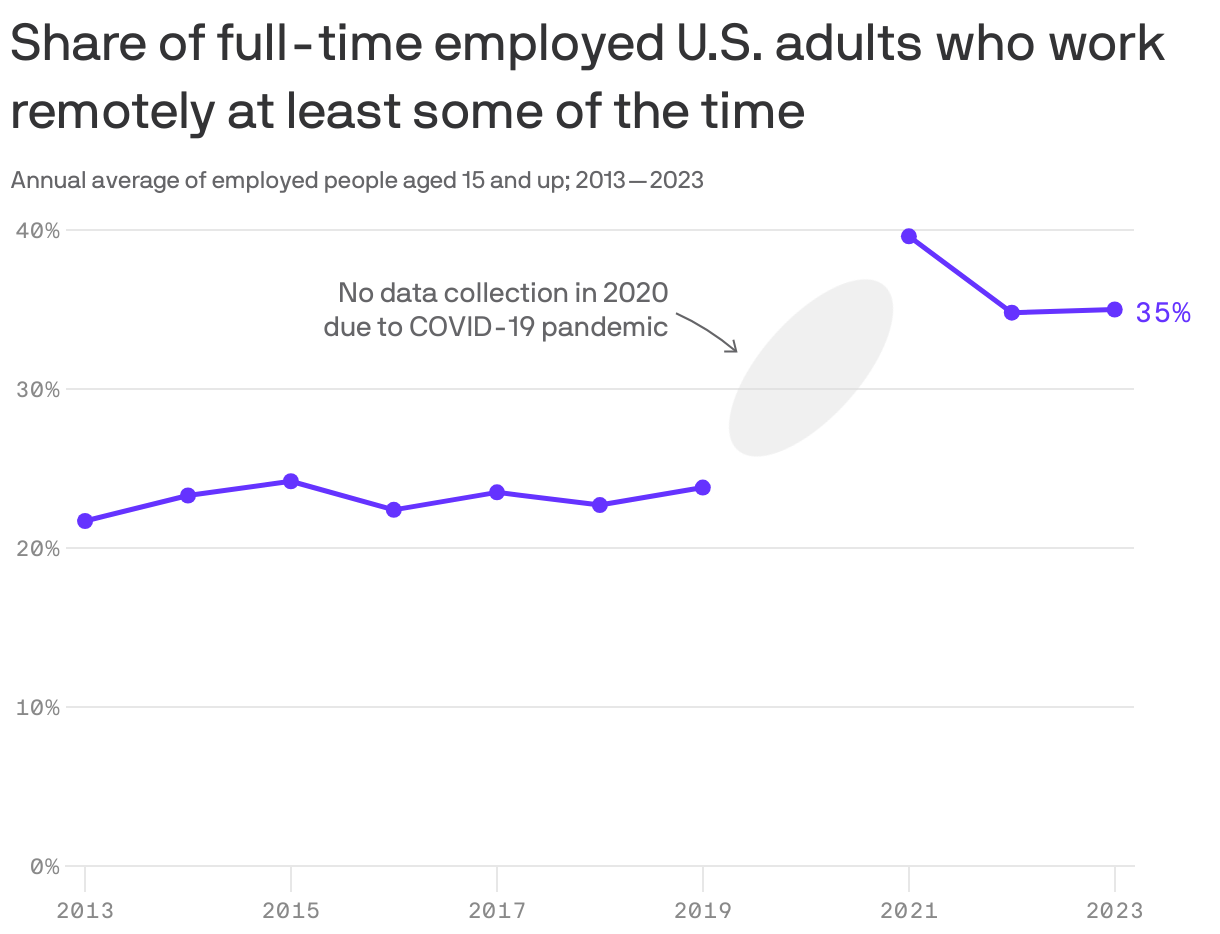
By the numbers: In 2023, 35% of workers age 15 and over worked from home some of the time, per fresh data from the American Time Use Survey from the Bureau of Labor Statistics.
- That's unchanged from 2022 — and down from a peak 40% in 2021.
The bottom line: To make the summer work for workers, talk to them, set expectations and establish trust.
