Hydrogen could power the next-gen aircraft of tomorrow

Add Axios as your preferred source to
see more of our stories on Google.
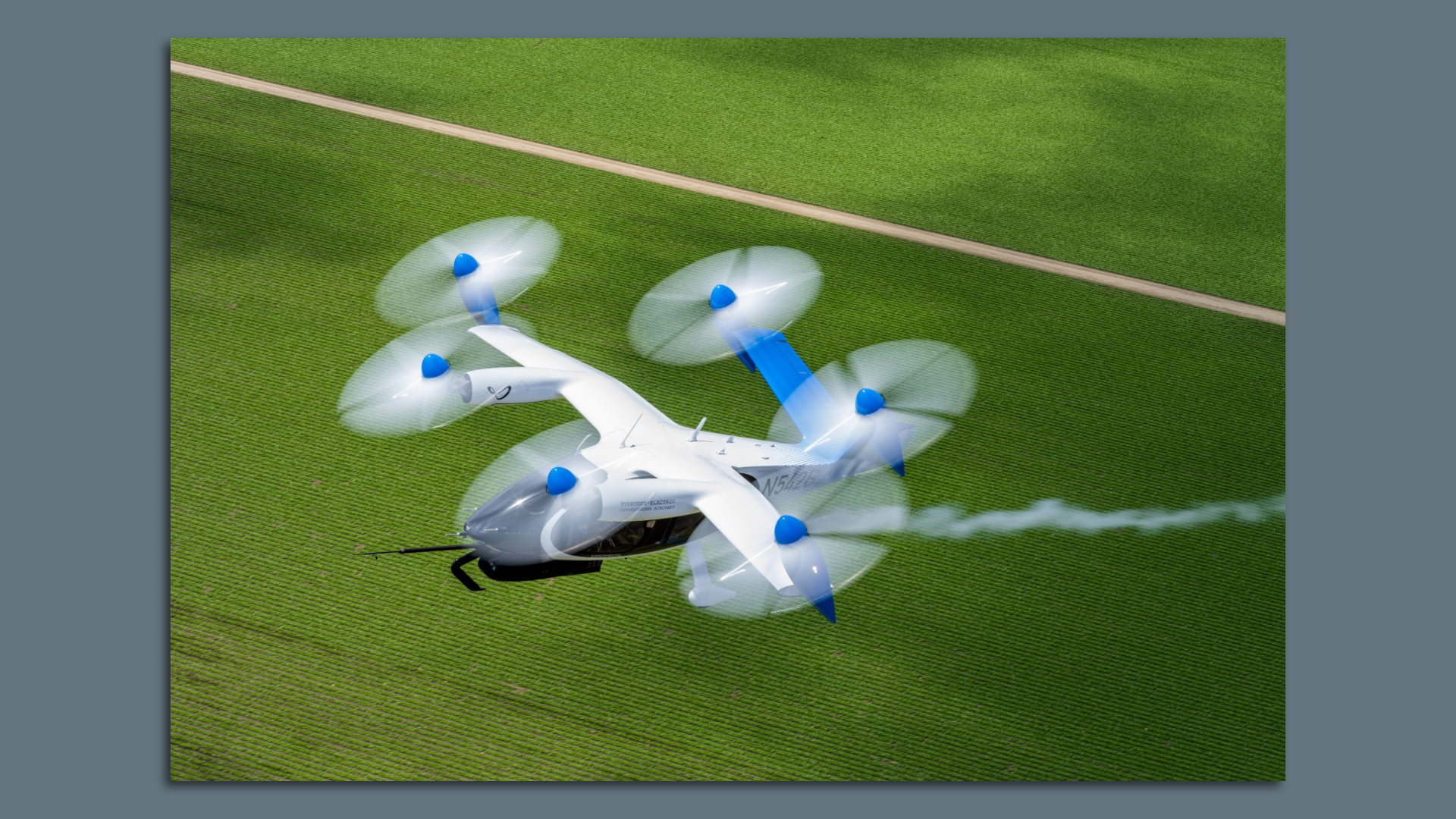
Water vapor is the only emission from a demonstration flight of a hydrogen fuel cell version of Joby's vertical takeoff and landing aircraft. Photo: Courtesy of Joby
Electric air taxi startup Joby Aviation is developing a hydrogen-powered version of its vertical takeoff and landing aircraft that could enable longer routes between cities.
Why it matters: Hydrogen fuel cells — already used in cars, trucks and industrial equipment — could be a game-changer for the aviation industry, which is under intense pressure to reduce its greenhouse gas emissions.
Driving the news: Joby successfully flew a 523-mile demonstration flight using a first-of-its-kind hydrogen-electric air taxi, it said today.
- The test flight, completed last month in California, involved a converted prototype of Joby's electric vertical takeoff and landing (eVTOL) aircraft already in development.
- It was outfitted with a liquid hydrogen fuel cell and hydrogen-electric propulsion.
- A trail of water vapor, seen in the photo above, is the only emission.
How it works: Hydrogen-powered aircraft can burn liquid hydrogen directly in an engine, or they can use gaseous hydrogen in a fuel cell system.
- With fuel cells, the hydrogen spurs an electrochemical reaction that produces electricity to charge the aircraft's batteries while in flight.
- That electricity drives the electric motor and spins the propellers, with water as the only byproduct.
Zoom in: Joby's primary focus remains launching an electric air taxi as early as 2025 for short hops between urban centers and airports, starting in New York, Los Angeles and Dubai.
- But repurposing its existing eVTOL design for the hydrogen demonstration flight is an efficient way for Joby to begin exploring the potential for longer routes.
- "The vast majority of the design, testing and certification work we've completed on our battery-electric aircraft carries over to commercializing hydrogen-electric flight," founder and CEO JoeBen Bevirt tells Axios.
Between the lines: Because Joby is building a vertically integrated operation, different aircraft will be able to use the same vertiport facilities, operations personnel and booking software.
- The Pentagon — Joby's largest customer — is also keen on hydrogen because it supports the military's clean energy goals, Jacob Wilson, acting branch chief of the U.S. Air Force's AFWERX Agility Prime advanced technology program, said in a statement.
Catch up quick: Joby has been working on hydrogen flight since 2021, when it acquired H2Fly, a German company that last year completed the world's first piloted flight of a liquid hydrogen-powered electric aircraft.
The big picture: Decarbonizing aviation is a monumental challenge, which is why the industry is exploring a range of solutions — including more efficient planes and engines and increased use of sustainable aviation fuels.
- There's a potential sweet spot for hydrogen on short-haul flights of several hundred miles or so — especially for VTOLs, which don't need a runway.
- Passengers could fly from the heart of San Francisco to San Diego or Boston to Baltimore, for example, without having to go to the airport.
- Hydrogen also allows for quicker refueling compared to battery-electric technology.
- To meet climate targets, however, hydrogen must be produced from renewable sources.
State of play: American Airlines recently agreed to buy 100 hydrogen-electric engines from ZeroAvia, a fuel cell aviation startup, to power its regional jets.
- Massachusetts-based Alaka'i Technologies is developing a hydrogen-powered VTOL that would compete with Joby, Archer and other eVTOL companies.
Reality check: Another hydrogen aircraft startup, Universal Hydrogen, is shutting down amid financial struggles.
What we're watching: Congress recently passed a bipartisan bill that directs the Federal Aviation Administration to research and develop strategies for using hydrogen fuel within the next year.
