Biden's dual NATO mission: Reassure America and the world

Add Axios as your preferred source to
see more of our stories on Google.
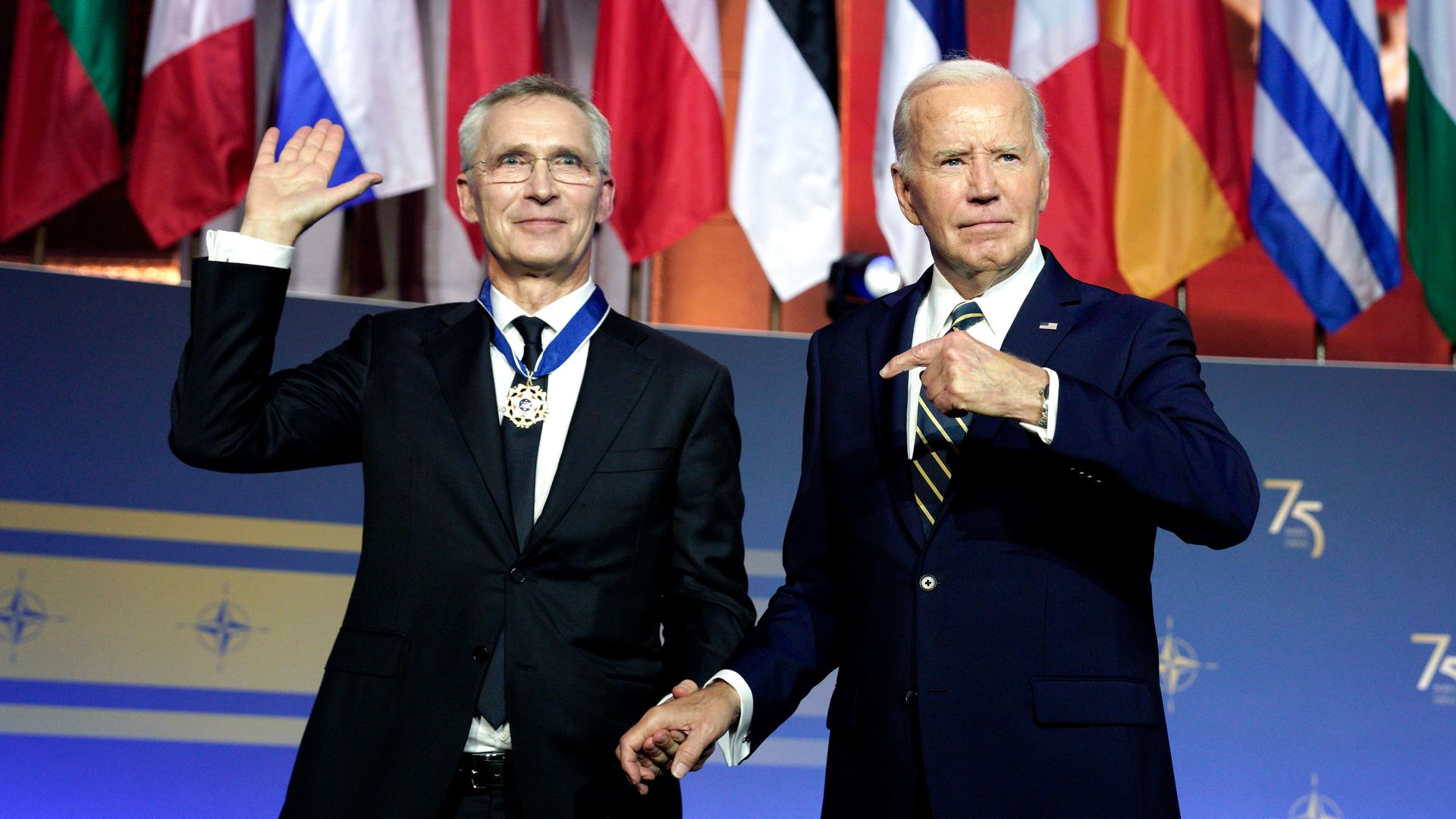
Biden awards outgoing NATO Secretary General Jens Stoltenberg the Presidential Medal of Freedom. Photo: Yuri Gripas/Abaca/Bloomberg via Getty Images
President Biden wants to use this week's NATO summit in Washington to reassert his leadership over two anxious audiences: the Democratic Party, and Western allies unsure what to make of the unfolding political crisis.
Why it matters: The summit, which kicked off Tuesday and commemorates 75 years since the alliance was established, is Biden's first major international event since last month's debate raised doubts about his capacity to lead NATO's most important ally.
- More than 30 leaders have descended on D.C. to discuss critical issues like Ukraine's roadmap to NATO membership, air defenses against Russian missile and drone attacks, and the joint challenges posed by China.
- Many NATO leaders and diplomats are also privately eager to see Biden up close, having tracked the fallout from his debate fiasco from afar.
The intrigue: "People are coming to witness whether Biden is or is no longer [in charge]," one European diplomat said.
Behind the scenes: European officials and diplomats have expressed concerns about the situation in private, especially given their growing anxiety about the possibility that former President Trump will return to the White House.
- Trump — a NATO critic who once suggested he would "encourage" Russia to attack allies who were "delinquent" on their military spending — has not hidden his skepticism about current U.S. policies on supporting Ukraine.
- Ukrainian President Volodymyr Zelensky is among the leaders who watched the presidential debate and is concerned about the situation, according to a Ukrainian source.
- "Let's be candid and frank: Everyone is waiting for November," Zelensky, who will meet with Biden on Thursday, said in a press conference. "The whole world is looking to November, and truly speaking, Putin awaits November too."
The other side: White House spokesman John Kirby firmly rejected questions from reporters Monday regarding the possible need to reassure NATO allies, saying that none have raised those concerns since the debate.
- State Department spokesman Matthew Miller had to fend off similar questions on Tuesday and stressed that no U.S. ally had expressed concern to American diplomats about the president's situation.
- Some U.S. officials even went as far as telling reporters during a pre-summit briefing that Biden planned to participate in an event during the NATO summit that will take place after 8pm.
- "Foreign leaders have seen Joe Biden up close and personal for the last three years. They know who they're dealing with, and ... they know how effective he's been about NATO," one U.S. official said.
What they're saying: In his speech at the opening ceremony of the summit on Tuesday evening, Biden spoke forcefully — even shouting at some points — about Western resolve and Russia's failure to defeat Ukraine.
- "Russia will not prevail, Ukraine will prevail," Biden declared in the speech.
- He touted his record leading NATO's expansion and said that 23 member states are now spending at least 2% of their GDP on defense, compared to only nine when he assumed office.
- Biden claimed that the majority of Americans from both parties understand why NATO is important and support it, despite Trump's criticism.
What's next: At the end of the summit on Thursday, Biden will conduct what his team called "a 'big boy' press conference" — a closely watched opportunity for Biden to try and restore public confidence in his re-election.
