Israel sees major progress in new Hamas response to hostage-ceasefire deal

Add Axios as your preferred source to
see more of our stories on Google.
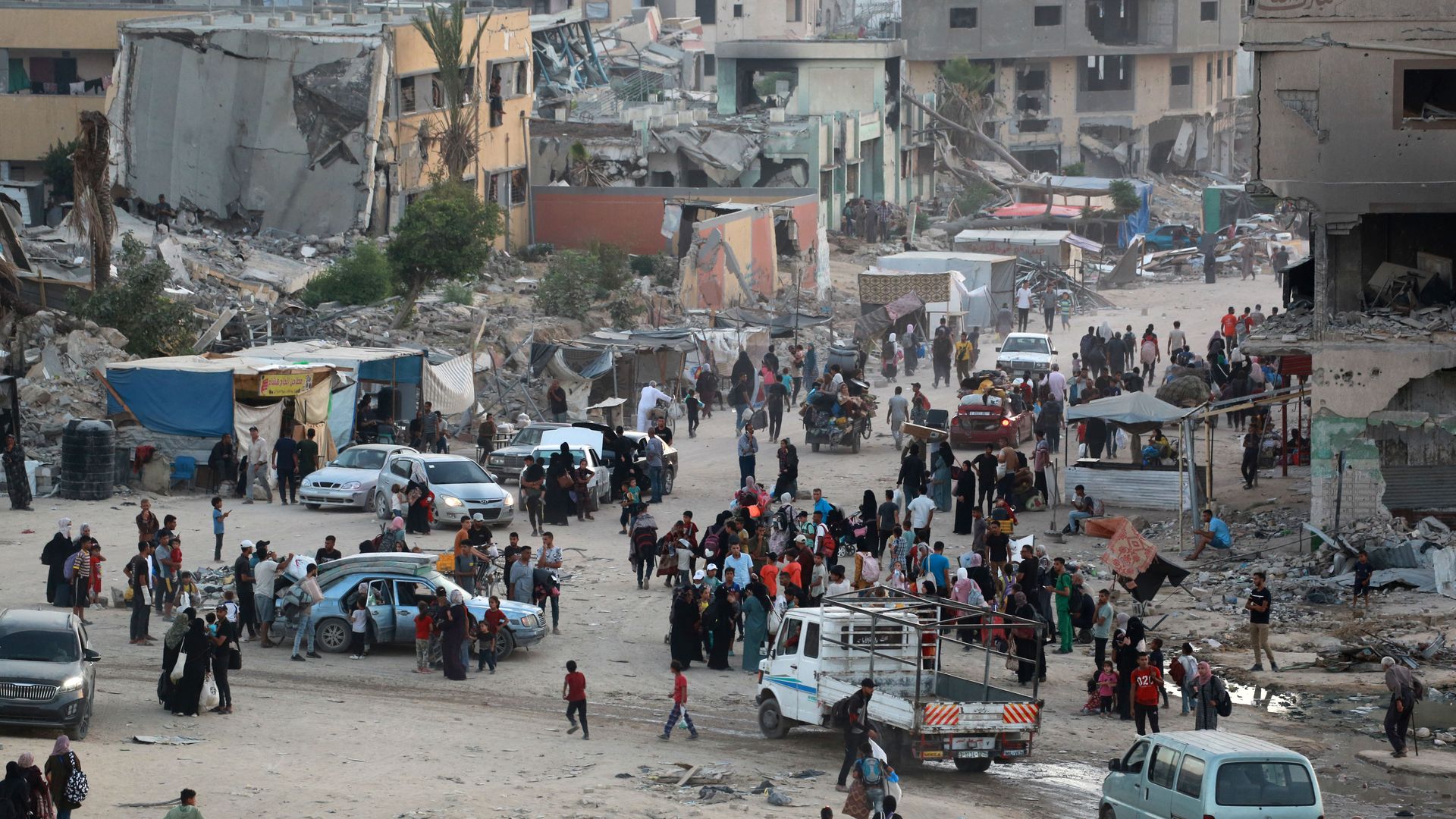
Displaced Palestinians leave an area in east Khan Yunis after the Israeli army issued a new evacuation order on July 1. Photo: Bashar Taleb/AFP via Getty Images
Qatar and Egypt on Wednesday delivered Hamas' updated response to Israel's proposal for a hostage and ceasefire deal in Gaza, the Israeli Mossad said in a statement.
Why it matters: Two senior Israeli officials told Axios that Hamas' updated response was constructive and opens the door to more detailed negotiations that could result in a deal.
Driving the news: Axios reported over the weekend that the Biden administration has presented new language for parts of the proposed hostage and ceasefire deal in an effort to bridge remaining gaps and reach an agreement.
- The U.S. effort was based on an Israeli proposal that was approved by Israel's war cabinet and presented by President Biden in a speech in late May.
- The Biden administration is pushing for a three-phase deal that would lead to the release of the 120 remaining hostages held by Hamas and to "sustainable calm" in Gaza, where nearly 40,000 Palestinians have been killed by Israel, according to local health authorities.
- The new language that the U.S. presented — and that Qatari and Egyptian mediators pressed Hamas hard to accept — was focused on Article 8 in the proposal.
Zoom in: This part of the agreement outlines Israel-Hamas negotiations that would begin during implementation of the first stage of the deal. The talks would focus on setting the exact conditions for the second stage of the deal, which includes reaching "sustainable calm" in Gaza.
- Hamas wants these negotiations to focus only on the number and identity of Palestinian prisoners who will be released from Israeli jails in return for every living Israeli soldier or male hostage held in Gaza.
- Israel, on the other hand, wants the ability to raise the de-militarization of Gaza and other issues during these negotiations.
Behind the scenes: Hamas' response was delivered to Israel on Wednesday around noon local time, a senior Israeli official said.
- Israel's negotiation team began studying the response immediately and saw it was much better than the initial response Hamas sent on June 12, two Israeli officials said.
- The officials said Hamas' response makes it possible to reach an agreement on Articles 8 and 14 — the source of the main gaps between the parties.
Reality check: One Israeli official said that "important progress has been made, but there is still a significant way to go with serious challenges."
- Even if the parties enter into detailed negotiations, they will be "tough" and likely "take several weeks to reach an agreement," the official said.
The big picture: A deal in Gaza would be a huge accomplishment for Biden, who has been pushing for an end to the violence for months and is facing massive political pressure at home after his shaky debate performance.
- A hostage and ceasefire deal would upend the news cycle and allow Biden to flex his national security and foreign policy credentials, which officials have long pointed to when rebutting questions about his age.
What's next: In the coming days, Israel's negotiation team is expected to hold discussions with Prime Minister Benjamin Netanyahu and Defense Minister Yoav Gallant to formulate a policy on Hamas' response and decide whether to enter detailed negotiations in Qatar or Egypt.
