Biden awards Medal of Honor to Union soldiers for covert Civil War mission

Add Axios as your preferred source to
see more of our stories on Google.
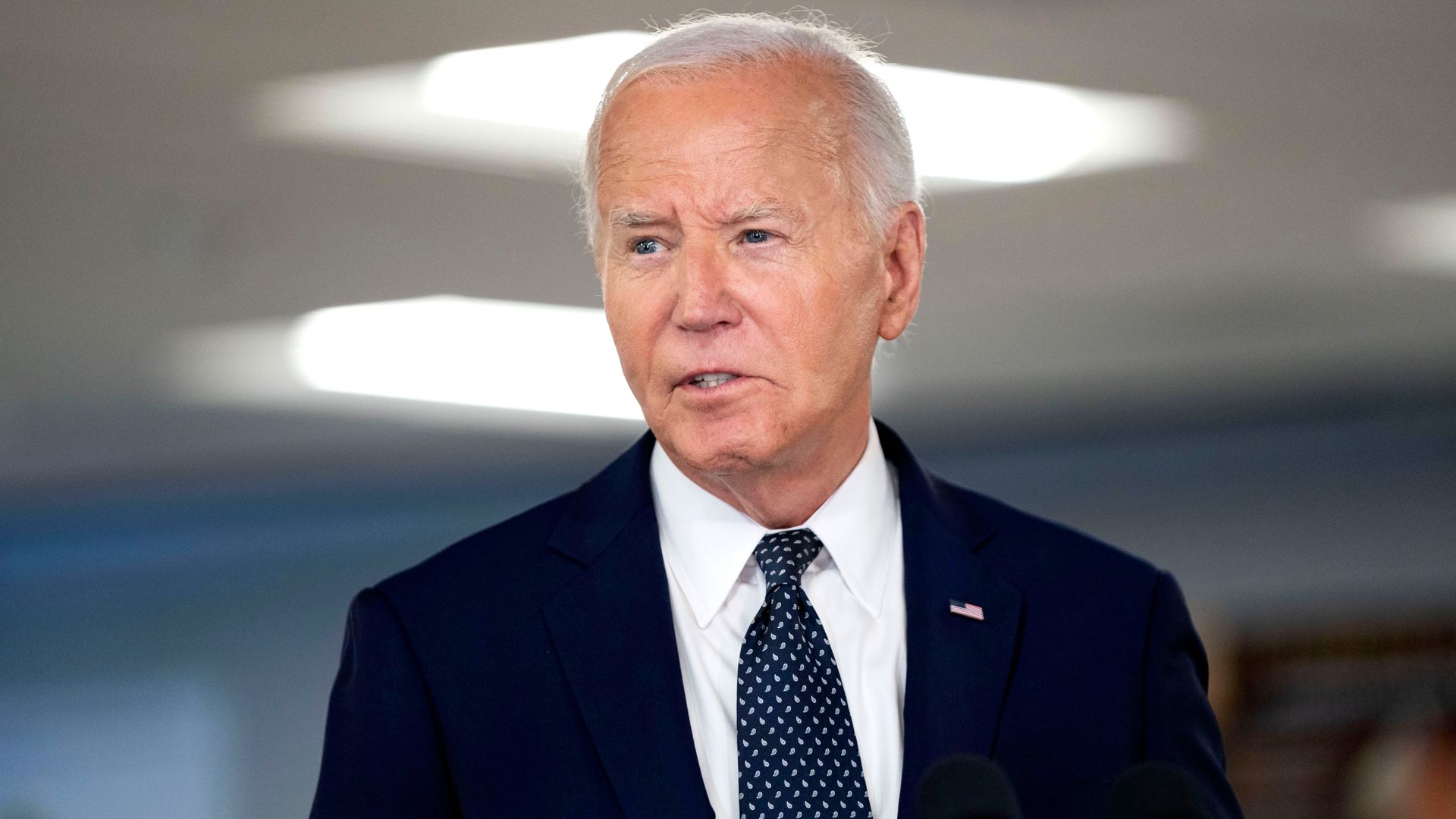
President Biden speaking in Washington, D.C., on July 2. Photo: Bonnie Cash/UPI/Bloomberg via Getty Images
President Biden bestowed the Medal of Honor for conspicuous gallantry posthumously to two U.S. soldiers who took part in a daring Civil War covert operation that involved stealing a train 200 miles behind Confederate lines.
Why it matters: The mission, which became known as the Great Locomotive Chase, was one of the earliest special operations in U.S. Army history.
- Six of the participants in the train raid were the first recipients of the Medal of Honor, the country's highest military decoration, while others received the award for their role in the raid later on.
- It's unclear why Pvts. Philip Shadrach and George Wilson did not receive medals, but Biden recognized their courage 162 years after they were caught and executed.
What they're saying: "Every soldier who joined that mission was awarded the Medal of Honor — except for two," Biden said. "Two soldiers died because of that mission but never received that recognition."
- "Today, we right that wrong," he said. "Today, they finally receive the recognition they deserve."
The big picture: The April 1862 train raid sought to degrade Confederate railway and communication lines that supported the rebel stronghold of Chattanooga, Tennessee.
- The mission involved 24 Union soldiers and volunteers dressing as civilians to infiltrate the Confederacy, hijacking a train in Georgia and riding it 87 miles north while destroying enemy infrastructure along the way.
Eventually, the raiders ran out of fuel and abandoned the locomotive. They were all later captured by Confederate troops and tried and convicted for "acts of unlawful belligerency."
- At least eight of the raiders, including Shadrach and Wilson, were executed by hanging, while the remaining raiders were kept as prisoners of war, though eight escaped imprisonment.
- The mission started just days after the Battle of Shiloh was fought about 220 miles west of Chatanooga in southwestern Tennessee.
Zoom in: Shadrach, born in Pennsylvania and orphaned at an early age, was 21 when he volunteered for the train raid.
- Wilson, originally a tradesman in Ohio, became a central figure in the mission. Before he was killed, Wilson told the crowd gathered for the executions that he felt no hostility toward them and did not regret dying for his country, according to the Army.
- Both were initially buried at their execution site in Atlanta, but their remains were later moved to the Chattanooga National Cemetery on April 25, 1866.
Go deeper: Biden pardons veterans convicted under military's ban on gay sex
Editor's note: This story was updated to include a statement from Biden.
