Biden pardons veterans convicted under military's ban on gay sex

Add Axios as your preferred source to
see more of our stories on Google.
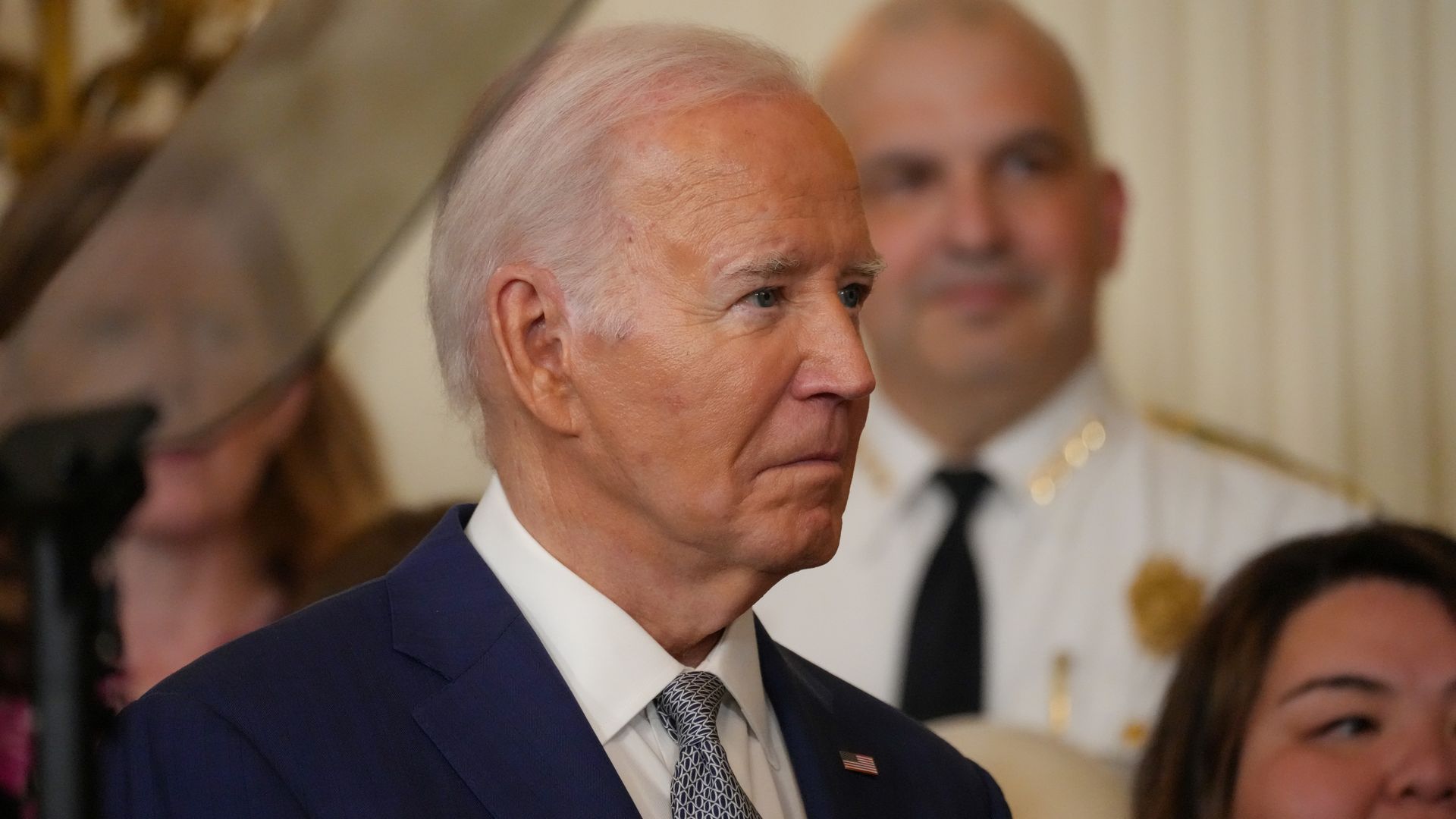
President Biden in the White House on June 18. Photo: Andrew Leyden/NurPhoto via Getty Images
President Biden on Wednesday pardoned veterans who were convicted and forced out of the military because of a former law that banned gay sex, including between consenting adults.
Why it matters: Biden's clemency will extend to thousands of former military service members who were convicted of the former Uniform Code of Military Justice Article 125 while it was in effect from the 1950s to 2013.
What they're saying: "Today, I am righting an historic wrong by using my clemency authority to pardon many former service members who were convicted simply for being themselves," Biden said in a statement.
- "Despite their courage and great sacrifice, thousands of LGBTQI+ service members were forced out of the military because of their sexual orientation or gender identity," he said.
- "This is about dignity, decency, and ensuring the culture of our Armed Forces reflect the values that make us an exceptional nation."
Zoom out: The clemency action won't automatically change the recipients' criminal record.
- It will instead allow them to apply for a pardon that will help them receive benefits that were withheld from them due to their other than honorable discharge status.
- It will also not apply to people convicted of non-consensual acts, like rape.
Context: The law specifically stated that those who engage in "unnatural carnal copulation" are guilty of "sodomy," meaning it technically also outlawed other forms of heterosexual intercourse.
- The ban was repealed by Congress and former President Obama as part of the fiscal year 2014 defense authorization bill. In its place, a new law made sodomy by force subject to a court martial.
The big picture: The move is separate from the Department of Defense's (DOD) ongoing review of LGBTQ+ veterans who may have been forced out of the service under its "don't ask, don't tell" policy (DADT).
- The initiative could allow thousands of veterans receive retroactive honorable discharges, giving them access to the full amount of benefits for their service.
By the numbers: At least 32,837 LGBTQ service members between 1980 and 2011 were forced out of the military under DADT and other policies that prevented them from serving, according to DOD data.
- Over 14,000 of those service members received general, other than honorable, uncharacterized or unknown discharge or separation characterizations throughout those decades.
Go deeper: Defense industry rushing to hire workers as military spending spikes
