AI is supercharging disease diagnosis

Add Axios as your preferred source to
see more of our stories on Google.
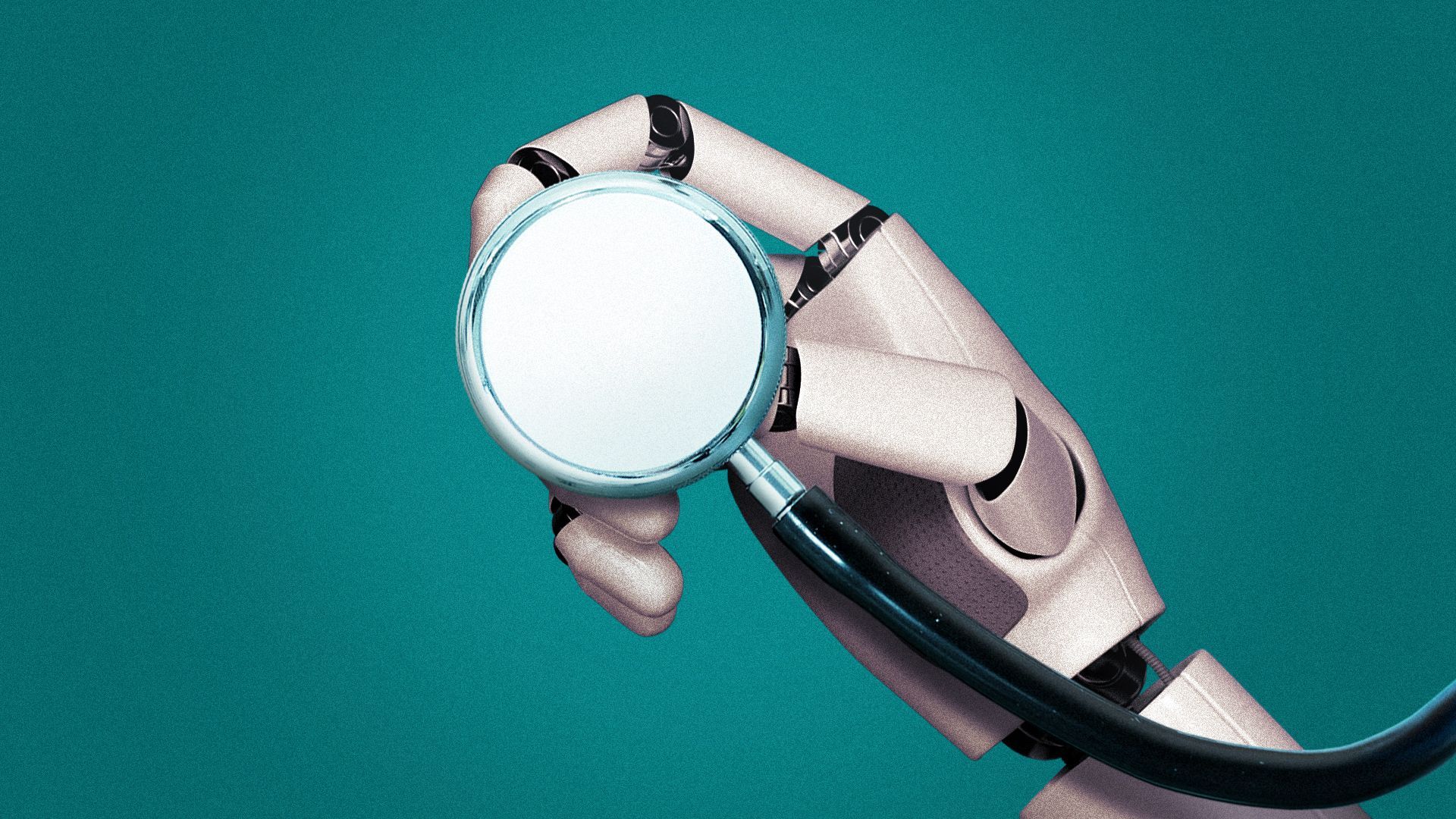
Illustration: Gabriella Turrisi/Axios
Diagnostic tests are starting to spot diseases far earlier with the help of artificial intelligence.
Why it matters: Many of today's diagnostics are limited by whether there is a known biological marker for a disease or a clinician knows precisely what to look for.
- But the ability of AI to use a vast array of data is helping researchers discover entirely novel ways to detect disease.
- In some cases, that might even be a disease that may not have turned out to harm someone.
Driving the news: On Tuesday, researchers from Peking University in Beijing reported finding that temperature patterns of the face — detected using thermal cameras and AI — are associated with various chronic illnesses, such as diabetes and high blood pressure.
- Last week, researchers at the University of British Columbia announced they pinpointed a distinct subtype of endometrial cancer that put patients at much greater risk of death but "would otherwise go unrecognized by traditional pathology and molecular diagnostic tests."
- In a study last month, researchers reported they could identify patients with Parkinson's disease far earlier — up to seven years before symptoms appear — using a blood test paired with AI.
The big picture: AI algorithms are able to organize and sift through massive amounts of data quickly and identify patterns that might otherwise go unnoticed.
- Advances in algorithms combined with greater availability of large datasets and improved access to cloud computing are supercharging diagnostics.
- "It's math, not magic," Mayo Clinic Platform president John Halamka told Axios.
- Many of these tests are powered by classic AI algorithms, not generative AI that powers chatbots and image generators.
Between the lines: A key benefit of using AI in diagnostics is its incidental findings.
- In an abdominal CT scan, a ton of data is gathered with a single test, but typically the radiologist zeroes in on what the physician ordered the test for, Elliott Green, CEO of AI database startup Dandelion Health, told Axios.
- But AI might also flag early markers for metabolic dysfunction-associated steatotic liver disease, often referred to as fatty liver disease, Green said.
- "AI goes where the evidence is, not where we think the evidence should be," Green said.
Zoom in: Disease-detecting advances are also making diagnostic testing more personalized, predictive and prescriptive, said Liz Kwo, chief medical officer of at-home testing company Everly Health.
- Testing for newly identified biomarkers is starting to be compared against an individual's own records and real-time data from wearables to personalize a diagnosis.
- Data from millions of similar patients will be compared to predict how an individual might respond to a particular treatment and offer prescriptive advice about drugs or lifestyle changes.
Friction point: Halamka disputes the idea that AI is encroaching on some doctors' turf.
- Algorithms are not practicing medicine but serving as tools that make doctors better at their jobs and are more accurately described as "augmented intelligence," he said.
Yes, but: Data out is only as good as the data in. That means addressing issues around data transparency and the representation of diverse patients in datasets are critical for developing accurate, less biased, algorithms.
- Health care organizations are still trying to figure out appropriate guardrails for the use of AI, such as best practices for evaluating algorithms and the ongoing accuracy of datasets they are using.
- It's difficult to assess the quality and accuracy of generative AI's recommendations in particular, so it needs to be limited to lower-risk applications for now, Halamka said.
- While AI may reduce false positives, it also runs the risk of overdiagnosing a disease that may not have turned into a problem.
The bottom line: Over time, patients should expect to see much more of this in their doctor's offices — and may even get information they weren't looking for — as they undergo even the most routine testing.
Editor's note: This story was corrected to reflect that John Halamka said the use of AI is more accurately described as "augmented intelligence" (not "augmented reality").
