"New era" of cosmetics' regulation: FDA wields new powers over makeup companies

Add Axios as your preferred source to
see more of our stories on Google.
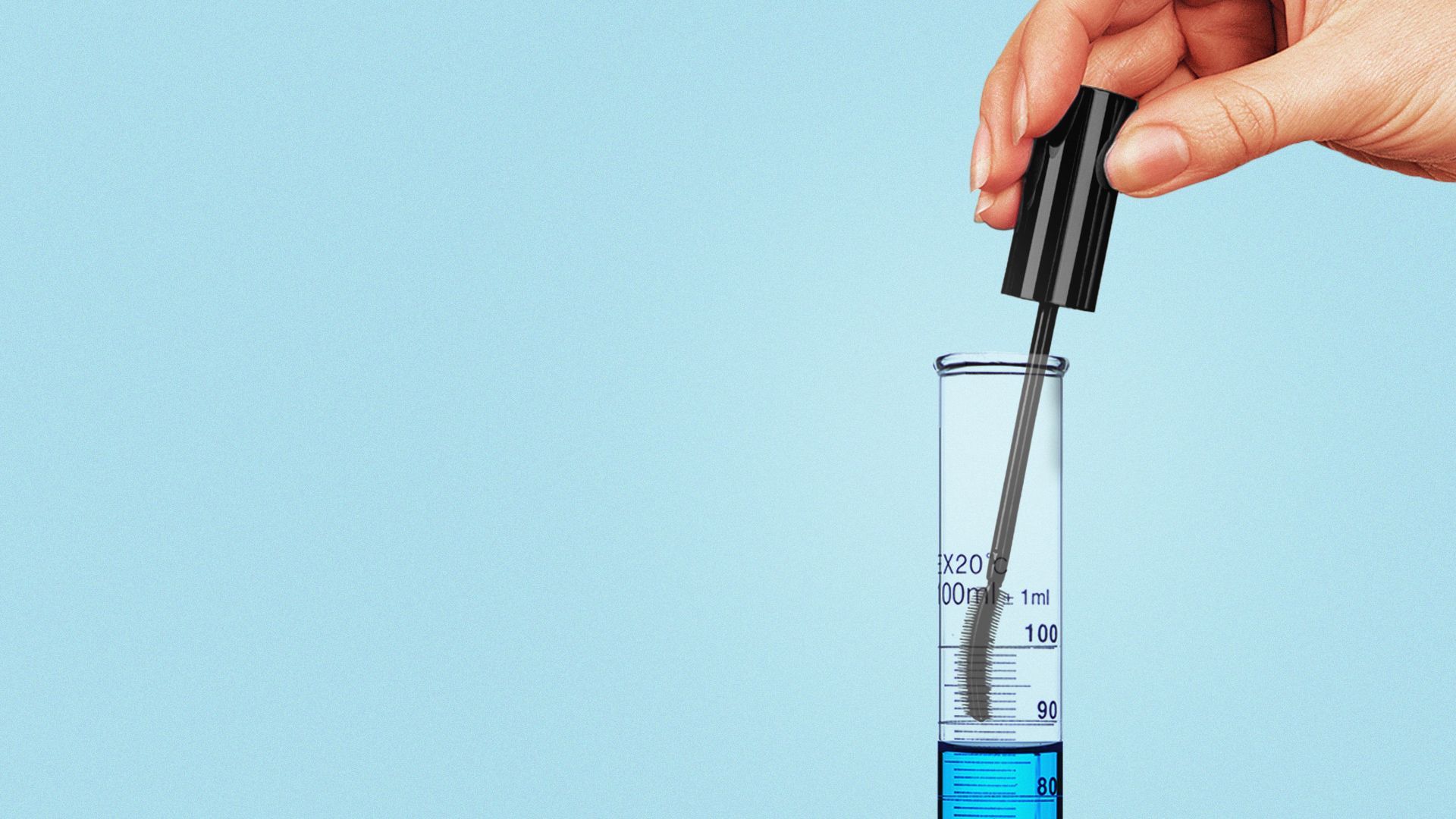
Illustration: Gabriella Turrisi/Axios
Starting Monday, the Food and Drug Administration will wield new regulatory powers over makers of lipsticks, shampoos, baby wipes and other cosmetic products that account for more than $40 billion in sales annually.
Why it matters: It's part of the phase-in of a 2022 law that calls for more oversight of adverse events and requires companies to clearly label allergens, register their facilities and disclose every product they sell.
- "It's like ushering in this new era of cosmetics being a more highly regulated, more meaningfully regulated product," said Emily Cowley Leongini, an attorney at ArentFox Schiff. "I see it as the beginning of what's to come."
The big picture: The law, known as the Modernization of Cosmetics Regulation Act, or MoCRA, aimed to bring more transparency to an opaque industry that was largely self-regulated.
- It took effect at the end of last year and bestowed on authorities the power to recall a product and to make companies report serious adverse events, from hair loss to birth defects.
- The agency extended the deadline for companies to register their products and facilities to Monday. Facilities will have to renew registrations every two years, and companies must initially list each marketed cosmetic product and provide updates — for example, if a product is discontinued.
Between the lines: Most big manufacturers already are complying, experts say.
- But some companies likely have reformulated or will soon change the composition of products as the result of the law, Katlin McKelvie, a partner with law firm Gibson, Dunn and Crutcher recently told the Glossy Beauty Podcast.
- "Because of MoCRA, I think some of them are taking a closer look at information available about the safety of some of these ingredients and are acting in a more conservative manner," she said.
- The threat of increased FDA scrutiny of facilities or labels may push some to rein in the claims they're making for their products, Marc Scheineson, partner and leader of Alston & Bird's food and drug law practice and former associate commissioner for legislative affairs of the FDA.
Critics say the law doesn't go far enough, because it doesn't lay out specific ingredients that can be in cosmetics or accommodate testing for substances like "forever chemicals."
- It will fall to the Federal Trade Commission, via its Green Guides due out this year, to address manufacturer claims about whether a product is "natural" or "clean," said Helen Ogunyanwo, an associate at Crowell & Moring.
What to watch: Packaging will need to include a U.S. address, email and telephone number of a responsible party at the company for consumers to contact.
- By the end of this year, the agency is expected to propose rules requiring companies to disclose the ingredients of their fragrances, long treated as proprietary and secret, in order to flag allergens.
- It's also expected to outline good manufacturing practices, as well as standardize testing for detecting asbestos in talc-containing cosmetic products.
Editor's note: This story has been updated with the correct name of the law firm ArentFox Schiff.
