7 states show promising recovery from youth mental health crisis

Add Axios as your preferred source to
see more of our stories on Google.
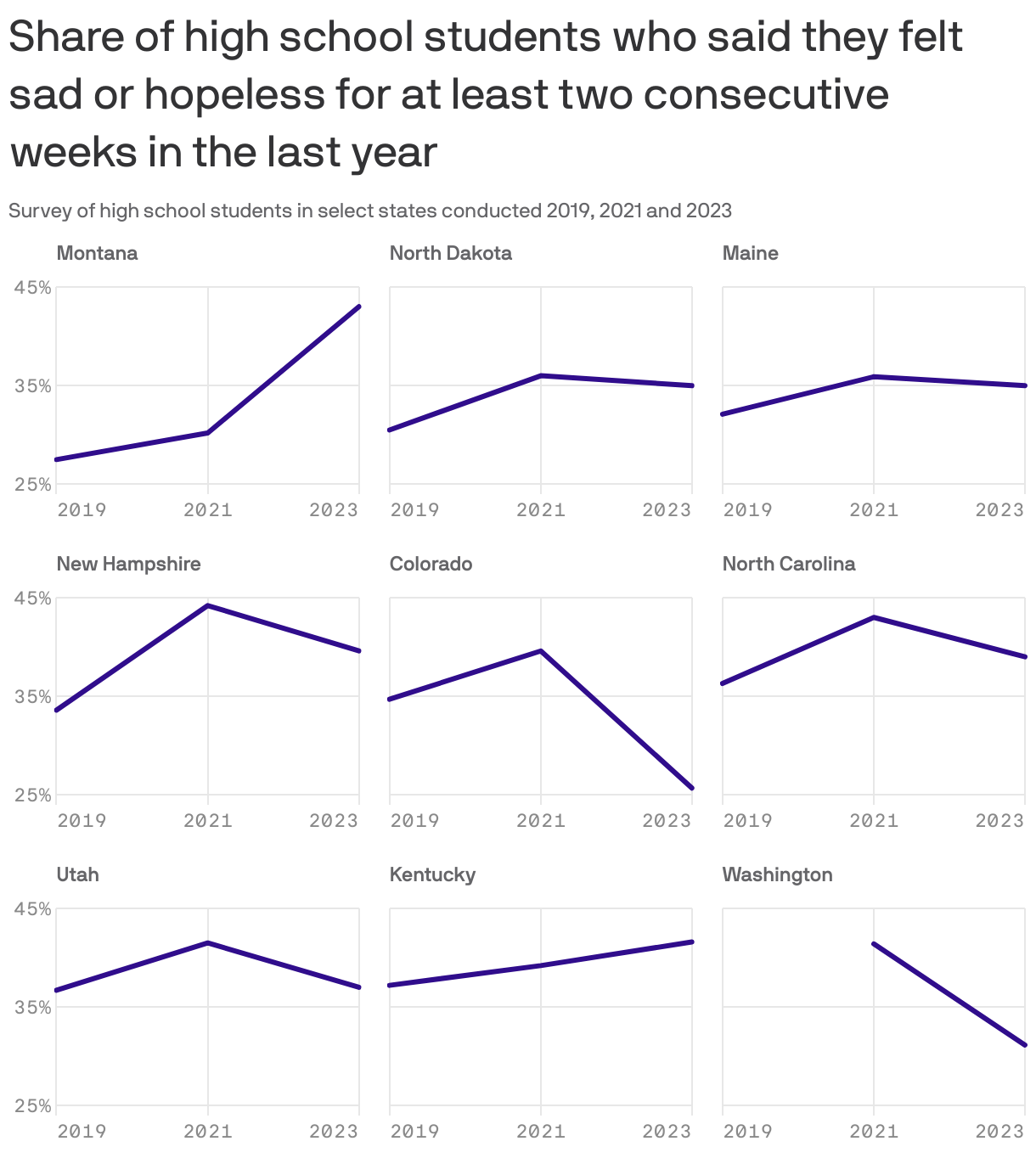
Youth mental health has begun to improve after major pandemic dips, new data shows.
Why it matters: The COVID-19 pandemic laid bare students' struggles as well as a fractured system to help them navigate recovery.
- Some of the recovery, though, trails pre-pandemic mental health metrics.
State of play: In seven of nine states identified by Axios with published 2023 data, surveys showed lower rates of sadness and hopelessness.
- Overall, dedicating more resources to student well-being during the pandemic has started to pay off, Kathleen Ethier, director of the Centers for Disease Control and Prevention's Division of Adolescent and School Health, told Axios.
- "These improvements, they're not huge, but they are important," she said.
- These survey findings are not yet comprehensive, and the CDC is expected to publish national results later this year.
Zoom in: In North Carolina, the percentage of high school students who seriously considered suicide dropped to 18% (2023) from 22% (2021).
- North Carolina high school students also used fewer vape products, marijuana and alcohol in this same time period.
- In Washington, more students reported having adults to turn to when feeling depressed — 59% (2023) from 50% (2021).
- The number of students in Colorado who feel sad or hopeless nearly daily dropped to 26%, the lowest level since the survey's 2013 inception when it was 24%.
Yes, but: LGBTQ+ students and teen girls experienced more stark mental health challenges last year than the general population, according to data from multiple states.
- "It's really important to make sure that we are focused on making schools less toxic for the most vulnerable youth," Ethier said. "And by doing that, we support all youth."
Between the lines: In Washington, depressive feelings were nearly two times higher for female students than male students and more than two times higher for LGBTQ+ students.
- Colorado's LGBTQ+ youth experienced higher rates of suicidal despair than their peers.
The other side: Montana's 2023 data showed more bleak results as reported sadness and hopelessness increased, but at a lower rate than previously tallied.
- 26% of students seriously considered suicide, which was the highest percentage since 1991, when it was 27%.
- High school students in Kentucky experienced slightly higher rates of hopelessness and sadness in 2023 than immediately before the pandemic or after its start.
Zoom out: Youth mental health was already on the downturn before the pandemic, which exacerbated the problem.
- Last month, U.S. Surgeon General Vivek Murthy said young people are in a decade-long mental health crisis.
What they're saying: In North Carolina, improvements were attributed to local, state and federal investments into school counselors and establishing school-based mental health policies, said Ellen Essick, the section chief for the state's healthy schools and specialized instructional support.
The bottom line: "We have a lot of work to continue doing," Essick said.
- "It's not a time to rest on our laurels, but it's a time to keep pushing forward and thinking about all the things we can do to support our students and our staff."
Go deeper: New program creates "youth corps" for mental health
