Thompson: Debate format hasn't changed

Add Axios as your preferred source to
see more of our stories on Google.
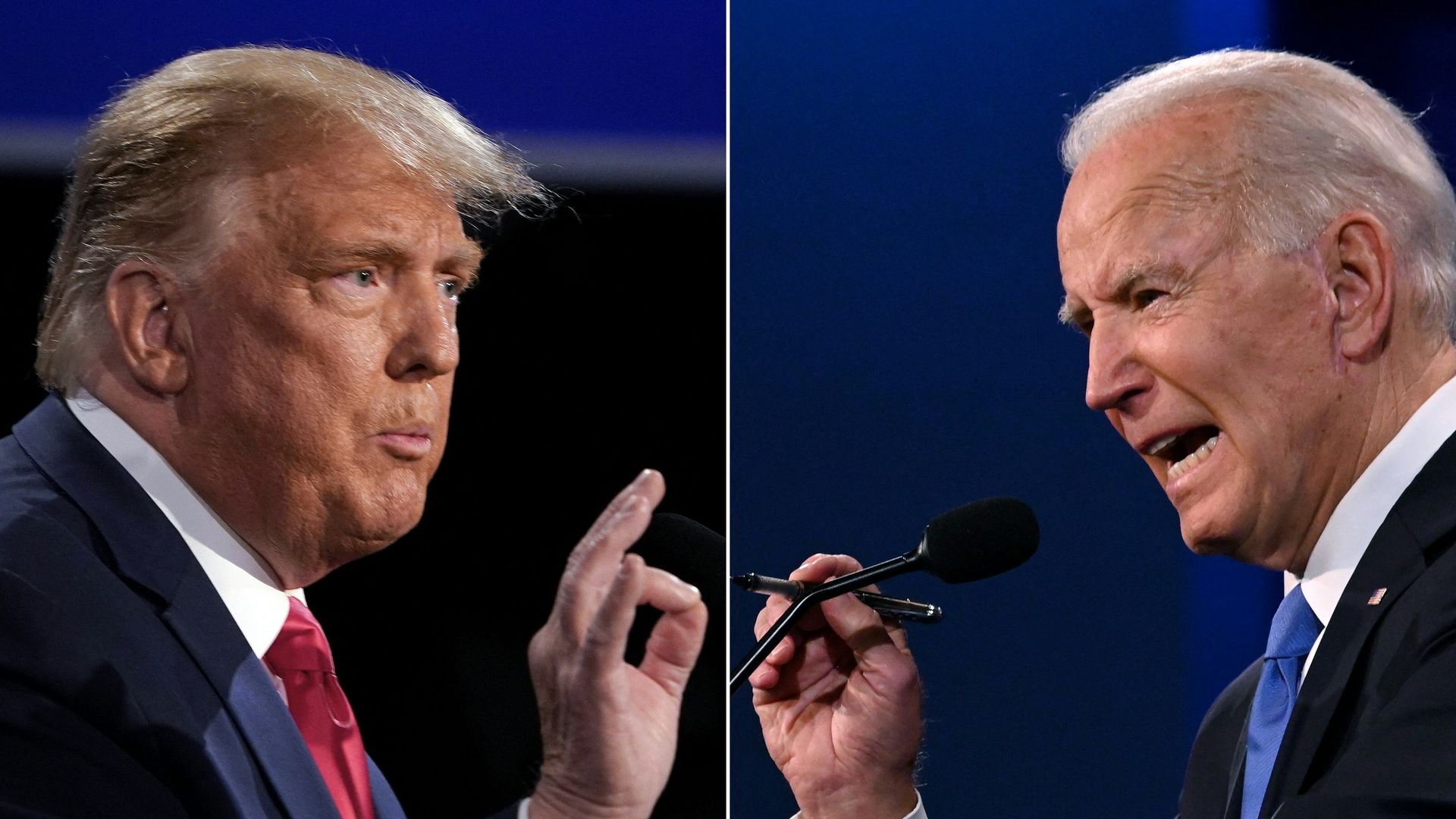
The format for this Thursday's historic debate between former President Trump and President Biden has been kept "absolutely the same right from the start," Thompson told me in the same interview.
- "The format is our format, and the invitation was to take part in that format, in that studio, on that day, with those moderators."
- "There's been no variation in the format from first to last," he added.
Why it matters: His comments refute any suggestions that CNN has changed its debate format or fact-checking strategy to appease either campaign.
- CNN released details about the debate rules earlier this month, which both campaigns have agreed to.
Zoom out: Thursday's prime-time showdown marks the first time in decades that a single TV network — and not the nonpartisan Commission on Presidential Debates — will organize a general election debate, Axios' Zachary Basu writes.
- The moderators and their role in live fact-checking are under intense scrutiny given Trump's long-running war with CNN and false claims about the 2020 election.
Between the lines: CNN's political director David Chalian told the New York Times Monday that Jake Tapper and Dana Bash will focus on facilitating the conversations between the candidates, as the debate "is not the ideal arena for live fact-checking."
- A CNN spokesperson told Axios, the moderators "are not participants in the debate. They are facilitators."
- As such, while they do intend to fact-check major inaccuracies, such as any assertions that the 2020 election was stolen, they don't plan to correct minor details in real time on air, such as inaccurate figures, the spokesperson added.
- Fact-checking of smaller details, as well as major falsehoods, will occur in real time on CNN's digital properties and immediately on air following the debate.
The big picture: Thompson said he wanted "an absolutely classic debate," akin to the historic first television debate ever between John F. Kennedy and Richard Nixon in 1960.
- "What we're hoping for is a moment where Americans and worldwide audiences who are maybe not focused on this event will begin to focus on it, and maybe be more likely to vote — whoever they vote for," he said.
What to watch: In allowing other networks and members of the Washington press pool to simulcast CNN's debate, Thompson anticipates ratings and engagement will be very high.
- "This is an election which American citizens get to vote in, but in many ways, it's an election for the world. ... I think you're going to see a great deal of attention on pretty much every continent on Earth."
