The Biden approach


Add Axios as your preferred source to
see more of our stories on Google.
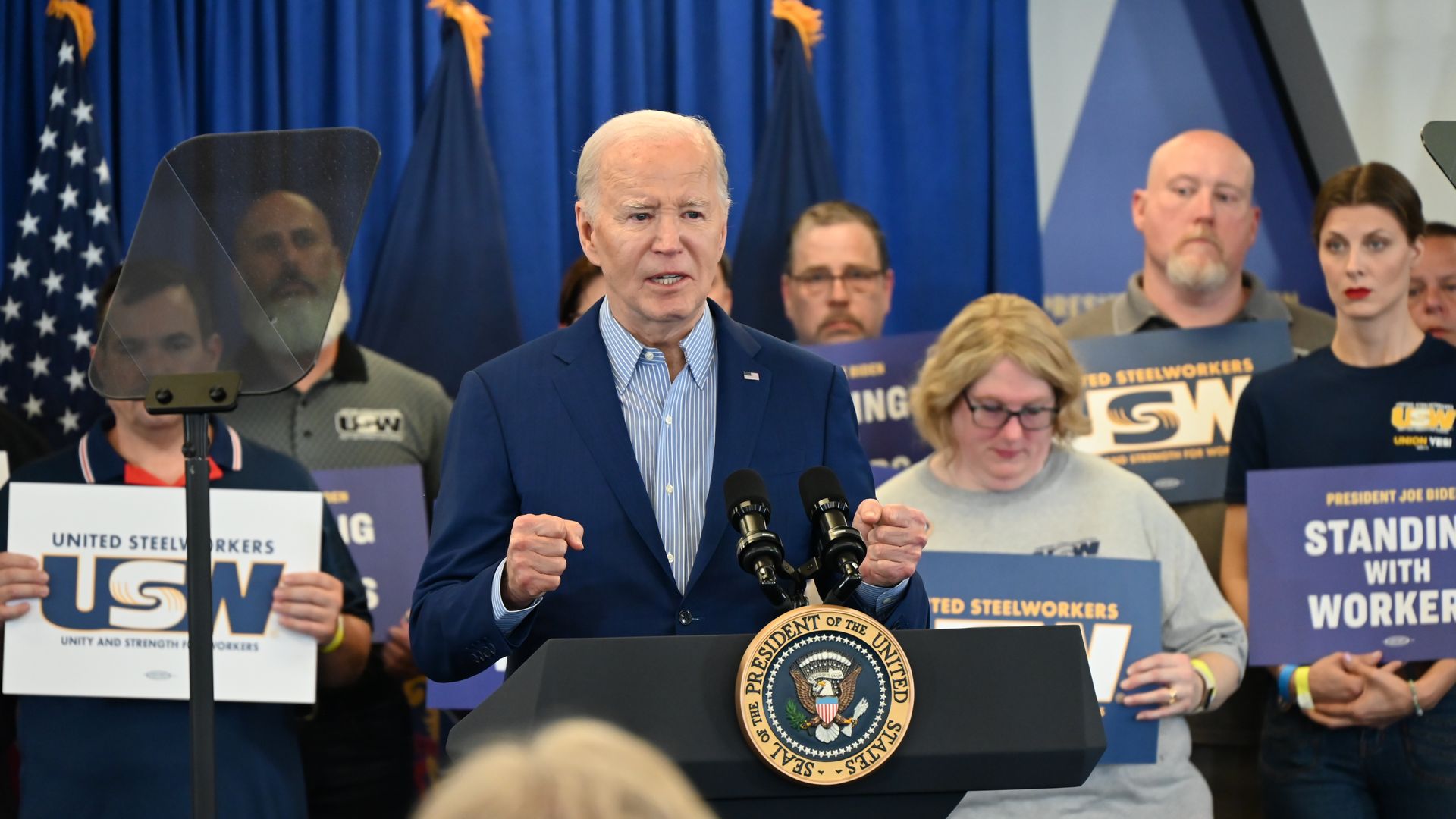
Last month, the Biden administration rolled out a suite of tariffs on Chinese exports of electric vehicles, solar panels, semiconductors and more. Administration officials emphasized what they see as differences with the Trump approach.
- Biden's "tough targeted approach combining investment and enforcement in key sectors is a sharp departure from the prior administration," White House economic adviser Lael Brainard said last month.
- "The previous administration did not take action to invest in America and failed to follow through on securing the promised Chinese purchases or end to China's unfair practices in its failed Phase One trade agreement with China," she said.
Yes, but: Biden has also elected to mostly leave Trump's China tariffs in place in his first three years in office, even as inflation surged.
- And he has simultaneously taken steps that cause friction with geopolitical allies, including heavy subsidies to U.S. electric car makers and a pledge to stop Japan's Nippon Steel from buying U.S. Steel.
Of note: Sixteen Nobel laureates in economics have endorsed Biden's economic policies, our colleague Hans Nichols reports, seeing Trump's policy agenda as likely to be inflationary.
Between the lines: There is an internal incoherence in the new bipartisan enthusiasm for trade barriers.
- "What we're seeing is that protectionist policies are being used to advance a number of totally separate goals," which are frequently in tension with each other, AEI's Strain said.
- "One goal is to revive the domestic manufacturing sector, another is to weaken the U.S. economic relationship with China, another is to increase the U.S.'s economic self-sufficiency more broadly, another goal is to advance national security, another is to support the green energy transition, and now adding another is to fund government spending," he said.
The bottom line: "That's an awful lot to ask of trade policy," Strain added.
