Surprise election results in Mexico, India leave international investors reeling

Add Axios as your preferred source to
see more of our stories on Google.
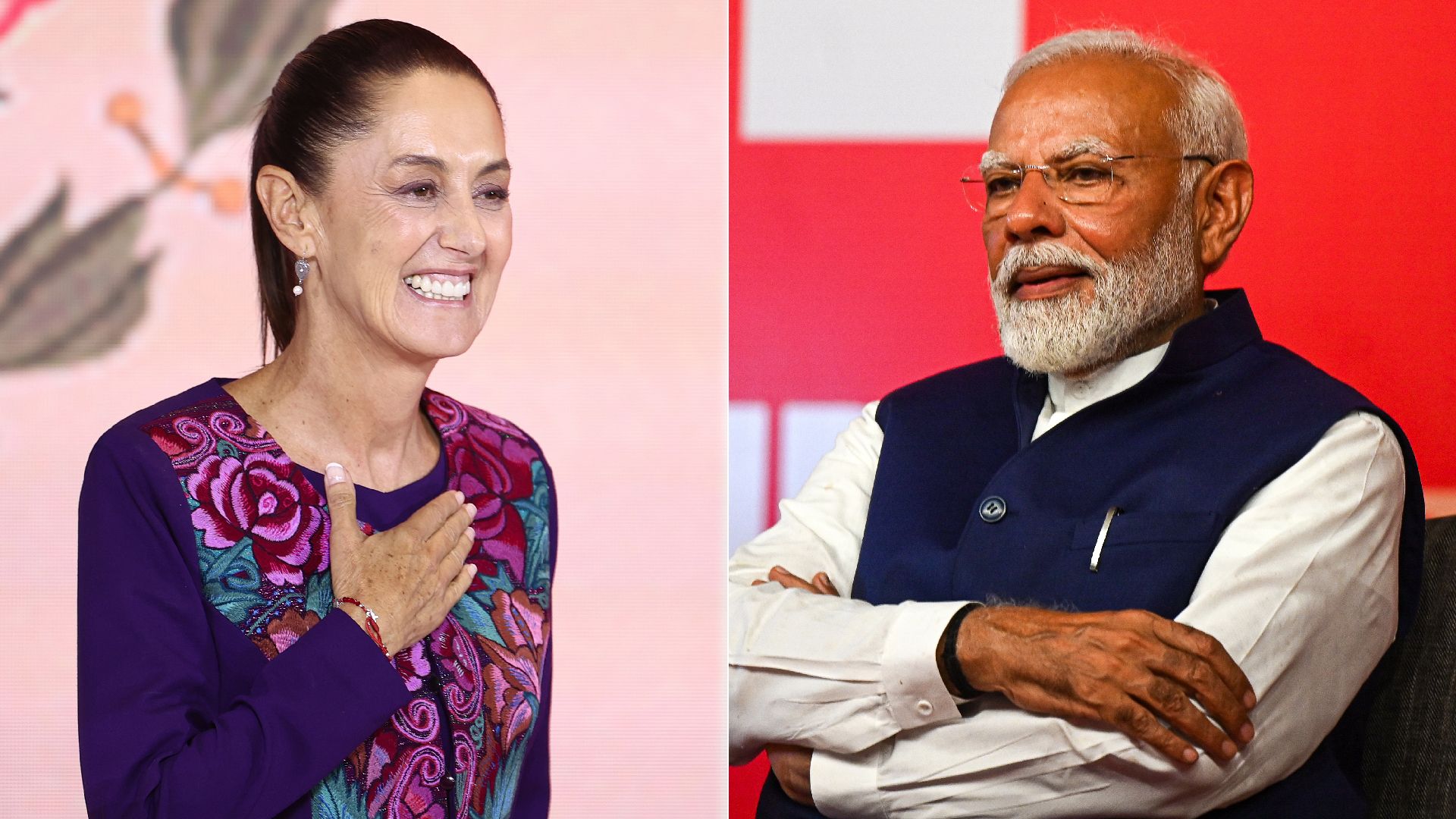
Photos: Prakash Singh/Bloomberg, Hector Vivas/Getty Images
A pair of election surprises in Mexico and India have left international investors reeling.
Why it matters: Stocks and currencies plunged in both countries as India Prime Minister Narendra Modi's party lost its parliamentary stronghold and Claudia Sheinbaum won by a landslide victory in Mexico.
- "Sheinbaum's victory was priced in but a near-super majority was not while in India a very large Modi victory was priced in rather than a modest majority," according to a note today by Bespoke Investment Group.
The big picture: In Mexico and India — two developing economies with deep ties to the U.S. — investors want to see government policies that bolster business.
- In Mexico, investors fear "the ruling party will pass constitutional reforms without any checks from the opposition leading to a less business-friendly environment," according to a separate note by Bespoke.
- In India, Modi will have a "weakened mandate and that will make the passage of contentious economic reforms more difficult," according to a note today by Capital Economics.
By the numbers: The Sensex — an India index not unlike the American Dow — plunged more than 5.7% today in its worst daily showing since May 2020, though that was after a nearly 4% jump a day earlier.
- The S&P/BMV IPC — an index that tracks major Mexican stocks — fell by 6.1% on Monday in its worst decline since the pandemic crash.
Reality check: In Mexico, Sheinbaum is expected to maintain the course set by her predecessor and ally, Andrés Manuel López Obrador.
- "S&P Global Ratings doesn't believe that the new administration is likely to materially change the country's fiscal, monetary, or trade policies," and Sheinbaum will be under pressure to grow an economy that increased by only 3.1% in 2023, the ratings agency said today in a report.
- Meanwhile, Modi will still remain in power as head of a stable coalition, with Capital Economics saying that its broader embrace "of the value of economic reforms" could still translate to growth at 6-7%.
