Gen Z drives a teen-job comeback

Add Axios as your preferred source to
see more of our stories on Google.
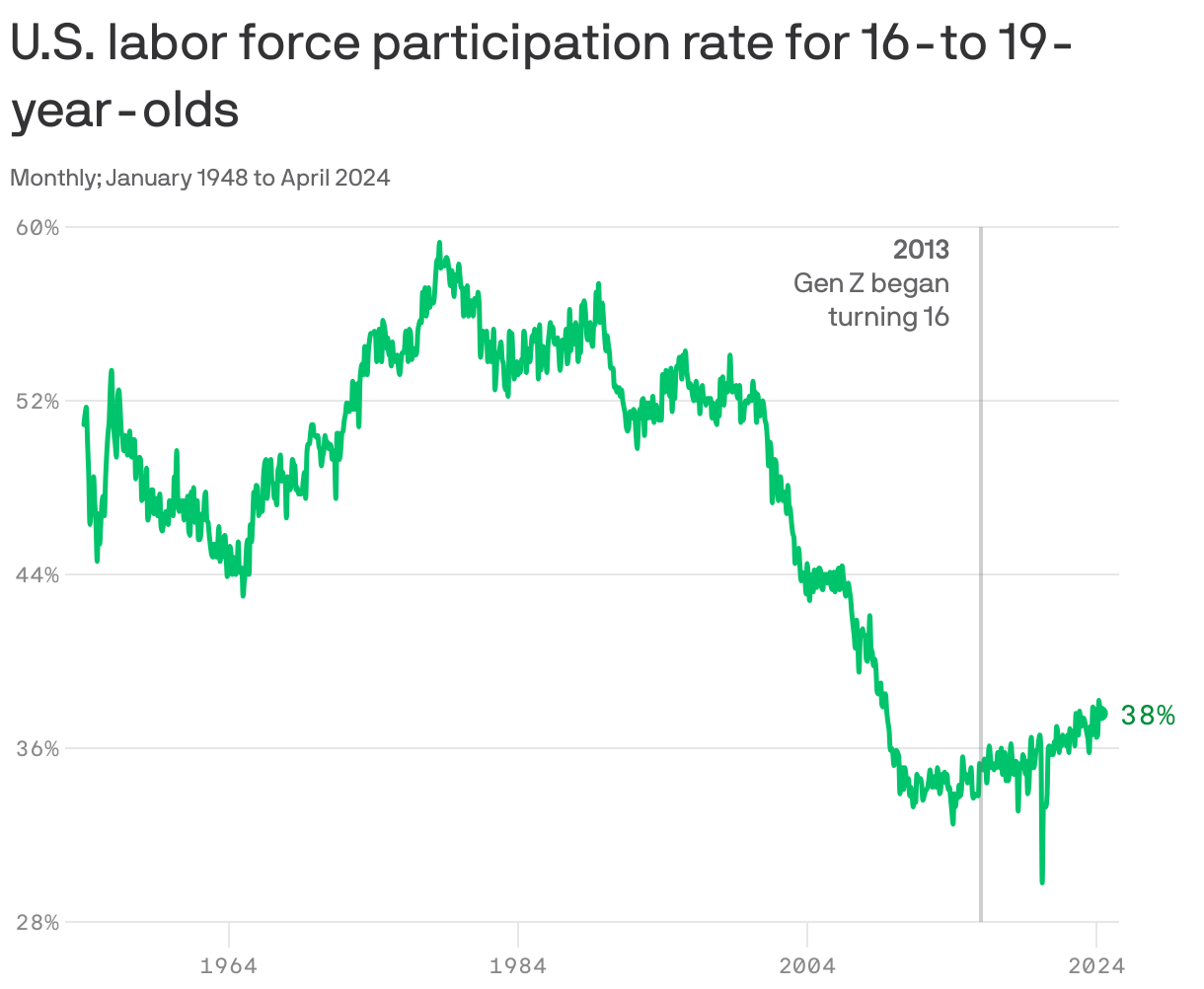
Gen Z is reversing a decades-long decline in teen employment.
Why it matters: Working for pay can be a key rite of passage for teens as they grow up, but it’s not nearly as common as it used to be.
- “There is something lost when there are more young people who enter the workforce after college with no work experience,” says Jean Twenge, a psychologist and author of the book "Generations."
- “When they learn those lessons about how important it is to show up on time and do a good job and sometimes you have to listen to the boss, all of it builds conscientiousness for later in life.”
By the numbers: In the 1980s, nearly 2 in 3 16- to 19-year-olds were working or actively looking for work.
- That’s been steadily falling since then, with teens’ labor force participation rate dropping especially low among millennials in the 2000s.
- But Gen Z is starting to bring teen jobs back. The share of teens working or looking for work recently hit a 14-year high — 38%.
- In the coming weeks, employers are expected to add another 1.3 million summer jobs for teens, according to the firm Challenger, Gray & Christmas.
Zoom in: A number of factors are driving the uptick in teen employment.
- Younger workers’ wages have been rising faster than those of other age groups.
- Many teens are getting part-time jobs to help their families cover daily costs as inflation squeezes budgets, says Andrew Challenger of Challenger, Gray & Christmas.
- And the demand for labor in jobs teens typically hold — at shops and in restaurants — is still high.
Reality check: While teen employment is rising, it’s unlikely it’ll ever get close to what it was among Boomers and Gen X-ers, Challenger says.
- Today’s young people have more options for how to spend their time away from school, including sports, summer and after-school programs and volunteering gigs.
Zoom out: The long-term decline in teens working for pay lines up with several other trends that indicate today’s kids are growing up slower than kids of previous generations, Twenge says.
- They’re getting their licenses later and waiting longer to date and drink alcohol.
