A new novel shows how the U.S. fought Nazis with economics

Add Axios as your preferred source to
see more of our stories on Google.
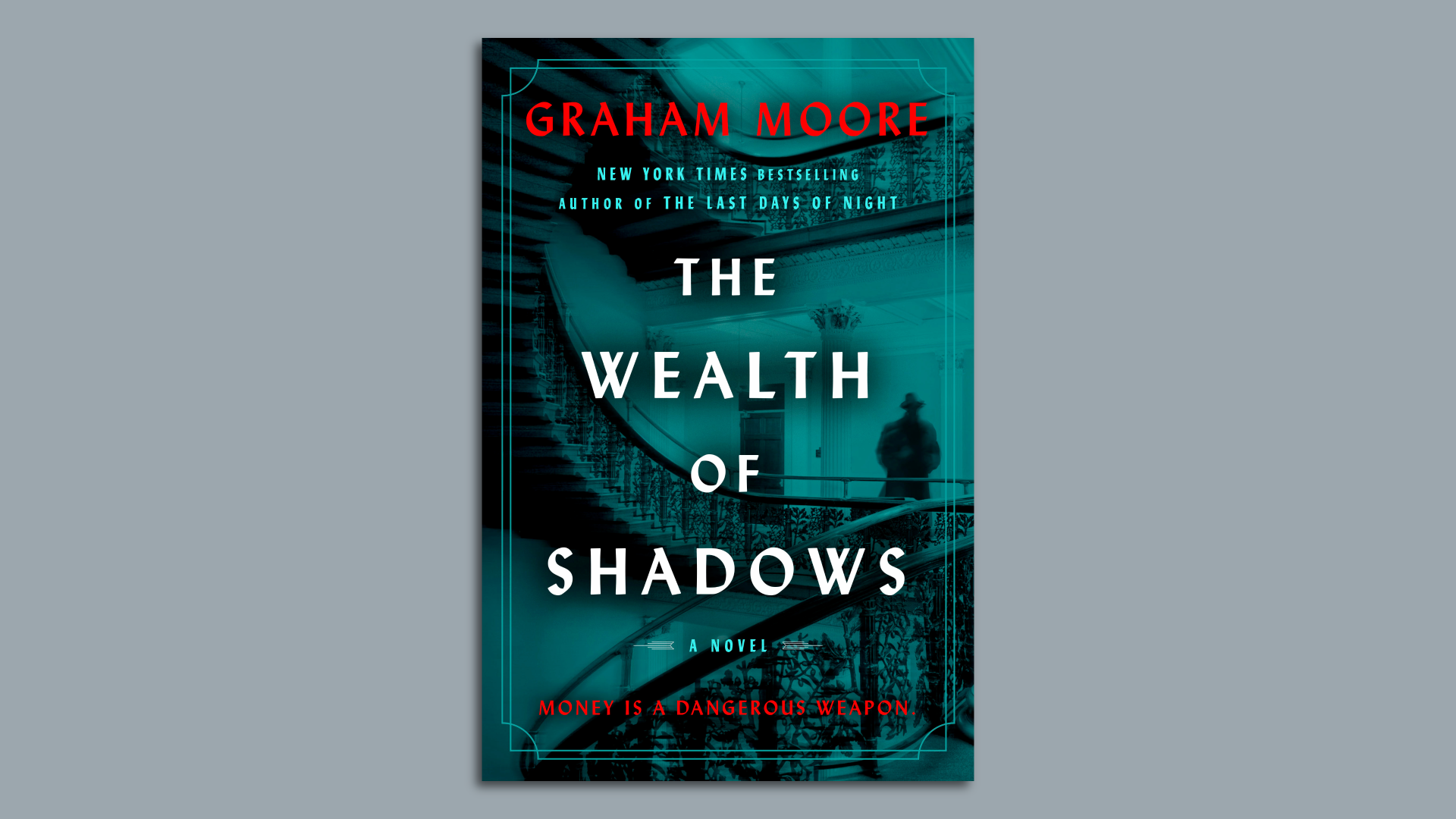
Credit: Random House
In the late 1930s, as Hitler prepared the German economy for war, a secret team assembled in the U.S. Treasury Department to use economic tools to fight the Nazis. Their story is told in a terrific work of historical fiction out this week.
Why it matters: "The Wealth of Shadows" by Graham Moore has the addictive readability of a good spy novel — yet is simultaneously one of the best economics books I've read in a long time. It makes financial history uncommonly vivid and accessible.
- Its lessons are crucial to understanding economic statesmanship and the geopolitics of money — and have disturbing echoes in the present-day Treasury's efforts to fight the Russian war machine with financial tools.
- Not many books feature blurbs from both Liaquat Ahamed, author of a Pulitzer-winning history of Depression-era central bankers, and James Patterson, author of bestselling thrillers. But here we are.
The big picture: Moore's protagonist is Ansel Luxford, a Minnesota tax accountant — a real, if minor, historical figure — who is brought into the Treasury scheme to undermine German financial might.
- He worked underneath Secretary Henry Morgenthau and the enigmatic financial diplomat Harry Dexter White, initially in the utmost secrecy given the U.S. government's policy of official neutrality as conflict widened in Europe.
- The narrative moves quickly between financial conferences, moments of spycraft, and debates with John Maynard Keynes over who will pay for the British war effort and how.
- There are amusing digressions, like a chapter in which Mabel Newcomer, a real-life Vassar professor who was part of the team, buys a car by applying the logic of "asymmetric information," also known as the "Lemon Problem," that would later win George Akerlof a Nobel prize.
State of play: If you read the book, keep a finger on a detailed appendix that lays out what, in each chapter, is historical fact and what has been streamlined, embellished or invented for novelistic purposes.
- In a typical act of novelization, for example, Moore turns a series of letters between Keynes and White into a hostile, in-person exchange.
Fun fact: In the appendix, Moore thanks three people for helping him get the economics right in the book — names that will be familiar to those who follow contemporary economic debates: Ahamed, Ernie Tedeschi and Austan Goolsbee.
What they're saying: "To understand how money flows through a society was to understand how blood brings life to the body of a man," Moore writes early in the book. It's as good a summary as any of why economic ideas matter.
