High rates may not be bringing down inflation as much as the Fed thinks

Add Axios as your preferred source to
see more of our stories on Google.
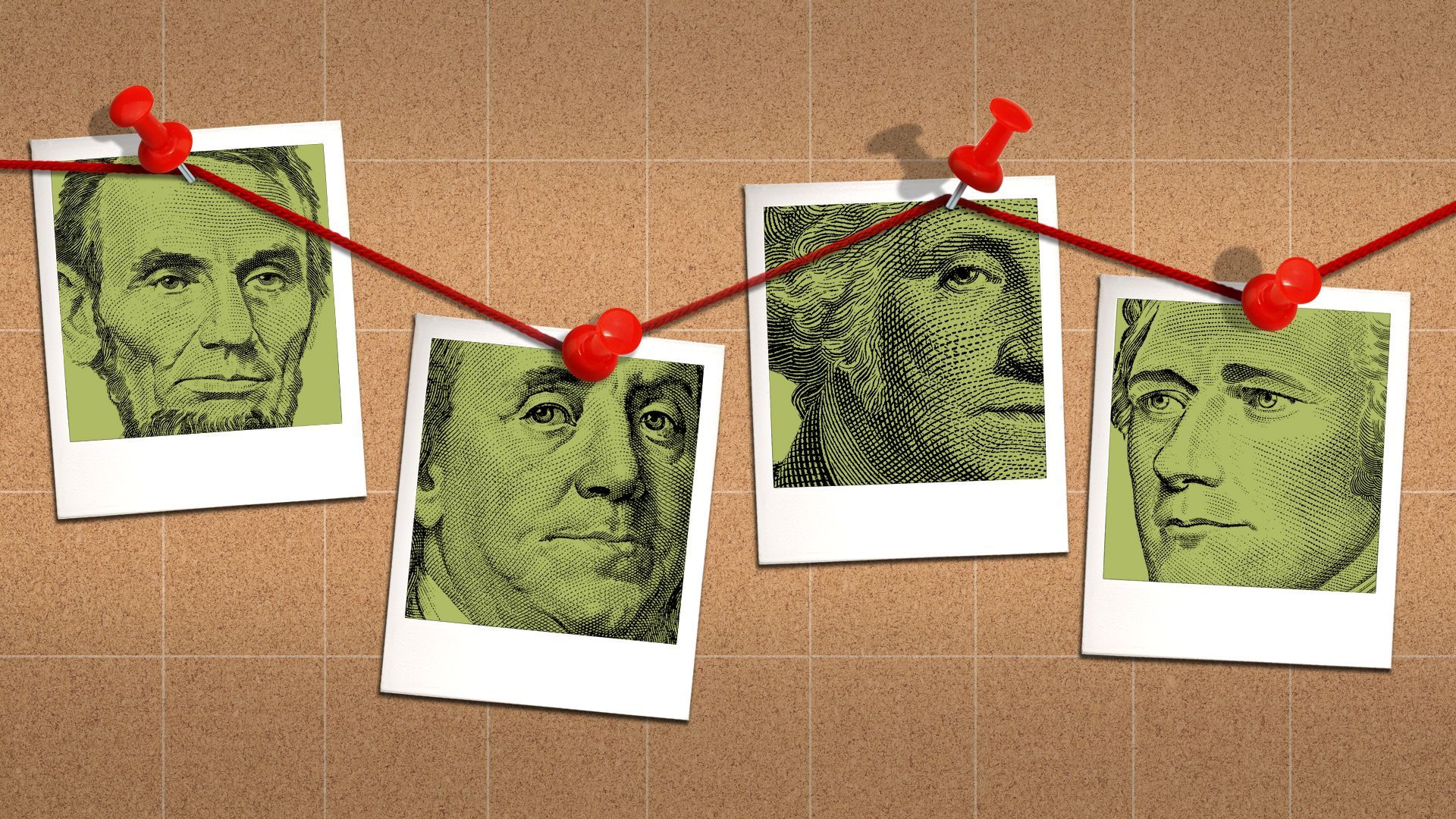
Illustration: Sarah Grillo/Axios
"If a tree falls in the forest and no one is around to hear it, does it make a sound?" is an old philosophical thought experiment. There is a monetary policy equivalent right now: If high interest rates don't visibly slow the economy, are they doing anything to bring inflation down?
Why it matters: It's unclear how much the Fed's high interest rate policy is exerting downward pressure on economic activity, raising profound questions about the central bank's power to guide the economy and manage inflation.
- No recession has occurred, contrary to forecasts when the Fed raised interest rates by more than 5 percentage points in 2022 and 2023. The unemployment rate has remained below 4% for 27 straight months.
- GDP growth has been above its long-term trend over the last year, and even interest-sensitive residential investment has been positive in the last three quarters.
- The stock market is reaching new highs.
What they're saying: "Policy is not restrictive," said David Zervos, Jefferies' chief market strategist, at the Atlanta Fed's Financial Markets Conference Tuesday morning in Amelia Island, Fla. "Demand was not crushed."
- "The main reason inflation did what it did had almost nothing to do with the demand cycle," Zervos said.
- "The big picture story in this whole economic cycle was a massive supply shock following by the unwinding of that supply shock, and a little bit of aggregate demand tinkering," he said.
The Fed's rate hikes, in his telling, were enough to take the stance of policy from "uber-uber-uber easy" to closer to neutral — neither stimulating nor slowing the economy — in light of the Fed's multitrillion-dollar balance sheet.
The other side: We asked Atlanta Fed president Raphael Bostic why he is confident that current interest rate policy is restrictive and how he sees monetary policy transmitting through the economy.
- "If you look at the most interest rate-sensitive sectors of the economy, they responded almost immediately," Bostic said in a briefing with reporters on the sidelines of the conference.
- When speaking to housing industry contacts, "everyone says that interest rates are really having a significant impact on loan volumes and transaction activity in every market."
- He added that businesspeople tell him high rates are causing them to postpone investments, which would "suggest that we are seeing a deferral of activity in ways that would be consistent with a slowdown."
Americans' reliance on fixed-rate mortgages — and the many homeowners who locked in low rates in 2021 — has likely limited the impact of higher rates on households.
- As a result of those cheap loans, Bostic acknowledged, "they have a lower interest rate sensitivity today than they might have under ordinary circumstances. But less sensitivity is not the same thing as no sensitivity."
