U.S. press freedoms fall to new low

Add Axios as your preferred source to
see more of our stories on Google.
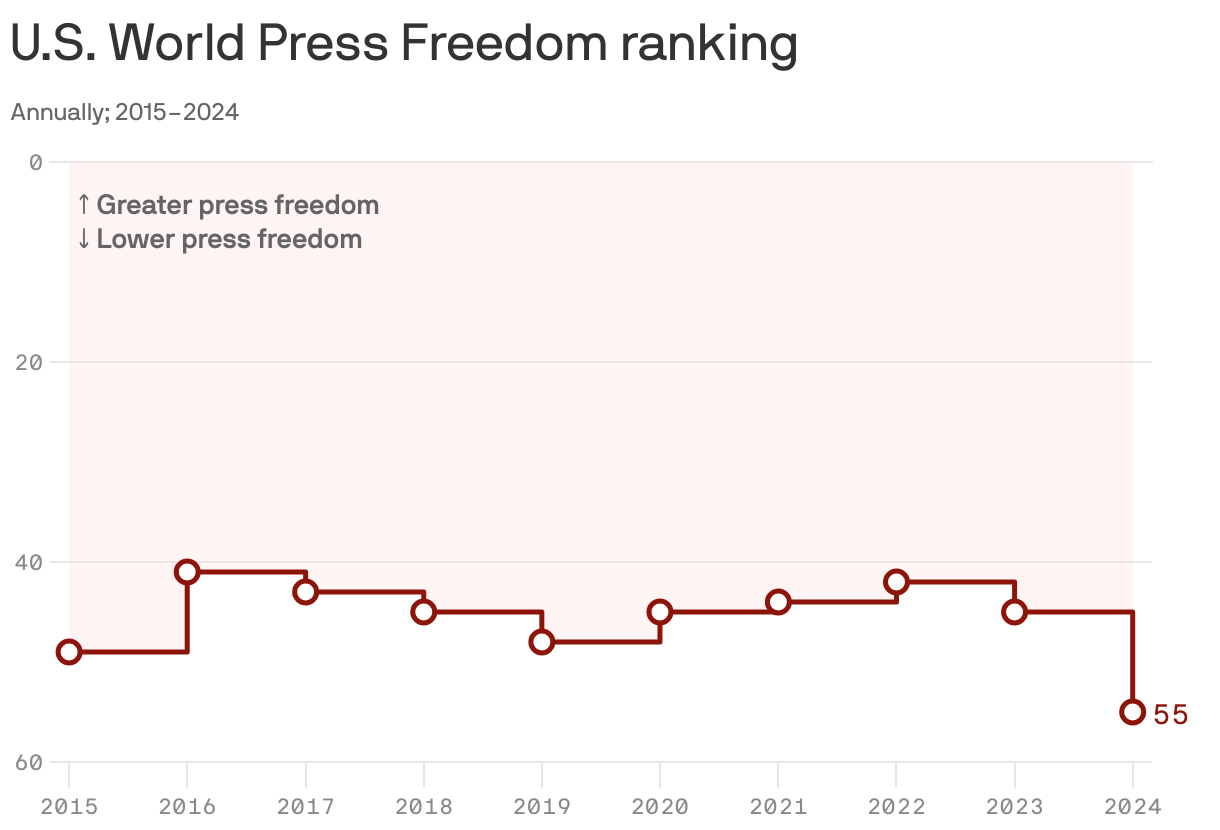
Press freedom in the U.S. has fallen significantly in the past year, thanks in part to consolidation that has gutted local news and forced corporations to prioritize profits over public service, according to this year's annual Reporters Without Borders press freedom index.
Why it matters: Once considered a bastion for free expression, the U.S. is now on par with developing countries that have few resources or protections dedicated to journalism, including Belize, Ivory Coast and Ghana.
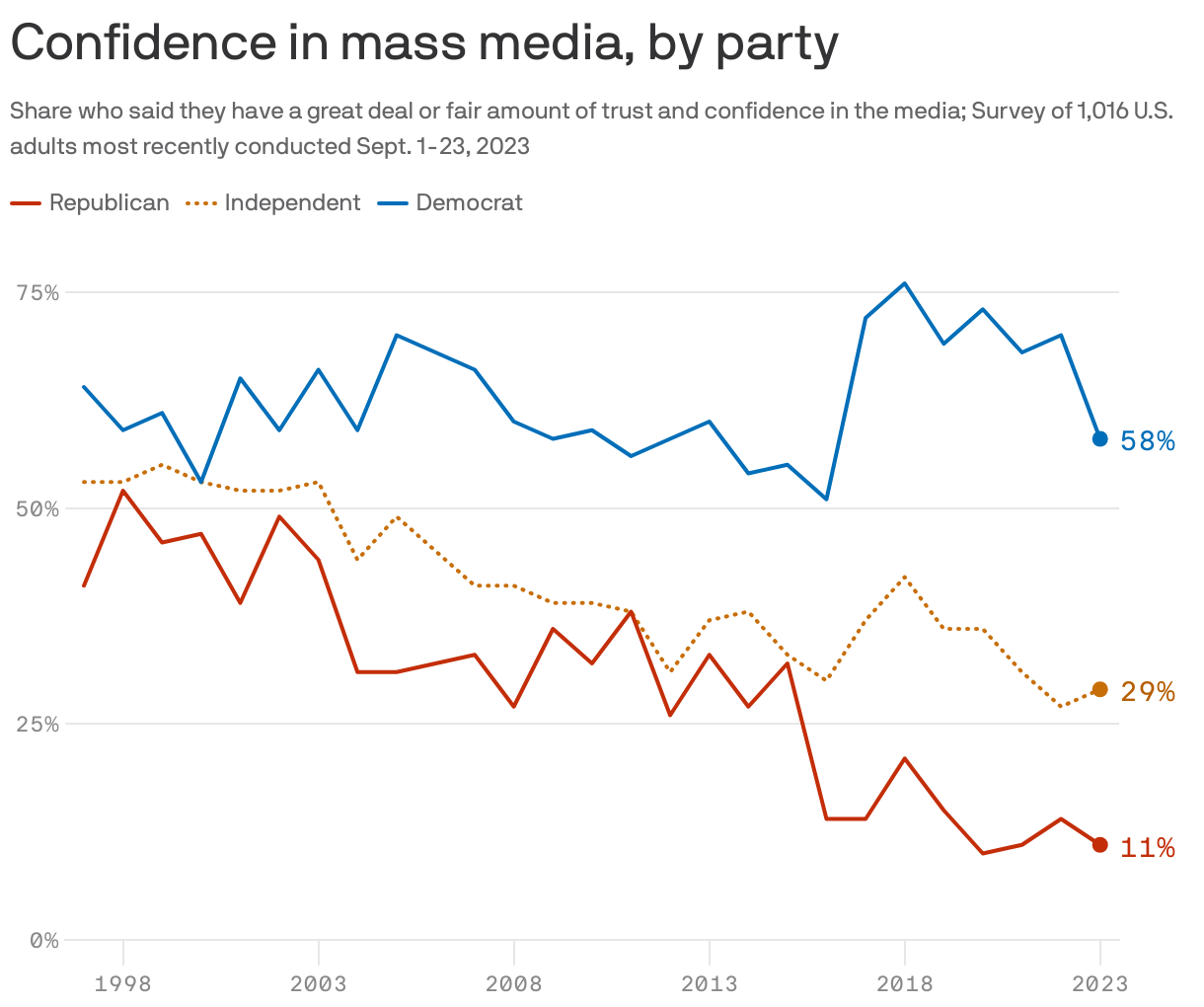
- The ranking also calls out unprecedented levels of distrust in American media, stemming in part from economic challenges to the industry and also from political polarization.
- The Trump era brought historic levels of division in media trust between parties that the Biden era has been unable to recover from.
Zoom out: Press freedoms are backsliding globally as autocrats use new laws to crack down on independent journalism, mostly under the guise of national security.
- Efforts to undermine press freedoms in Democracies like Israel and India underscore how fragile protections for journalism have become in democracies around the world.
Yes, but: New elections have the potential to help offset some of those trends.
- Poland, for example, climbed 10 points in this year's press freedom index following the opposition party's 2023 victory, which ended eight years of media manipulation by the Law and Justice party.
What to watch: In the U.S., tensions between law enforcement and the press at the local level continue to hamper press freedoms.
- Since the beginning of the Israel-Hamas war, Reporters Without Borders estimates that at least eight journalists have been arrested or detained at protests and 18 have been assaulted, including six student journalists.
